

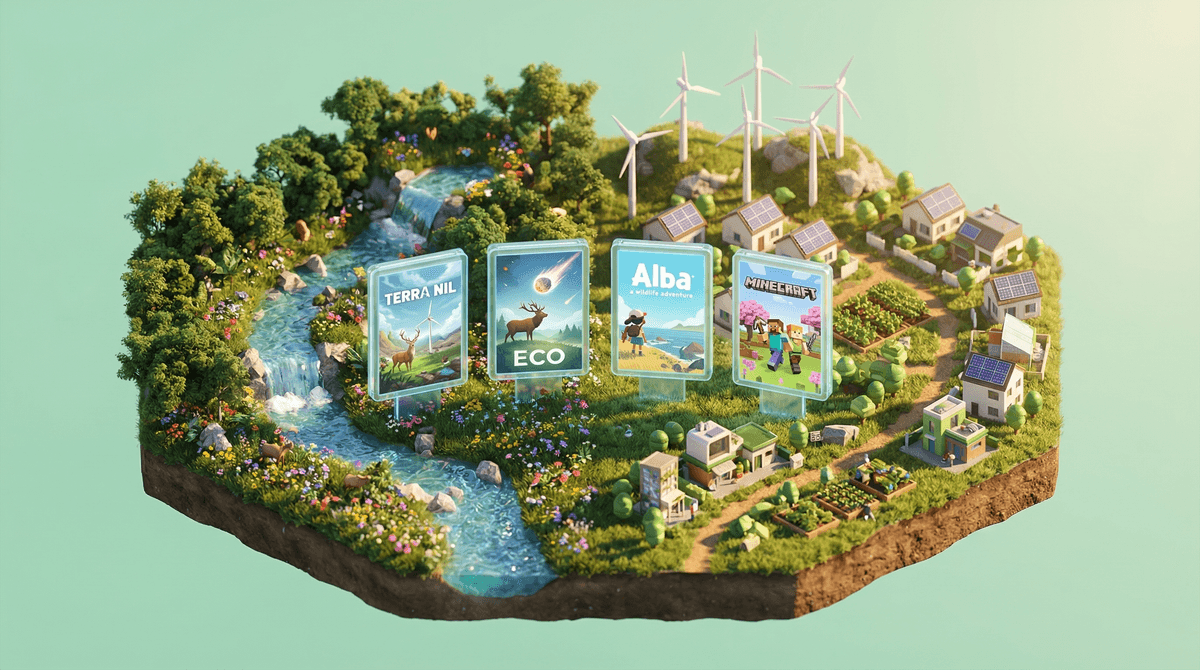
Environmental games are video games that teach kids about nature, conservation, climate change, and sustainability—through gameplay that actually makes these concepts click. We're talking about games where you restore ecosystems, manage renewable energy, clean up pollution, or protect endangered species. Not in a preachy "eat your vegetables" way, but in a way that makes kids genuinely care about the planet because they've spent hours nurturing a forest back to life or figuring out how to power a city with solar panels.
The best environmental games don't lecture—they let kids experiment, fail, learn, and feel the consequences of their choices in a safe digital sandbox. And honestly? In a world where climate anxiety is real for kids (and parents), these games can be genuinely empowering. They show that individual actions matter, that problems can be solved, and that taking care of the planet can be creative and fun.
Here's the thing: kids aren't playing these games because they're "educational." They're playing them because they're actually good games that happen to have environmental themes baked in.
Games like Minecraft have entire communities dedicated to building sustainable cities and renewable energy systems. Terra Nil is a gorgeous reverse city-builder where you turn barren wastelands into thriving ecosystems—and it's genuinely satisfying to watch a dead landscape bloom. Alba: A Wildlife Adventure lets kids explore a Mediterranean island, photograph wildlife, and clean up litter, and it's just... lovely.
Kids are drawn to these games because they offer agency. You're not just watching a documentary about deforestation—you're actively planting trees, seeing them grow, and watching animals return. That feedback loop is powerful, especially for kids who feel helpless about big global issues.
Ages 6-9: Gentle Introductions
Alba: A Wildlife Adventure is perfect for younger kids. It's wholesome, non-violent, and focuses on exploration and helping animals. The gameplay is simple enough for early readers, and the environmental message is woven in naturally—you're just a kid on vacation who wants to help.
Grow Home is a quirky climbing game where you're a robot growing a giant plant. It's more abstract, but kids love the physics-based climbing and watching their plant reach into the sky.
Ages 10-13: Building Complexity
Eco is the gold standard here, but fair warning—it's complex. Players work together to build a civilization while preventing a meteor from destroying their planet. The catch? Every action has environmental consequences. Chop down too many trees? Ecosystem collapse. It's basically a playable lesson in sustainability, and it's multiplayer, so kids learn to negotiate and collaborate.
Terra Nil is more chill and works great for this age. It's a puzzle game about restoration rather than exploitation, and the art style is beautiful enough that parents won't mind watching over their shoulder.
Ages 14+: Real-World Complexity
Beyond Blue is a narrative ocean exploration game that tackles marine conservation with real scientific research. It's developed in collaboration with BBC's Blue Planet II team, so it's legit.
Endling: Extinction is Forever is darker—you play as a mother fox trying to protect her cubs in a world devastated by humans. It's emotional and doesn't pull punches about extinction and environmental destruction. Not for sensitive kids, but for teens ready to grapple with heavier themes, it's powerful.
These games aren't all sunshine and optimism. Some, like Endling, deal with heavy topics—extinction, pollution, habitat loss. That's not necessarily bad! Teens especially can handle (and benefit from) games that don't sugar-coat environmental challenges. But you'll want to know what your kid is playing so you can talk about it.
Some require reading and patience. Games like Eco have learning curves. They're not instant gratification games—they're about long-term planning and consequences. That's actually great for executive function skills, but it means some kids will bounce off them if they're used to faster-paced games.
Multiplayer games need moderation. Eco is designed for multiplayer servers, which means your kid might be playing with strangers. Private servers with friends are ideal, but if they're on public servers, the usual online safety conversations apply.
They can spark real-world action. Don't be surprised if your kid suddenly wants to start composting or asks why you're not using reusable bags. These games can genuinely shift perspectives. Lean into it—help them find age-appropriate ways to take action, whether that's a school project, volunteering for a local cleanup, or just making small changes at home.
Instead of quizzing your kid on what they learned, try: "What are you working on in your game right now?" Let them show you their restored wetland or renewable energy grid. Ask what happens if they make different choices. These games are built around cause and effect, so kids usually love explaining the systems they've figured out.
If they're playing something heavier like Endling, check in: "How did that game make you feel?" Create space for them to process any eco-anxiety that comes up. Acknowledge that yes, environmental problems are real and scary, but also talk about solutions—what people are doing, what your family can do, what they can do.
And honestly? Play with them sometimes. Terra Nil and Alba are legitimately relaxing for adults too. It's a nice change from watching them play Fortnite.
Environmental games aren't going to single-handedly solve climate change, but they can do something valuable: they can help kids develop a genuine emotional connection to the planet and understand that their choices matter. They turn abstract concepts like "ecosystem" and "sustainability" into something tangible and interactive.
The best part? These aren't vegetables disguised as dessert. They're genuinely good games that happen to teach something meaningful. Your kid isn't being tricked into learning—they're just playing a game they enjoy, and coming away with a deeper understanding of how the natural world works.
So if your kid wants to spend their screen time restoring a digital rainforest or building a zero-waste city, that's honestly a pretty solid use of their gaming hours. Way better than doomscrolling climate disaster news, and way more empowering than feeling helpless about the future.
Want to explore more games that teach without preaching? Check out our guides on educational games that don't feel like homework and cozy games for stressed-out kids.
Worried about eco-anxiety in kids? Here's how to talk about climate change without overwhelming them.
Looking for more hands-on environmental activities? Pair these games with real-world action—nature documentaries, local park cleanups, or citizen science projects. The combination of digital and physical environmental engagement is powerful.