

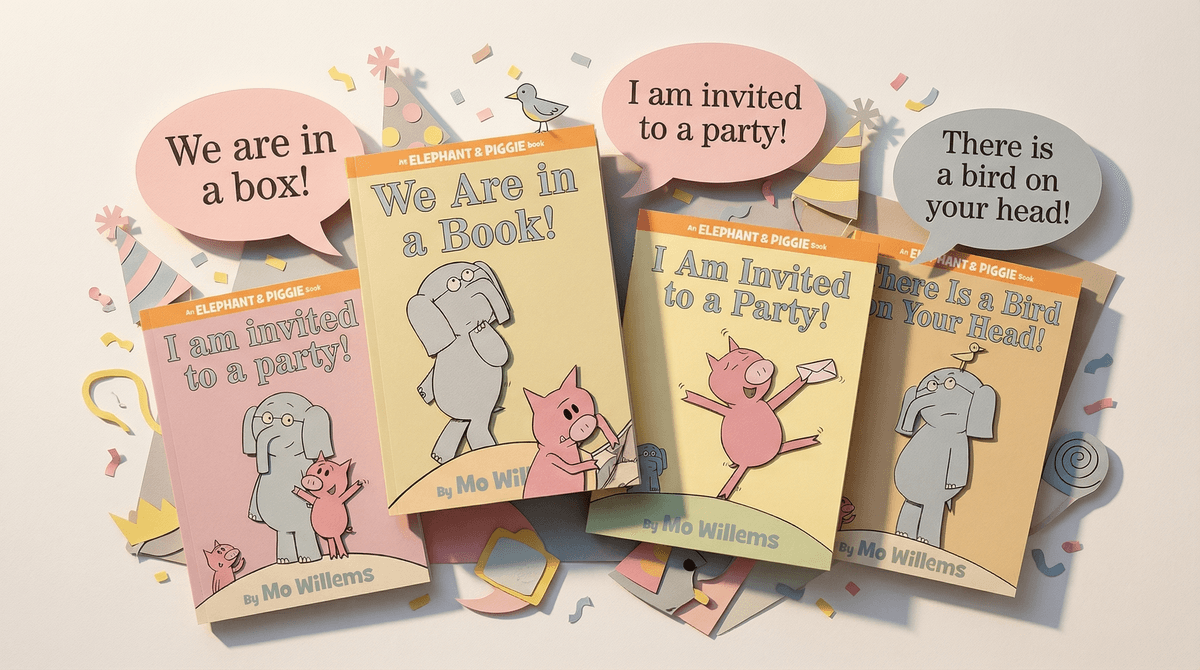
Elephant & Piggie is a series of 25 easy reader books by Mo Willems that follows the friendship between Gerald, a cautious elephant, and Piggie, an optimistic pig. Published between 2007 and 2016, these books have become a staple in early elementary classrooms and home libraries for a really good reason—they work.
Each book is short (usually 57 pages), uses limited vocabulary, and relies heavily on speech bubbles and expressive illustrations to tell stories about everyday friendship challenges. Titles like There Is a Bird on Your Head!, My Friend Is Sad, and I Am Invited to a Party! tackle situations that feel genuinely relatable to kids: misunderstandings, worry, excitement, disappointment.
The genius is in the simplicity. These aren't dumbed-down stories—they're emotionally sophisticated narratives told with intentionally accessible language.
They feel like success. For emerging readers (typically ages 5-8), Elephant & Piggie books hit that sweet spot where kids can actually read them independently without constant adult help. The large font, generous white space, and repetitive sentence structures build confidence fast. When a first grader finishes one of these books on their own, they genuinely feel like they've accomplished something—because they have.
The humor lands. Mo Willems understands comic timing. The page turns create natural pauses that make the jokes work. Kids get the humor, which makes them want to keep reading. And honestly? They're funny for adults too, which matters when you're reading the same book for the 47th time.
They teach emotional vocabulary without being preachy. Gerald worries. Piggie gets excited. They misunderstand each other. They work things out. The books model emotional regulation and communication skills through story, not through "here's how you should feel" lessons. Kids absorb these patterns naturally.
Teachers love them for reader's theater. The speech bubble format makes these books perfect for practicing reading with expression and doing partner reads. Many teachers use them for performance activities where kids act out the stories—building both reading fluency and confidence in front of peers.
Ages 4-5 (Pre-K to Kindergarten): These work beautifully as read-alouds. The pictures do a lot of the storytelling work, so even pre-readers can follow along and start recognizing sight words. The emotional content is sophisticated enough to spark good conversations about feelings and friendship.
Ages 6-7 (1st-2nd Grade): This is the prime independent reading zone for Elephant & Piggie. The Lexile levels range from about BR (Beginning Reader) to 200L, which aligns with typical first and second grade reading development. Kids in this age range can often read these books on their own and feel genuinely accomplished.
Ages 8+ (3rd Grade and up): Some kids might feel "too old" for these books, but they still work well for reluctant readers, English language learners, or kids who need confidence builders. The emotional sophistication means older kids can still engage with the themes, even if they've moved past the reading level.
These books punch above their reading level emotionally. Just because they use simple words doesn't mean they're simple stories. I'm a Frog! deals with imagination and identity. I Will Surprise My Friend! explores how good intentions can go wrong. These are real friendship dynamics.
They're genuinely rereadable. Unlike some early readers that feel like chores to revisit, Elephant & Piggie books hold up to multiple readings. The humor works even when you know what's coming, and kids often notice new details in the illustrations on subsequent reads.
The complete series creates a reading journey. While each book stands alone, there's something satisfying about collecting the whole series. Kids can see their own reading progress as they move through the books, and the consistent characters feel like old friends.
They pair well with other Mo Willems books. If your kid loves Elephant & Piggie, they might also enjoy Don't Let the Pigeon Drive the Bus! or Knuffle Bunny—Mo Willems has a whole universe of beloved characters.
Library accessibility is excellent. These books are in virtually every public library system, often available as physical books, ebooks, and audiobooks. Many libraries also have the complete boxed sets available for checkout.
In a digital media landscape where we're constantly evaluating screen time and app safety, it's worth remembering that some of the best "media" for kids is still the old-fashioned kind. Elephant & Piggie books do something that apps and games rarely accomplish: they build genuine reading independence while teaching emotional intelligence.
These books aren't going to solve all your parenting challenges, but they're one of those rare things that actually delivers on its promise. They help kids learn to read. They help kids understand feelings. They make kids laugh. And they do all of this without batteries, subscriptions, or in-app purchases.
If you're looking for a way to balance screen time with other activities, building a reading habit with books like these is one of the most evidence-based strategies out there. Research consistently shows that time spent reading independently correlates with better academic outcomes, stronger vocabulary, and improved focus—skills that translate across all areas of learning, digital and otherwise.
Start with one or two books from the library to see if they click with your kid. Are You Ready to Play Outside? and We Are in a Book! are great entry points.
Create a reading routine that competes with, rather than competes against, screen time. Maybe Elephant & Piggie before Bluey, or as part of bedtime instead of YouTube Kids.
Let kids reread favorites. Rereading is actually a valuable literacy skill—it builds fluency and comprehension. If your kid wants to read I Love My New Toy! twelve times in a row, that's a feature, not a bug.