

Look, Dr. Seuss books are childhood icons. They're colorful, rhyme-y, and basically guaranteed to be on every preschool and kindergarten reading list. But here's the thing: not all Seuss is created equal. Some books are genuinely great—teaching empathy, creativity, and resilience. Others? Well, let's just say they haven't aged particularly well.
This isn't about canceling the Cat in the Hat. It's about being intentional with what we're putting in front of our kids. Because when you actually read through the full Seuss catalog with 2025 eyes, you'll notice some books teach amazing values while others are... let's say "products of their time" (and not in a good way).
Dr. Seuss books are often the first "real" books kids read independently. They're formative. The messages stick. And while we can't protect our kids from every outdated idea they'll encounter, we can be thoughtful about which books earn prime real estate on the bedside table.
Plus, let's be honest: you're going to read these books approximately 847 times. You might as well choose ones that don't make you cringe or require a lengthy "well, actually..." conversation afterward.
The Lorax
Ages 4+
This one holds up. Environmental stewardship, speaking up for those who can't speak for themselves, the consequences of unchecked capitalism—it's all there. Yes, it's a bit preachy, but in the best way. Kids get it, and it sparks genuinely good conversations about taking care of our planet.
Oh, the Places You'll Go!
Ages 5+
The graduation gift classic for a reason. It's honest about life's ups and downs without being saccharine. Waiting places exist. Slumps happen. But you've got agency and potential. It's basically a resilience masterclass in rhyme form.
Horton Hears a Who!
Ages 4+
"A person's a person, no matter how small." This is empathy and inclusion gold. Horton literally risks everything to protect the Whos because he believes they matter, even when everyone else thinks he's ridiculous. It's about standing up for the vulnerable and believing people when they tell you about their experience. Chef's kiss.
The Sneetches
Ages 5+
A surprisingly sophisticated takedown of prejudice, conformity, and the ridiculousness of in-groups and out-groups. The star-belly/plain-belly dynamic is a perfect entry point for talking about discrimination with young kids. Plus, the Sylvester McMonkey McBean character is a great lesson about people who profit from division.
Green Eggs and Ham
Ages 3+
It's fine! Kids love it. The message is basically "try new things," which is good but not exactly groundbreaking. It's repetitive (by design), so it's great for early readers. Just don't expect any deep moral lessons here.
The Cat in the Hat
Ages 4+
Pure chaos energy. The Cat is basically that friend your kids have who's fun but also definitely going to get them in trouble. There's something to be said for controlled chaos and creativity, but the "clean up before Mom gets home" ending is doing some heavy lifting here. It's a classic for a reason, but the values are... debatable.
One Fish Two Fish Red Fish Blue Fish
Ages 3+
It's basically a counting/rhyming book with weird creatures. Totally fine for early literacy, but there's no real story or message. It's Seuss at his most random.
The Cat in the Hat Comes Back
Ages 4+
All the chaos of the original but somehow less charming? The Cat makes an even bigger mess and brings in helpers (Little Cats A through Z) who also make messes. The cleanup lesson is even more forced here.
If I Ran the Zoo
Out of print for good reason
This one's been pulled from publication due to racist imagery. It's not subtle. If you find it at a garage sale, maybe just... don't.
And to Think That I Saw It on Mulberry Street
Also out of print
Same deal—racist caricatures that were wrong in 1937 and are definitely wrong now. The Seuss estate made the right call pulling this one.
Scrambled Eggs Super!
Ages 4+
The protagonist goes around stealing rare bird eggs to make fancy scrambled eggs. In an era where we're trying to teach kids about conservation and respecting wildlife... yeah, this one's a tough sell. Plus it's just kind of boring?
The Beginner Books series (the ones Seuss edited but didn't write, like Go, Dog. Go!) are hit or miss. Some are great for early readers but have zero narrative or values. They're tools for literacy, not character building. And that's okay! Just know what you're getting.
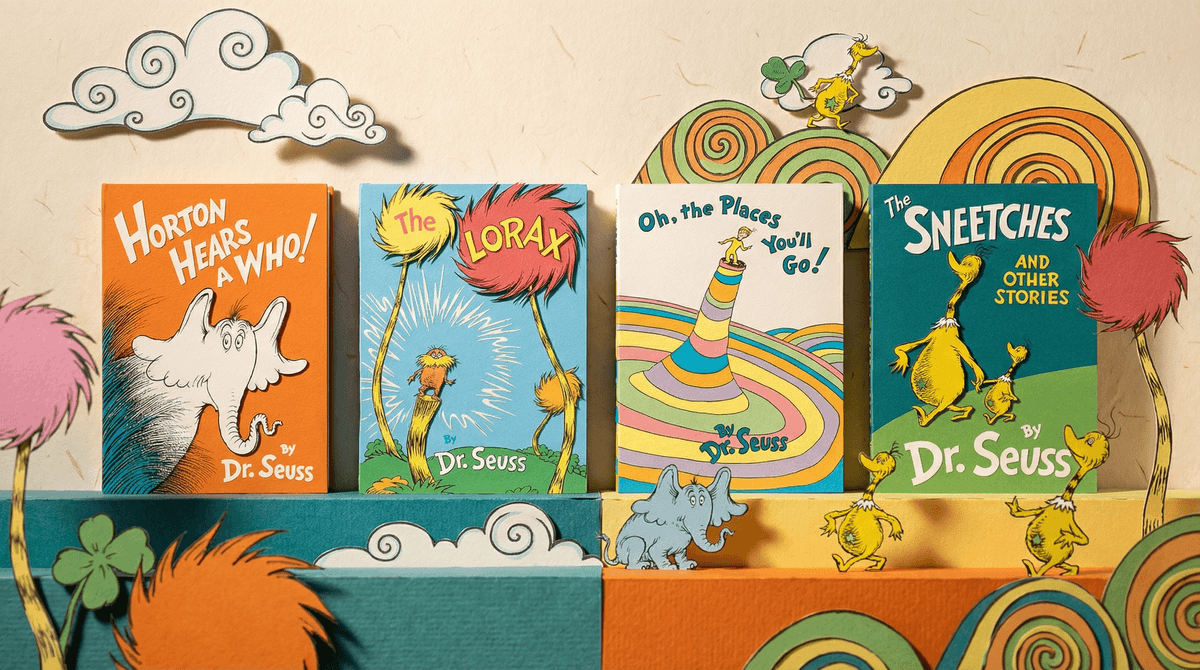
Keep on your shelf: The Lorax, Horton Hears a Who!, The Sneetches, Oh the Places You'll Go!
Fine for fun: Green Eggs and Ham, The Cat in the Hat, One Fish Two Fish
Maybe skip: The Cat in the Hat Comes Back, Scrambled Eggs Super!, and anything that's been pulled from publication
The good news? The best Seuss books are genuinely great. They teach empathy, environmental responsibility, and resilience. The less-good ones are just... fine. And the problematic ones are mostly out of print already.
You don't need to throw out your whole Seuss collection. Just be intentional about which ones you're reading on repeat. Because if you're going to read the same book 847 times, it might as well be one that's teaching your kid to be a good human.
Looking for more age-appropriate book recommendations? Check out our guide to building a values-aligned bookshelf or explore alternatives to Dr. Seuss that hit the same rhyme-y, fun vibe with more modern sensibilities.