

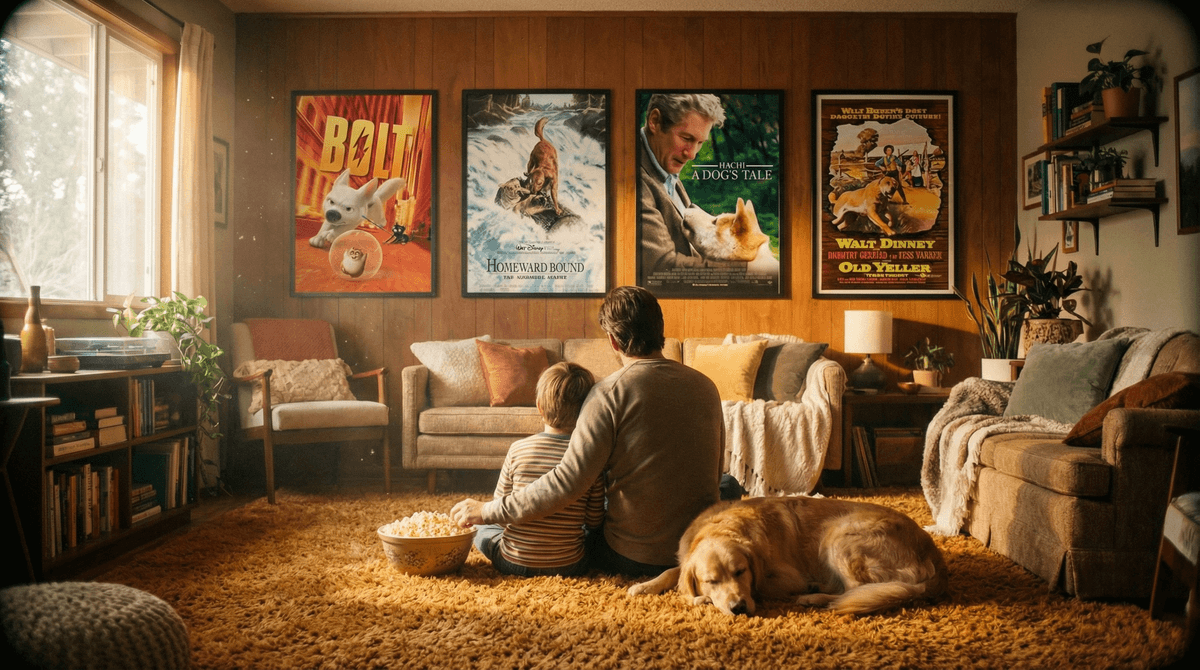
Look, we need to talk about dog movies. Because if you have a kid who loves animals, you've probably already been dragged into this emotional minefield. Dog movies are a specific genre of family entertainment that exists solely to teach children about love, loyalty, responsibility, and devastating loss—often in that exact order, within 90 minutes.
Here's the thing: dog movies are almost universally manipulative, and that's kind of the point. They're designed to make you feel things. Big things. The question isn't whether you'll cry (you will), but whether the emotional journey is worth it for your kid's age and sensitivity level.
Kids love dog movies for the same reason they beg for a puppy every single birthday: dogs represent unconditional love in its purest form. No judgment, no conditions, just pure devotion. In a world where kids are navigating social hierarchies, academic pressure, and the general chaos of growing up, a dog who just gets them is incredibly appealing.
Plus, let's be real—watching a dog movie is the socially acceptable way to practice big emotions. Kids can ugly-cry into a couch pillow while learning about grief, loyalty, and sacrifice without it feeling like a "lesson."
Ages 4-7: The Gentle Introduction
At this age, you want talking dogs, happy endings, and minimal peril. Think Bolt, Lady and the Tramp, or Clifford the Big Red Dog. These movies have conflict (Bolt thinks he has superpowers! Lady gets lost!), but they resolve in ways that don't require family therapy afterward.
101 Dalmatians is a solid pick here—Cruella is scary in a cartoon-villain way, but the puppies are never in real danger that feels traumatic. The 1996 live-action version amps up the slapstick if your kid prefers that.
Beethoven is pure chaos and slobber. A giant St. Bernard wreaks havoc on a suburban family. It's silly, it's messy, and nobody dies. Perfect for this age.
Ages 8-11: Entering the Feelings Zone
This is when you can introduce movies with real stakes. Homeward Bound: The Incredible Journey is the gold standard here. Two dogs and a cat travel across wilderness to find their family. There are scary moments (Shadow falls in a pit, and yes, you will sob), but it ends happily. The animals talk, which creates just enough distance from reality that most kids can handle the tension.
Because of Winn-Dixie is underrated and deals with themes of loneliness, community, and a kid processing her mom leaving. The dog is a scruffy catalyst for healing. It's sweet without being saccharine.
Marley & Me—okay, we need to talk about this one. This movie is 90% delightful chaos about the world's worst-behaved dog, and then the last 15 minutes will absolutely wreck you. If your kid is 10+ and has experienced loss before (a grandparent, a pet), this can be a beautiful shared emotional experience. If they haven't? Maybe wait. The ending is rough, and it's very realistic.
Ages 12+: The Full Emotional Spectrum
At this point, your kid can probably handle the heavy hitters. A Dog's Purpose follows a dog through multiple reincarnations, which means multiple deaths. It's existential and surprisingly philosophical. Some kids find it comforting (the dog always comes back!), others find it devastating (the dog keeps dying!). Know your kid.
Togo on Disney+ is based on the true story of a sled dog team in Alaska. It's beautifully made, genuinely thrilling, and yes, the dog eventually dies of old age. But it's framed as a life well-lived, which hits differently than sudden tragedy.
And then there's Old Yeller. Look, this is a cultural touchstone for a reason, but let's be honest: it's brutal. A boy bonds with a stray dog, the dog saves the family from various dangers, gets rabies, and has to be shot by the boy. It's about duty, sacrifice, and growing up in the harshest way possible. Is it a masterpiece of American cinema? Sure. Should you watch it with your sensitive 8-year-old? Absolutely not. Save this for high schoolers studying film or kids who specifically want to understand why their parents' generation is so emotionally damaged.
The "based on a true story" trap: Movies like Hachi: A Dog's Tale are even more devastating because they actually happened. Hachi waited at a train station for his dead owner for nine years. NINE YEARS. It's beautiful and soul-crushing. Don't start this at 8pm on a school night.
The talking dog debate: Some kids find talking dogs comforting (it's clearly fiction!), while others find silent, realistic dogs more emotionally engaging. The Call of the Wild (the 2020 version with Harrison Ford) splits the difference with a CGI dog that's expressive but doesn't talk.
Breed representation matters: Kids will 100% become obsessed with whatever breed they see. After watching Beethoven, every kid wants a St. Bernard. After Marley & Me, it's Labs. Use this as a teaching moment about breed needs, space, and why that husky they saw in Eight Below needs way more exercise than your apartment can provide.
Dog movies are actually fantastic for talking about hard topics:
- Responsibility: What does it really take to care for a dog? (Spoiler: more than they think)
- Grief: How do we handle losing something we love?
- Loyalty: What does unconditional love look like?
- Growing up: Why do we sometimes have to do hard things?
After watching something heavy like Where the Red Fern Grows (another absolutely devastating classic), don't just turn off the TV. Sit with the feelings. Ask what they noticed, what surprised them, what they're still thinking about.
Dog movies are emotional boot camp disguised as family entertainment. They're going to make you cry, probably multiple times, and your kid is going to ask for a puppy immediately afterward. That's the deal.
Start gentle, build up tolerance, and know your kid's sensitivity level. Some 7-year-olds can handle Homeward Bound, others need to stick with Clifford until they're 10. There's no shame in choosing the lighter option.
And when you do finally watch the sad one—because you will, they'll wear you down—make sure you have tissues, time to process afterward, and maybe some pictures of your own pets (past or present) to look at together. These movies hurt because they tap into something real: the profound love between humans and dogs, and the bittersweetness of that love being so much shorter than we want it to be.
Pro tip: If you need a palate cleanser after a particularly rough dog movie, Paddington (yes, it's a bear, not a dog) is perfect for restoring faith in wholesome family movies that won't destroy you emotionally.
Now go forth, stock up on tissues, and prepare to explain to your child why you're crying harder than they are. It's part of the experience.