

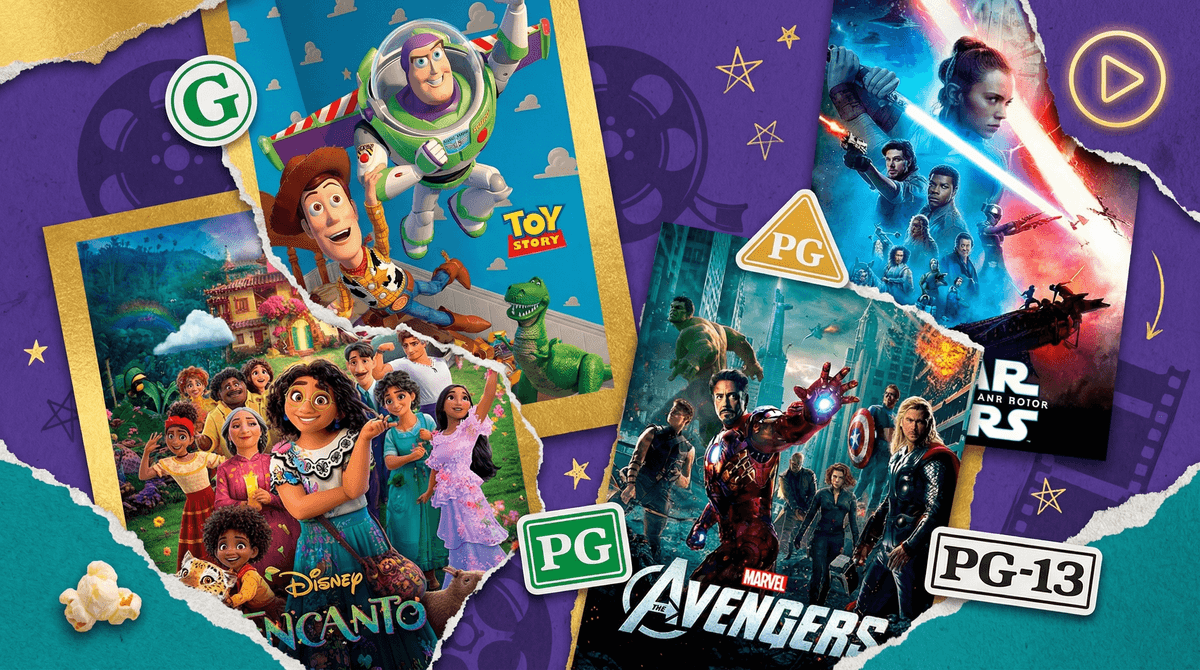
You know those letters before every movie—G, PG, PG-13? They're supposed to help us figure out what's appropriate for our kids. But if you've ever sat through a "family-friendly" PG movie that gave your six-year-old nightmares, you know the ratings system isn't exactly foolproof.
The MPAA (Motion Picture Association of America) assigns these ratings based on themes, language, violence, nudity, and drug use. But here's the thing: ratings are guidelines, not rules. And Disney movies, despite their wholesome reputation, span the entire spectrum from truly gentle G-rated films to intense PG-13 adventures that might be too much for younger viewers.
With 92% of families in our community using TV/streaming services, and about 50% watching Disney Plus content together as a family, chances are you're navigating these choices regularly. So let's break down what those ratings actually mean for your movie nights.
G-Rated Disney Films
G means "General Audiences"—nothing that would concern parents. Think Winnie the Pooh, Toy Story, and classic princess movies like Cinderella.
Ages 2-8: These are your safest bets. Minimal scary moments, no language concerns, simple conflict resolution.
But even here, know your kid. Bambi is G-rated and absolutely devastating. Dumbo has that pink elephant scene that's genuinely unsettling. G doesn't mean "won't make your kid cry."
PG-Rated Disney Films
PG means "Parental Guidance Suggested"—there might be some material parents wouldn't want younger children to see. This is where most modern Disney and Pixar movies land: Frozen, Moana, Encanto, The Lion King.
What triggers a PG rating:
- Mild action/peril (chase scenes, scary villains)
- Brief rude humor or language
- Thematic elements (death, family conflict)
- Slightly intense scenes
Ages 5-12: Most kids in this range can handle PG Disney content, but there's a huge difference between a five-year-old and a ten-year-old. Up opens with one of the most emotionally devastating sequences ever animated. Coco deals beautifully with death but might be intense for sensitive younger viewers.
The villain factor matters here. Maleficent in Sleeping Beauty? Terrifying. The hyenas in The Lion King? Genuinely menacing. Ursula in The Little Mermaid? Still giving millennials nightmares.
PG-13 Rated Disney Films
PG-13 means "Parents Strongly Cautioned"—some material may be inappropriate for children under 13. This is where you'll find most Marvel and Star Wars content, plus some Pixar films.
What triggers PG-13:
- Intense action/violence
- Frightening images
- Some suggestive content
- Brief strong language
- Thematic material
Ages 10+: The Avengers movies, Black Panther, Star Wars sequels—these have sustained action sequences, higher stakes, and more complex themes. Some kids are ready at 8 or 9, others not until 12 or 13.
Turning Red got PG-13 for thematic elements around puberty. Brave has genuinely scary bear attacks. Context matters as much as content.
Here's what the MPAA rating system doesn't account for:
Your kid's specific sensitivities. Some kids are fine with action but terrified of suspense. Others can handle scary visuals but fall apart at emotional scenes. You know your child better than any rating board.
Cultural and family values. The ratings focus heavily on violence, language, and sexual content, but don't capture everything that might matter to your family. Religious themes, representation, gender roles, consumerism—these don't factor into ratings but might be important to you.
Emotional maturity vs. age. A mature 8-year-old might handle Inside Out's complex emotional themes better than a sheltered 11-year-old.
The "Disney" label doesn't mean automatic approval. Disney owns Marvel, Lucasfilm, Pixar, and 20th Century Studios. Not everything with the Disney logo is princess-friendly.
Check Common Sense Media for specifics. They break down exactly what earns each rating—how many scary scenes, what kind of language, specific themes. Way more useful than just "PG."
Watch trailers together. If your kid seems anxious about the preview, the full movie probably isn't a good fit yet. Get strategies for previewing content with kids about strategies for previewing content.
The "together" vs. "independent" viewing matters. In our community data, 50% of families watch Disney Plus together, while 30% let kids watch independently. Co-viewing gives you the chance to pause, discuss, and provide context when scary or confusing moments happen.
Ages 3-5: Stick with classic G-rated films and gentler PG options. Moana and Finding Nemo work for most kids this age, but preview the scary parts (Te Kā, the barracuda attack).
Ages 6-8: Most PG Disney content is fair game, but watch together the first time. The Incredibles, Ratatouille, and Zootopia are generally great for this age.
Ages 9-12: You're probably ready to explore some PG-13 content, especially the lighter Marvel films like Spider-Man: Homecoming or Ant-Man. Still worth co-viewing to gauge reactions.
Ages 13+: Most Disney content is on the table, but you might still want to discuss themes beforehand. The Star Wars prequels have political complexity; Black Widow deals with human trafficking.
Ratings are a starting point, not a finish line. The letter before the movie matters less than knowing your kid, your family's values, and being willing to have conversations about what you watch together.
That 50% of families watching Disney Plus together? They're onto something. Co-viewing lets you be the real rating system—pausing to explain, fast-forwarding through the truly scary parts, and talking through the themes that matter to your family.
Create your family's movie guidelines. Maybe PG is fine but you preview villain scenes first. Maybe PG-13 is okay with a parent present. Talk with your kids about why ratings exist and what your family's specific boundaries are.
Use the Screenwise platform to see how other families in your community approach movie watching and get personalized recommendations based on your kids' ages and sensitivities.
Trust your gut. If something feels off about a movie choice, even if it's "age-appropriate," listen to that instinct. You're the expert on your kids, not the MPAA.