

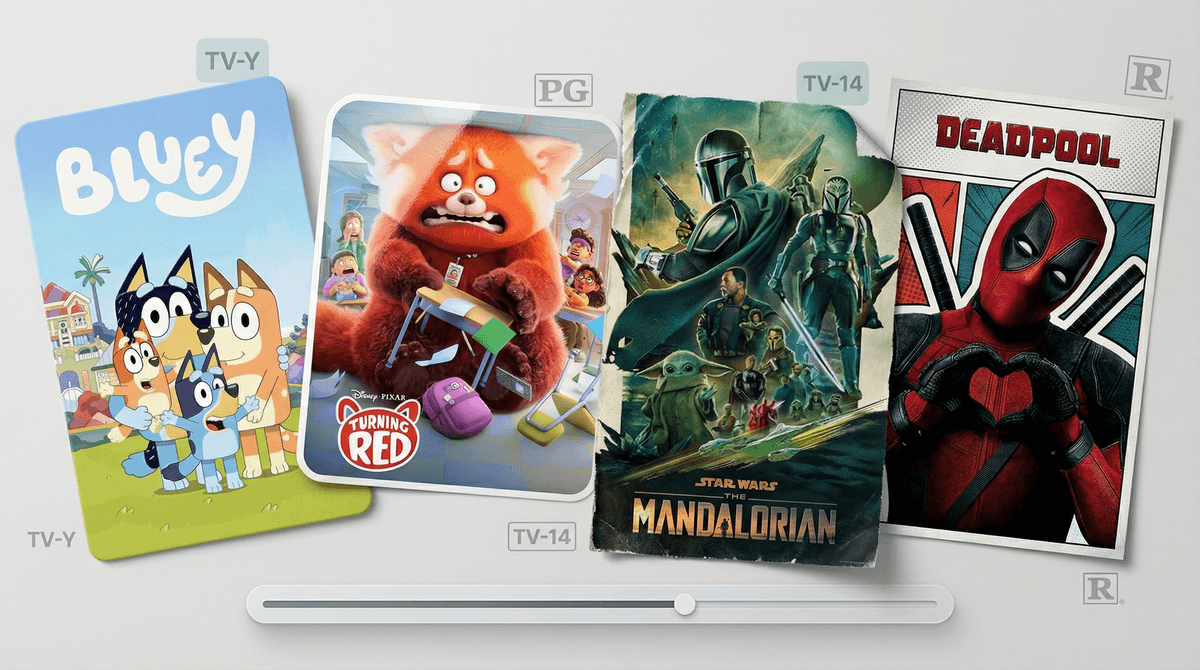
Look, Disney has spent a century building its reputation as the gold standard for family entertainment. But here's the thing: Disney content in 2026 is not what it was when you were a kid. Between Disney+, Pixar, Marvel, Star Wars, National Geographic, and now all the Fox content they acquired, "Disney" doesn't automatically mean "appropriate for my 6-year-old" anymore.
Disney+ uses a rating system that includes TV-Y, TV-Y7, TV-G, TV-PG, PG, PG-13, TV-14, and even TV-MA and R-rated content. Yes, you read that right—Disney+ has R-rated movies now. Deadpool is on Disney+. Let that sink in.
Screenwise Parents
See allThe platform does offer parental controls where you can set content ratings by profile, but you need to actually set them up. The default settings don't restrict anything.
Here's where it gets tricky: Disney's brand has expanded so much that parents often assume everything under the Disney umbrella is automatically kid-friendly. But The Mandalorian has some genuinely intense violence. Turning Red is about puberty and includes a scene where the main character draws her crush as a merman (it's actually great, but not necessarily what you want your 5-year-old watching without context). Bluey? That one actually lives up to the wholesome hype.
The ratings themselves can be inconsistent. The MPAA and TV ratings systems were designed decades ago and don't always capture what modern parents care about. A PG movie might have zero violence but include casual meanness that bothers you more. A TV-Y7 show might be technically "fine" but have humor that goes over your kid's head or models behavior you're not thrilled about.
And then there's the maturity vs. age question. Your 8-year-old might be ready for Encanto's themes about family trauma, while your 10-year-old might still find parts of The Lion King too intense. Ratings can't account for your specific kid.
Disney+ has four content rating levels you can set per profile:
- Little Kids (TV-Y and G) - Truly young kid content
- Older Kids (up to TV-PG and PG) - Elementary/middle school range
- Teens (up to TV-14 and PG-13) - High school content
- Adults (all content including TV-MA and R) - Everything
The critical thing: You have to actively set these. When you create a kid's profile, it doesn't automatically restrict content unless you configure it. Go to your account settings, select the profile, and choose the appropriate content rating. You can also require a PIN to access adult profiles.
Here's what I wish more parents knew: preview anything you're unsure about. The 2-minute rule works well here—watch the first few minutes of a show or movie before letting your kid dive in. You'll get a sense of the tone, humor, and whether it matches your family's values.
Ages 2-5: Stick with TV-Y and G-rated content. Think Bluey, Mickey Mouse Clubhouse, classic Disney movies like Moana. Even here, some kids find Ursula or the Coachman in Pinocchio scary. You know your kid.
Ages 6-8: TV-Y7 and PG content opens up. The Mandalorian is technically TV-PG but has more action violence than many parents expect. Encanto and Coco are beautiful but deal with heavier themes. Many kids this age are ready for them, some aren't.
Ages 9-12: PG-13 and TV-14 content becomes relevant. This is where Marvel movies land—lots of action, some language, occasional scary moments. Spider-Man: Into the Spider-Verse is fantastic but intense. The middle-grade years are also when peer pressure kicks in hard. Your kid's friends might be watching things you're not comfortable with yet.
Ages 13+: Teens can handle more mature content, but "can handle" doesn't mean "should consume everything." Even at this age, consider watching together for the first time, especially with content that deals with heavy topics. The Hunger Games is PG-13 but it's about kids killing kids. Context matters.
Ratings tell you what's in the content. They don't tell you if it's good or if it aligns with your values. Here's what to actually think about:
Representation and values: Does the content show diverse families? How are problems solved—through violence, through talking, through magic? What messages about gender, friendship, and conflict does it send?
Behavioral modeling: Young kids especially will mimic what they see. If characters are sassy or mean for laughs, expect that at home. Bluey is beloved partly because the characters model actually healthy family dynamics.
Emotional intensity: Some kids can handle scary visuals but not emotional scenes. Others are fine with sad stories but terrified of villains. Inside Out made some kids cry not because it's scary, but because it's emotionally complex.
Your family's specific concerns: Maybe you're fine with fantasy violence but not realistic violence. Maybe you don't care about mild language but you do care about how adults are portrayed. There's no universal "right" answer here.
Disney content isn't one-size-fits-all anymore, and that's actually okay. The variety means there's something for every age and stage, but it also means you need to be more intentional than just hitting play on anything with the Disney logo.
Set up those parental controls. Seriously, do it today. It takes five minutes and prevents the awkward moment when your 7-year-old stumbles onto Deadpool.
Co-view when you can, especially for new content or when moving up to a new rating level. You'll catch things the rating didn't mention, and you'll be there to answer questions or pause for discussion.
Trust your gut over the rating. If something feels off for your kid, it probably is—even if it's "technically" age-appropriate. And if your kid is ready for something slightly above their age range and you've previewed it, that's fine too.
The goal isn't perfection. It's being intentional about what your kids watch and why, which is exactly what you're doing by reading this. That's the whole point of Screenwise—helping you make informed decisions without the guilt trip or the overwhelm.
Want to explore specific Disney+ shows or movies? Check out our Disney+ content guide or Get guidance on a specific title anytime.