

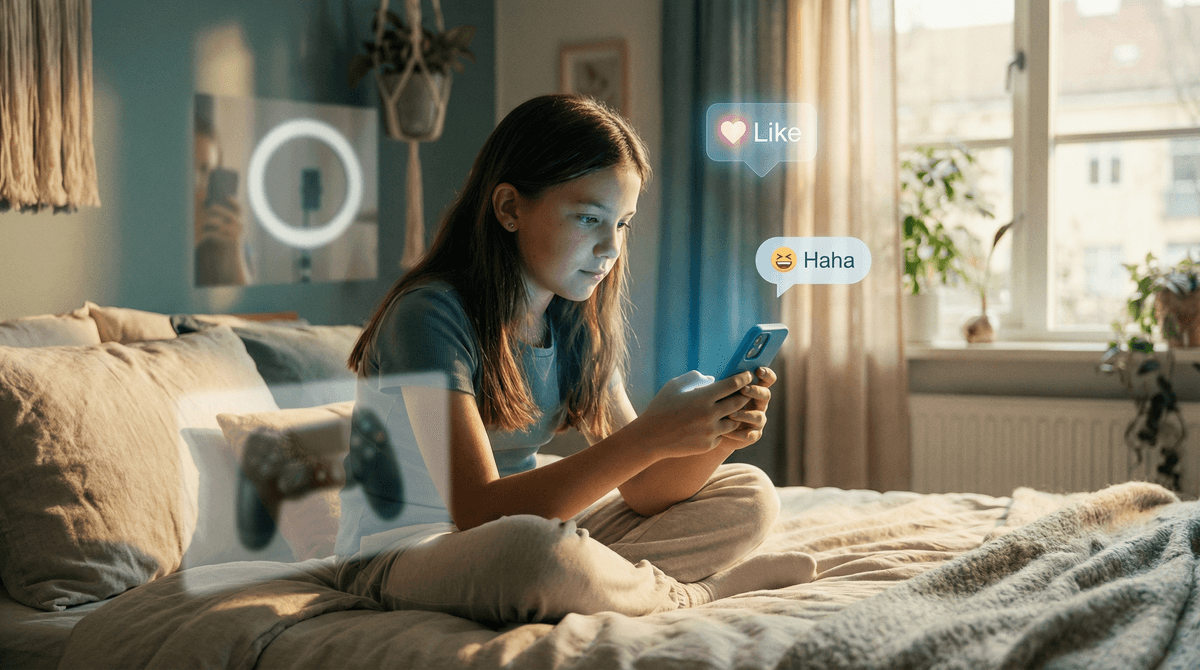
When Your Tween Says They're 'Parasocial Besties' with an Influencer
TL;DR: Your 10-12 year old knows more about their favorite YouTuber's breakfast routine than their own cousin's life, and that's... actually pretty normal. Here's how to navigate the intense, one-sided relationships tweens form with online celebrities without dismissing something that feels very real to them.
Your kid can tell you the exact upload schedule for MrBeast, knows every inside joke from the Sturniolo Triplets, and genuinely believes they'd be best friends with Charli D'Amelio if they ever met. They're not delusional—they're experiencing what psychologists call a "parasocial relationship," and it's basically the defining feature of tween fandom in 2026.
Here's what's tricky: these relationships feel mutual to kids. The influencer talks directly to the camera, responds to comments (sometimes), shares "vulnerable" moments, and creates an illusion of friendship that's incredibly compelling. Your tween isn't being naive—they're responding exactly as these platforms are designed to make them respond.
Remember when we had posters of *NSYNC or the Spice Girls on our walls? This is that, but on steroids and with a two-way communication illusion.
The old model: You watched celebrities on TV or in movies. You knew you'd never meet them. The boundary was obvious.
The new model: Influencers share their "real" lives daily, respond to comments, do live streams where they take questions, and create content that feels like a FaceTime call with a friend. The boundary is deliberately blurred because engagement = money.
Your tween watching Preston play Minecraft for three hours isn't just passive viewing—they're in the chat, their comment might get read, they're part of a community. It feels participatory in a way that watching a TV show never did.
Before we get into the concerns, let's acknowledge: parasocial relationships aren't inherently harmful. In fact, they can be:
- A safe way to explore identity: Tweens are figuring out who they are, and following creators who share their interests (gaming, art, sports, comedy) helps them explore different aspects of themselves.
- Community building: The comment sections and fan communities around creators can provide genuine connection with other kids who share their interests.
- Inspiration: Many kids are inspired to create their own content, learn new skills, or pursue interests because of creators they follow.
The problems emerge when:
- The relationship feels more real than actual friendships: If your kid knows more about their favorite influencer's day than their best friend's, that's a red flag.
- They're spending money to feel "closer": Buying merch, donating during streams, or purchasing personalized shoutouts to get noticed.
- They're defending problematic behavior: When creators mess up (and they do), kids who feel personally connected may defend the indefensible.
- Their self-worth becomes tied to the creator's validation: Desperately trying to get noticed in comments or streams, feeling genuinely hurt when ignored.
Gaming creators: Aphmau, DanTDM, Jelly, SSundee—these creators play Roblox, Minecraft, and other popular games while maintaining a mostly kid-friendly persona.
Lifestyle/comedy: The Sturniolo Triplets, Brent Rivera, and various TikTokers who've expanded to YouTube. These feel like "hanging out with cool older siblings."
Challenge/spectacle content: MrBeast is the king here—massive production values, huge giveaways, and content that feels like an event.
Special interest creators: Whatever your kid is into (art, sports, animals, science), there's a creator making daily content about it. These can actually be the healthiest parasocial relationships because they're interest-driven rather than personality-driven.
Don't mock or dismiss it. "You know they don't actually know you exist, right?" is both obvious and hurtful. They know. It still feels real to them.
Instead, try curiosity: "What do you like about their content?" "How do you think they decide what to post?" "Do you think their life is really like that, or is it more like a TV show?"
Introduce the concept of parasocial relationships gently: "You know how sometimes you can feel really close to a character in a book, even though they're not real? This is kind of similar—these creators are real people, but the relationship is one-directional. They're performing a version of themselves, and we're the audience."
Use real examples: When influencers have public controversies or get "canceled," that's a teaching moment. "Remember when [insert creator] said that thing? How did that make you feel? Do you think you knew them as well as you thought?"
Financial manipulation: If your kid is asking for money to donate during live streams, buy merch they don't actually want (just to "support" the creator), or purchase personalized shoutouts, that's a problem. Learn more about how these platforms monetize parasocial relationships .
.
Defending the indefensible: When kids feel personally connected to a creator, they may defend problematic behavior because criticism of the creator feels like criticism of themselves.
Neglecting real relationships: If YouTube time is replacing friend time, or if they're more interested in what their favorite creator did today than what happened at school, that's worth addressing.
Emotional volatility around the creator: If a creator not posting, changing their content, or—worst case—being exposed for bad behavior causes genuine emotional distress, the relationship has become too important.
Time limits aren't just about screen time: It's about making sure parasocial relationships don't crowd out real ones. "You can watch Preston for an hour, but then I want to hear about your day" is reasonable.
No spending money to get noticed: Donations during streams, paid shoutouts, excessive merch purchases—these are all designed to exploit the parasocial relationship. Hard no.
Diversify their feed: If they're only watching one or two creators obsessively, encourage branching out. Here are some great educational YouTube channels for tweens.
Reality checks: Regularly discuss the business side of content creation. "How do you think they make money?" "Why do they ask people to like and subscribe?" Understanding the economics helps demystify the relationship.
Model healthy media consumption: If you're doom-scrolling Instagram or obsessively checking Twitter, you're teaching them that parasocial relationships with celebrities/influencers are normal adult behavior too.
Your tween's intense connection to online creators isn't weird or wrong—it's a completely normal part of growing up in 2026. The key is helping them understand what these relationships actually are: one-sided, curated, and ultimately commercial.
The goal isn't to eliminate parasocial relationships (good luck with that), but to help your kid develop media literacy so they can enjoy content without confusing it with genuine friendship. They can love a creator's content, be inspired by them, and participate in fan communities—while still understanding that they don't actually know this person, and this person definitely doesn't know them.
Your job: Keep the conversation open, ask questions, and help them build the critical thinking skills to navigate a media landscape designed to blur the lines between entertainment and relationship. And maybe, just maybe, use this as an opportunity to talk about your own childhood obsessions—because let's be real, we all had them. They just didn't have comment sections.
- Have the conversation: Pick a moment when you're watching content together and ask, "Do you ever feel like you know this person?" Start from curiosity, not concern.
- Set financial boundaries now: Before they ask to spend money, establish rules about donations, merch, and paid interactions.
- Check in on real friendships: Make sure online content isn't replacing actual social connection.
- If you're worried about a specific creator: Ask our chatbot about any YouTuber or influencer to get the parent-focused rundown on their content and any controversies.