

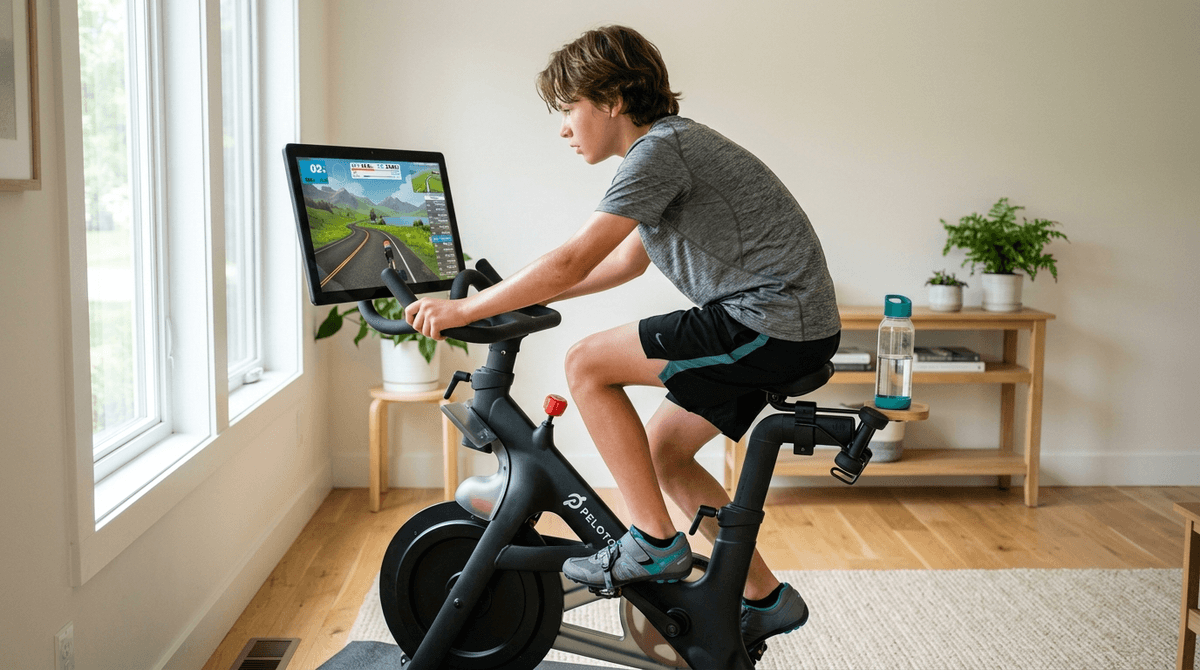
Setting up a cycling video game in your living room might help your sedentary teen lose body fat, but it won’t automatically turn them into a fit athlete unless they actually stick to the routine.
Giving sedentary teens access to cycling exergames for six months reduces body fat and BMI, but fails to significantly improve their cardiovascular fitness or aerobic capacity. The equipment works for weight management only if the child maintains a level of consistency that most struggle to achieve once the novelty wears off.
Parents often buy expensive "gamified" fitness equipment—like VR headsets, smart bikes, or rowing simulators—hoping it will be the silver bullet for a child who avoids traditional sports. This study confirms that while these tools are a viable way to improve body composition (the ratio of fat to muscle), they are not a shortcut to heart health.
If your goal is to help a child reach a healthier weight, exergaming is a functional "low-friction" entry point. However, if the goal is to build the stamina required for competitive sports or long-term heart health, simply having the bike in the house isn't enough to move the needle.
Researchers were testing the "stealth health" hypothesis: the idea that if you make exercise look like a video game, sedentary teens will accidentally get fit. With adolescent physical activity levels dropping globally, clinicians are looking for ways to meet kids where they are—which is usually on a screen.
The study aimed to see if the "fun factor" of gaming could overcome the high dropout rates usually seen in adolescent exercise programs. They focused specifically on healthy but inactive Norwegian teens to see if 24 weeks of home access could provide a measurable health "rescue."
The teens who had the gaming platform at home saw significant changes in their body composition, yet their actual fitness levels stayed flat. The "fun" of the game didn't translate into the high-intensity effort required to change cardiovascular markers.
- Body fat dropped: Participants in the gaming group lost about 8 pounds (3.6 kg) of fat mass on average compared to the control group.
- BMI improved: There was a measurable reduction in BMI (1.3 kg/m²) for the kids with the bikes.
- Fitness stalled: There was zero significant improvement in peak oxygen uptake (VO2), which is the standard measure for how well the heart and lungs deliver oxygen during exercise.
- The "Novelty Gap": Adherence was the primary failure point; kids used the bikes far less often than researchers recommended, suggesting the game wasn't addictive enough to sustain a long-term habit.
There is a massive difference between "moving more" and "training." The results suggest an "intensity gap": teens were willing to pedal enough to burn some extra calories (leading to the fat loss), but they weren't willing to push themselves into the "huff and puff" zone required to strengthen the heart.
The researchers essentially found that without a coach, a teammate, or a mandatory schedule, teens treat exergaming like any other toy. Once they’ve seen all the levels and unlocked the initial rewards, the motivation to engage in strenuous physical discomfort vanishes. For a parent, this means the "gaming" part of the bike is just a lure to get them started, not a motor to keep them going.
The study's conclusions are limited by a very small sample size—only 29 participants finished the trial. This makes the results "statistically fragile," meaning a few kids having a bad month could skew the entire data set.
Additionally, the group was almost entirely male and based in Norway (a "WEIRD" population: Western, Educated, Industrialized, Rich, and Democratic). We don’t know if these results would hold for girls, who often have different motivations for exercise, or for families in different socio-economic brackets where home space for a cycling rig might be at a premium.
- If your child avoids movement because of body image concerns or weight struggles, consider an exergame as a legitimate tool for weight management, as the study showed statistically significant fat loss even with low adherence.
- If you are looking to build athletic stamina for a specific sport, don't rely on home gaming bikes; the study shows they don't provide the cardiovascular intensity needed to improve peak fitness.
- If you decide to buy a gamified fitness platform, treat it like a "practice" rather than a "toy" by setting a mandatory weekly schedule from day one to counteract the inevitable drop in interest after the first month.
- If your teen is already fit but just wants to play more games, don't expect the bike to add much value; the benefits were most pronounced for those who were previously sedentary.
Gamified exercise is a functional tool for weight management, but it won't turn a sedentary teen into an athlete by osmosis. You can buy the bike, but you still have to provide the structure to ensure they actually ride it.
Berg J, Wang AI, Madssen E et al. (2026). Effects of providing access to a cycling exergaming platform on cardiorespiratory fitness and cardiometabolic health in adolescents: a randomised, controlled trial. Scientific reports. doi:10.1038/s41598-026-48327-3 — https://pubmed.ncbi.nlm.nih.gov/42103774/