

TL;DR
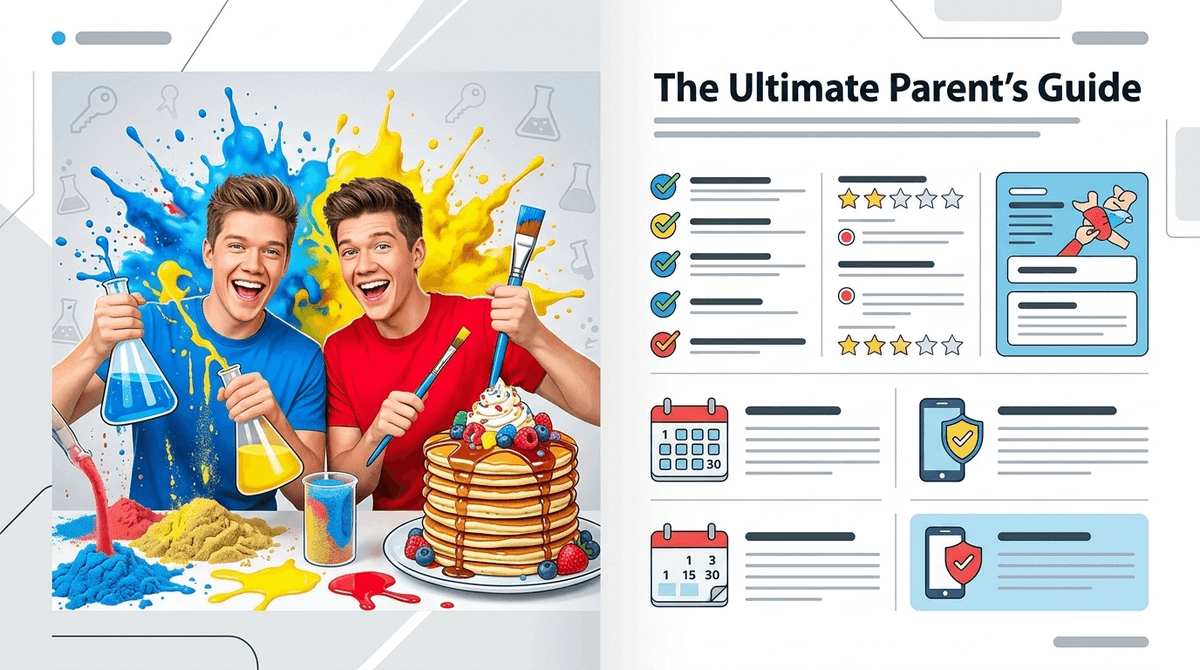
If your living room currently sounds like a high-speed blender full of neon paint and enthusiasm, you’ve likely encountered the "Keyper Squad." Collins Key and his brother Devan are the reigning kings of high-energy, DIY-focused YouTube entertainment.
The Verdict: It’s generally "clean" (no swearing, no suggestive content), but it is extremely loud, fast-paced, and designed to keep kids in a state of constant dopamine-induced excitement. It’s great for sparking a sudden interest in Pancake Art or DIY crafts, but it can be a sensory nightmare for parents.
Quick Links:
Collins Key started his career as a finalist on America's Got Talent doing close-up magic. However, he quickly realized that the real magic (and money) on YouTube wasn't in card tricks—it was in extreme DIY, food challenges, and "life hacks."
Alongside his brother, Devan Key, Collins produces massive-budget videos where they create giant versions of candy, participate in "last to leave" challenges, or try to solve "mystery wheel" puzzles. Think of it as a mix between a Saturday morning cartoon, a science experiment gone wrong, and a very expensive craft store.
They call their fans the "Keyper Squad," and they have built an empire of over 24 million subscribers by mastering the art of the 10-minute "retention edit"—where something happens every three seconds to ensure a child never looks away from the screen.
It’s easy to dismiss this as "brain rot," but there’s a reason Collins Key is more popular with the 7-to-12-year-old set than almost any traditional TV show.
- The Sibling Dynamic: Collins and Devan have a genuine, playful, and non-toxic sibling rivalry. They aren't mean-spirited; they’re just goofy. For kids, this feels like watching two older, cooler brothers hang out.
- Visual Spectacle: They use bright colors, "satisfying" textures (lots of slime, glue, and kinetic sand), and high-speed editing. It’s visually stimulating in the same way Roblox or Minecraft can be.
- The "I Could Do That" Factor: Even though their budget is huge, the core of the videos is usually something a kid can relate to—making art, playing with food, or building something. It feels accessible, even when they’re using 500 gallons of glue.
Parents often use the term "brain rot" for content that feels mindless. While Collins Key isn't teaching the Pythagorean theorem, it’s also not "garbage" in the way some unboxing or AI-generated channels are.
It’s pure entertainment. It’s the digital equivalent of a sugar rush. It doesn't necessarily make kids "dumber," but the sheer speed of the content can make it harder for them to transition back to "boring" real-life activities like reading a book or doing homework.
From a safety standpoint, Collins Key is one of the safer corners of the internet. They don't use profanity, they don't discuss adult themes, and they generally promote a positive "work hard, be creative" message.
However, there are a few things to keep on your radar:
The "Don't Try This at Home" Dilemma
Many of their videos involve "hacks" or experiments. While they usually include disclaimers, kids are... well, kids. If they see Collins mixing household chemicals or microwaving things to see what happens, they might try to replicate it.
- Actionable Step: If your kid is a fan, make it a rule that any "Key-inspired" experiments happen in the kitchen with a parent present.
Clickbait and Commercialism
Like MrBeast, Collins Key uses "clickbait" thumbnails—bright, exaggerated images that don't always accurately represent the video. They also heavily promote their merch and brand partnerships. It’s a 24/7 commercial for the "Keyper" brand.
Sensory Overload
If your child has sensory processing issues or struggles with overstimulation, Collins Key might be a "trigger" for meltdowns. The constant yelling, sound effects, and rapid cuts are designed to keep the nervous system "up." Transitioning away from this content is often where the trouble starts.
Check out our guide on managing screen time transitions without the drama
Ages 5-7 (The "Little Keypers")
At this age, kids might not distinguish between a "challenge" and reality. They are most likely to try to pour a gallon of milk on the floor because they saw it on the screen.
- Recommendation: Watch with them or stick to YouTube Kids where you can whitelist specific channels.
Ages 8-12 (The Sweet Spot)
This is the core demographic. They get the jokes, they understand the "over-the-top" nature of the videos, and they might actually be inspired to try some legitimate DIY projects.
- Recommendation: Use it as a springboard for creativity. If they watch a pancake art video, make Sunday morning a pancake art day.
Ages 13+
Most teens will start to find the "Keyper" energy a bit "cringe" and move toward more sophisticated creators or platforms like TikTok or Instagram. If they're still watching, it's usually for the nostalgia or the "satisfying" nature of the DIYs.
If you’re worried your kid is spending too much time in the "Keyper" rabbit hole, don't just ban it. That usually backfires. Instead, try these conversation starters:
- "I noticed they edit their videos really fast. Do you feel 'hyper' after watching them, or just relaxed?"
- "How much of that 'mystery wheel' do you think is real, and how much is scripted like a TV show?"
- "That giant gummy bear was cool, but do you think they actually ate it, or was that just for the video?"
These questions help build media literacy—the ability to see the "man behind the curtain" in digital content.
If you need the volume turned down but want to keep the creative spirit alive, check out these creators:
- Mark Rober: Former NASA engineer who does incredible builds and experiments with a much more educational (and quieter) tone.
- Art for Kids Hub: A much calmer way to engage with art and drawing.
- Dude Perfect: High energy, but focused on sports and "trick shots" rather than messy DIY.
- 5-Minute Crafts: Short, visual DIYs that are less about the personalities and more about the projects.
Learn more about the best educational YouTube channels for every age
Collins Key is the digital equivalent of a Saturday morning sugar-cereal commercial. It’s loud, it’s colorful, and it’s mostly harmless, provided it’s consumed in moderation. It isn't teaching your kids bad values, but it is training their brains to expect constant, high-octane stimulation.
If your kid is a "Keyper," don't sweat it. Just maybe invest in some good headphones for them—or a very large tarp for the kitchen floor.
Next Steps:
- Check your Screenwise dashboard to see how much time your child is spending on YouTube vs. other apps.
- Set a "Volume Limit" if the yelling is getting to you.
- Encourage an "Off-Screen Challenge" based on a video they just watched to turn passive consumption into active creation.
Take the Screenwise survey to see how your family's YouTube habits compare to your community