

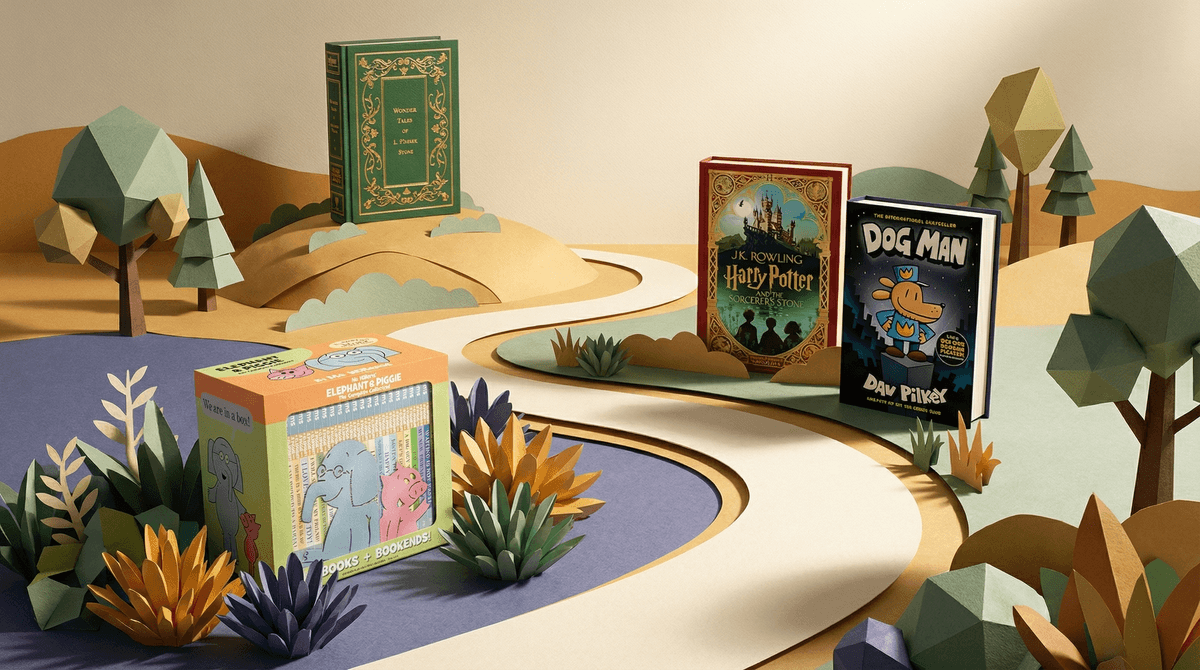
Look, choosing books for kids should be simple, right? Find something age-appropriate, hand it over, watch them become lifelong readers. Except... what does "age-appropriate" even mean? The back cover says "Ages 8-12" but your 9-year-old is reading at a 6th grade level and still gets nightmares from mildly scary content. Or your 7-year-old blazed through Harry Potter but refuses to touch anything without pictures. And don't even get me started on those "reading level" systems that seem designed to confuse rather than clarify.
Here's the thing: choosing books that actually work for your kid is about way more than matching a number to an age. It's about understanding the difference between reading ability and emotional readiness, knowing when to let them stretch versus when to let them coast, and figuring out how to honor their interests even when those interests are... let's say niche.
This guide will help you navigate the whole mess—from decoding those cryptic reading level systems to handling content concerns to finding that sweet spot where your kid is challenged but not defeated.
We talk a lot about screen time and app safety around here, but books? Books get a free pass. And mostly, that's fair—reading is objectively good for kids. But here's what happens when we get book selection wrong:
Kids who are constantly given books that are too hard start to think they're bad readers. They associate reading with frustration and failure. Not great.
Kids who only get books that are too easy get bored and stop reading altogether. They never build stamina or learn to push through challenging material.
Kids who are ready for complex plots but not mature content end up either reading baby books or stumbling into stuff they're not ready for. There's a reason "age-appropriate" is such a moving target.
And unlike a show or game where you can preview everything in 20 minutes, books are a bigger time investment. Nobody wants to realize on page 200 that this book has content you'd rather your 10-year-old not encounter yet.
Let's decode the alphabet soup of reading level systems:
Lexile Levels are the most common—they measure text complexity based on word frequency and sentence length. You'll see numbers like "580L" or "780L." Generally:
- 200L-400L: Early elementary (grades 1-2)
- 400L-650L: Elementary (grades 2-4)
- 650L-850L: Upper elementary (grades 4-6)
- 850L-1050L: Middle school (grades 6-8)
Guided Reading Levels use letters (A-Z) and are what teachers often use in classrooms. Level M is roughly 3rd grade, Level S is roughly 5th grade, Level W is roughly 8th grade.
AR (Accelerated Reader) Levels are decimals like "3.5" (3rd grade, 5th month) that schools use for their reading programs.
Here's what you need to know: These systems measure reading difficulty, not content appropriateness. A book can have a 4th grade reading level but deal with themes better suited for 7th graders. They also don't account for interest—a passionate 8-year-old can absolutely handle a higher reading level if they're motivated by the topic.
This is the big one. Your kid's reading ability and their emotional/interest maturity are often not aligned, and that's completely normal.
The strong reader who's still emotionally young: Maybe your 3rd grader reads at a 6th grade level but still loves silly, light content. Don't push them into "mature" books just because they can technically read them. Books like Diary of a Wimpy Kid or Dog Man are perfect—easy reading level, age-appropriate content, genuinely funny.
The struggling reader who's emotionally mature: Your 6th grader reads at a 4th grade level but wants stories about kids their age dealing with real stuff. Look for "hi-lo" books (high interest, low reading level) like the I Survived series or graphic novels like Smile by Raina Telgemeier.
The kid who only wants one thing: They've read every Wings of Fire book seventeen times and refuse to branch out. This is actually fine! Rereading builds fluency and confidence. But you can try to expand sideways—if they love dragons, try How to Train Your Dragon or Eragon.
Unlike movies with their neat MPAA ratings, books are basically the Wild West. A book marketed to middle schoolers might have language, violence, or mature themes you're not cool with. Here's how to navigate:
Use Common Sense Media. Seriously, bookmark their book section . They break down content concerns by category (violence, language, drinking/drugs, sexy stuff) and give both age ratings and quality ratings.
Read reviews from parents, not just critics. Amazon and Goodreads reviews will often flag content concerns that official reviews skip over.
Preview when you're unsure. For middle grade and up, skim the first few chapters and flip through randomly. You'll get a sense of tone and content pretty quickly.
Have the conversation. If your kid wants to read something you think might be borderline, talk about it. "This book deals with some heavy stuff—let's talk about it as you read" is way better than a hard no.
Some specific series that catch parents off guard:
- Percy Jackson: Generally great for ages 9-13, but Greek mythology includes some wild stuff (affairs, violence, etc.). The books handle it well, but know it's there.
- Harry Potter: Gets progressively darker. Books 1-3 are fine for most 8-year-olds; books 4-7 are legitimately intense and better for 10+.
- The Hunger Games: Kids killing kids is the premise. It's well-written and thoughtful, but it's heavy. Most kids aren't ready before 12-13.
The research is pretty clear: kids benefit most from reading books that are slightly above their independent reading level some of the time, but they also need easy, confidence-building reading regularly.
Think of it like this:
- Independent reading level: Books they can read alone with 95%+ comprehension. This is for pleasure reading, building stamina, and confidence.
- Instructional level: Books that are challenging but manageable with some support. This is where growth happens.
- Frustration level: Too hard—they're spending more time decoding than comprehending. Avoid this for independent reading.
A good mix is 70% independent level, 30% instructional level. Let them coast through Wimpy Kid during the week, tackle Wonder together on weekends.
The five-finger rule (for younger kids): Open to a random page. Have them read it aloud. Hold up one finger for each word they don't know. 0-1 fingers = too easy, 2-3 fingers = just right, 4-5 fingers = too hard. It's not scientific, but it's a decent gut check.
Let them quit books. Seriously. If they're not into it after 30-50 pages, move on. The goal is to build a love of reading, not teach them that reading is suffering through boring things.
Graphic novels count. Amulet, Hilo, The Baby-Sitters Club graphic novels—these are real books with real storytelling. They're especially great for reluctant readers or kids who are very visual.
Series are your friend. Once a kid connects with characters, they'll power through books they might otherwise find too challenging. Magic Tree House for younger kids, Percy Jackson for middle grade, Keeper of the Lost Cities for upper middle grade.
Audiobooks are reading. If your kid loves stories but struggles with decoding, audiobooks let them access grade-level content while building vocabulary and comprehension. Bonus: great for long car rides.
Follow their obsessions. Kid obsessed with space? Get them every space book in the library. Obsessed with horses? Cool, here are 47 horse books. They'll read above their level if they care enough about the topic.
Ages 5-7 (Early Readers):
- Elephant and Piggie (Mo Willems)
- Frog and Toad (Arnold Lobel)
- Mercy Watson (Kate DiCamillo)
Ages 7-9 (Chapter Books):
Ages 9-12 (Middle Grade):
Ages 12+ (Young Adult):
Choosing books for kids isn't about finding the "right" reading level and calling it done. It's about understanding your specific kid—their reading ability, their emotional readiness, their interests, and their confidence level—and finding books that meet them where they are while gently pushing them forward.
Some kids need more challenge. Some need more confidence-building. Most need both, in different proportions at different times. And all of them need to know that reading should be enjoyable, not a chore.
Trust your kid's instincts. If they're excited about a book, that enthusiasm will carry them through challenging vocabulary. If they're dreading it, it doesn't matter if it's "at their level"—they won't engage.
And remember: there's no such thing as a wasted book. Even if they quit after three chapters, even if it was "too easy," even if it was the "wrong" genre—they were reading. That's the whole point.
- Ask your kid's teacher what reading level they're at and what they're enjoying in class
- Check out Common Sense Media's book section for content guidance
- Hit up your local library—librarians are literally trained to match kids with books and they're shockingly good at it
- Try Screenwise's book recommendations based on your kid's specific interests and reading level
Reading is one of the few screen-free activities kids can truly lose themselves in. Getting the book choice right makes all the difference between "ugh, I have to read" and "don't talk to me, I'm at the good part."