

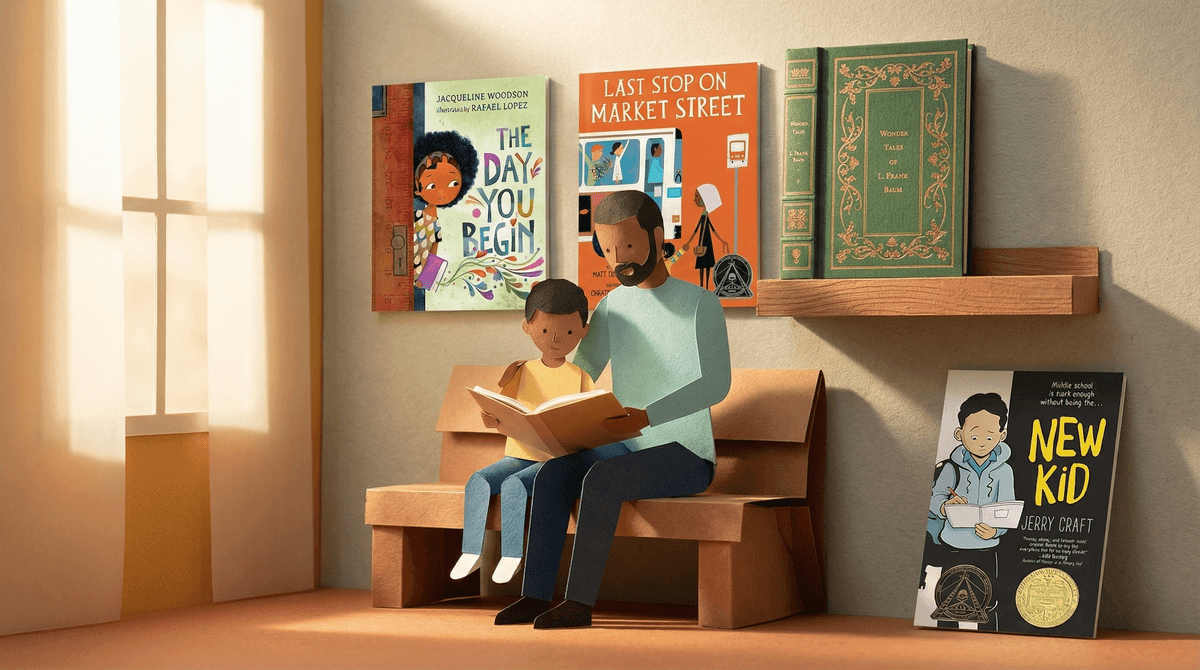
Look, we need to talk about the heroes our kids are reading about. Not every male character needs to be a stoic warrior who never cries or a bumbling dad who can't make a sandwich. There's a whole world of books out there featuring boys and men who are kind, emotionally intelligent, collaborative, and yes—still brave—just not in the punch-first-ask-questions-never kind of way.
Books with positive male role models show masculinity as something expansive: characters who solve problems through creativity and communication, who care for others without it being a punchline, who express their feelings, who fail and learn, who stand up for what's right even when it's hard. These aren't "soft" characters (whatever that means)—they're fully human characters.
And honestly? In a media landscape where boys are getting fed a steady diet of Andrew Tate clips and "sigma male" TikToks, books that show different ways to be a guy are more important than ever.
The stories we consume shape how we see ourselves and others. For boys, seeing male characters who are compassionate, who apologize, who help with caregiving, who stand up against bullying—that's powerful modeling. It gives them permission to be more than the narrow "tough guy" box society keeps trying to shove them into.
For girls (and kids of all genders), these books show that boys and men can be trusted allies, that masculinity doesn't have to mean dominance or emotional unavailability. That's the kind of representation that builds healthier relationships down the line.
And let's be real: boys need emotional literacy. They need to see characters wrestling with fear, sadness, confusion, and coming out the other side. Books are one of the best ways to build that empathy muscle.
We're not talking about perfect characters—those are boring and unrealistic. We're looking for:
- Emotional honesty: Characters who feel things and talk about those feelings
- Kindness as strength: Helping others isn't weakness, it's courage
- Accountability: Making mistakes and making amends
- Collaboration: Working with others, not just being the lone hero
- Standing up for others: Using whatever privilege or power they have to protect people who are vulnerable
- Complex masculinity: They can be tough AND tender, strong AND scared
For Younger Readers (Ages 4-8)
Last Stop on Market Street by Matt de la Peña
CJ and his grandmother ride the bus through their city, and CJ learns to see beauty in his community. His relationship with his grandmother is tender and respectful—he asks questions, she guides him with wisdom. It's a quiet book about gratitude and perspective.
The Day You Begin by Jacqueline Woodson
While not exclusively about boys, this book features children (including boys) finding courage to share their stories even when they feel different. It's about vulnerability as bravery.
Julian Is a Mermaid by Jessica Love
Julian sees mermaids and wants to be one. His abuela's acceptance and celebration of his self-expression is beautiful, but Julian himself is the star—a boy who knows what brings him joy and isn't afraid to pursue it.
For Middle Grade (Ages 8-12)
Wonder by R.J. Palacio
Auggie Pullman has a facial difference and starts mainstream school for the first time. But it's not just Auggie—characters like Jack Will and Justin show boys choosing kindness, standing up to bullies, and being genuine friends. The whole book is basically a masterclass in empathy.
New Kid by Jerry Craft
Jordan navigates being one of the few kids of color at his fancy private school. He's artistic, thoughtful, and trying to figure out where he fits. His dad is also a great model—present, supportive, trying his best even when he doesn't always get it right.
The Wild Robot by Peter Brown
Okay, Roz is technically a robot, but the book features Brightbill, a young gosling who learns about family, belonging, and what it means to care for others. The themes of nurturing and adaptation are beautiful.
Hatchet by Gary Paulsen
Brian survives alone in the wilderness after a plane crash. Yes, it's a survival story, but Brian's journey is deeply emotional—he processes his parents' divorce, his fear, his mistakes. He learns that survival isn't just about physical toughness.
Ghost by Jason Reynolds
Castle "Ghost" Cranshaw joins a track team and has to face his past trauma and anger. Coach is an incredible male mentor figure, and Ghost himself learns about discipline, vulnerability, and what real strength looks like.
For Teens (Ages 13+)
The Hate U Give by Angie Thomas
While Starr is the protagonist, the men in her life—her father Maverick, her boyfriend Chris, her friend Khalil—show different facets of Black masculinity, from activism to vulnerability to learning to be a better ally.
Aristotle and Dante Discover the Secrets of the Universe by Benjamin Alire Sáenz
Two Mexican American boys become friends and help each other navigate identity, family, and eventually love. Both boys are thoughtful, artistic, and emotionally open. Ari's dad is also a powerful character—a Vietnam vet working through his own trauma.
Long Way Down by Jason Reynolds
Will's brother is killed, and he has 60 seconds in an elevator to decide whether to follow the "rules" of revenge. It's a devastating look at cycles of violence and what it costs boys to live up to toxic codes of masculinity.
The Perks of Being a Wallflower by Stephen Chbosky
Charlie is sensitive, thoughtful, and dealing with mental health challenges. His friends help him, he helps them, and the book doesn't punish him for being vulnerable.
You might be thinking: "Great, but my kid wants dragons and magic, not feelings."
Good news: you can have both.
Percy Jackson series by Rick Riordan
Percy is brave, sure, but he's also loyal to a fault, insecure, funny, and surrounds himself with friends he trusts and respects. He doesn't go it alone—he builds a team. And Riordan's other series feature similarly well-rounded male protagonists.
Howl's Moving Castle by Diana Wynne Jones
Howl is vain and dramatic, yes, but he's also caring, clever, and ultimately brave in ways that don't involve just fighting. He's complicated and human (well, wizard, but you get it).
The Hobbit by J.R.R. Tolkien
Bilbo doesn't want to be a hero. He's scared, he misses his home, he's not particularly strong. But he's clever, kind, and ultimately courageous when it matters. He proves you don't have to be a warrior to be brave.
When you're reading together or discussing a book your kid just finished, try questions like:
- "What do you think about how [character] handled that situation?"
- "Have you ever felt like [character] did?"
- "What would you have done differently?"
- "Why do you think [character] made that choice?"
You're not trying to turn every book into a lesson—just opening space for reflection. Sometimes kids need to see that it's okay to talk about this stuff.
Books are quietly radical tools. They let kids try on different identities, feel what other people feel, and imagine different ways of being in the world.
Finding books with positive male role models isn't about making boys "soft" or pushing an agenda—it's about giving them more options for who they can be. It's about showing them that strength includes kindness, that bravery includes vulnerability, and that being a good person is the most important adventure of all.
Start with one book. See what resonates. Build from there.
And if your kid pushes back or says a book is "boring," that's okay too. Not every book lands with every kid. Keep offering options, keep the conversation open, and trust that the right stories will find them when they're ready.