

Second grade is that sweet spot where kids transition from "learning to read" to "reading to learn." They're decoding more fluently, tackling longer sentences, and starting to lose themselves in stories. But here's the thing: the gap between what they can technically read and what they actually want to read is HUGE right now.
A second grader might be able to sound out a chapter book, but if it's boring or too complex thematically, they'll bail. Or they might love the story but get frustrated if every other word requires help. Finding that Goldilocks zone—books that challenge without overwhelming, engage without requiring constant parent translation—is the key to building confident, enthusiastic readers.
The typical second grader (ages 7-8) is reading at roughly a Guided Reading Level J-M or Lexile 300-500, but those numbers matter way less than whether your kid is excited to pick up the book. Some second graders are devouring Harry Potter, others are perfectly happy with early readers, and both are completely fine.
Second grade reading isn't just about skill development—it's about identity formation. Kids start seeing themselves as "readers" or "not readers" around this age. If reading feels like a chore or a source of frustration, that mindset can stick. But if they find books that make them laugh, gasp, or stay up past bedtime with a flashlight? That's when reading becomes something they choose, not something they're assigned.
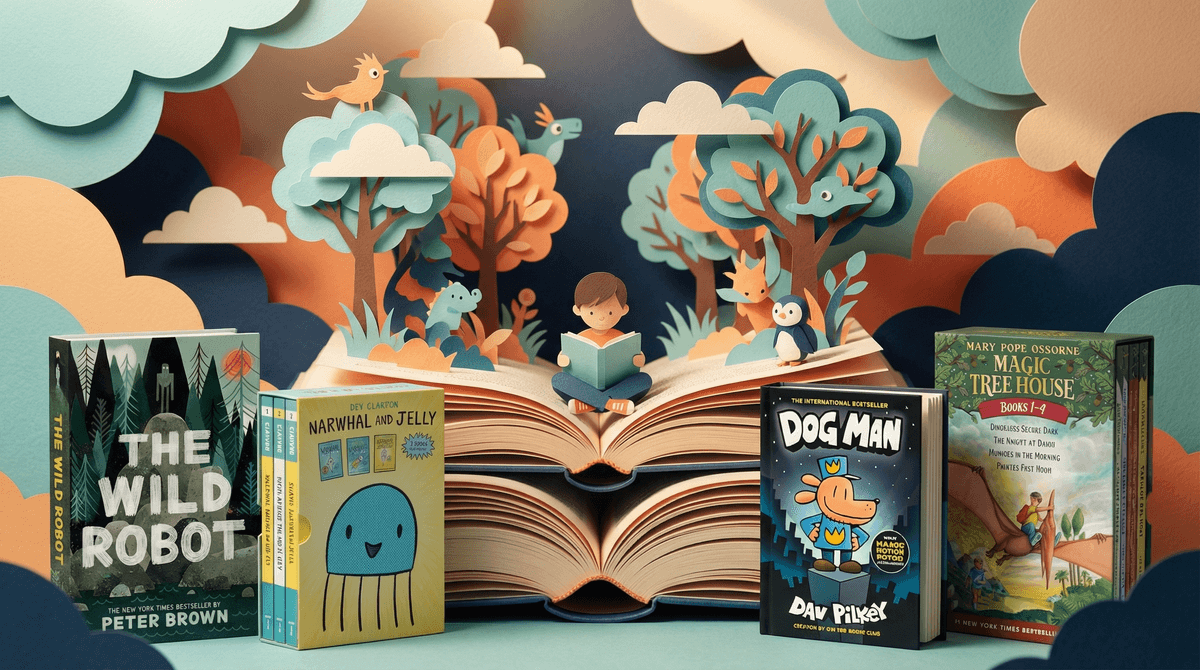
This is also when the comparison game starts. Your kid notices that their friend is reading "bigger" books or "harder" series. Try to shut that down early: reading isn't a race, and there's no prize for finishing chapter books first. A kid who loves Dog Man graphic novels is building the same comprehension and vocabulary skills as a kid reading Magic Tree House.
Length that doesn't intimidate: Most second graders can handle 50-100 pages with illustrations scattered throughout. Pure text for 200 pages? That's a lot. Graphic novels and heavily illustrated chapter books are your friends here.
Relatable themes: Friendship drama, sibling rivalry, school dynamics, feeling different, wanting independence. Second graders are navigating a lot socially and emotionally, and books that reflect their world back at them are gold.
Humor: Potty jokes, silly situations, characters doing ridiculous things—if it makes them laugh, they'll keep reading. Don't underestimate the power of a good fart joke in building reading stamina.
Predictable structure with some surprises: Series books are huge at this age because kids know what to expect (same characters, similar format), which builds confidence. But within that structure, they still want plot twists and new adventures.
Topics they're obsessed with: Dinosaurs, sports, animals, magic, space, mystery—lean into whatever they're currently fixated on. A reluctant reader will power through a challenging book about sharks if they're shark-obsessed.
Early Chapter Books (Great for Emerging Readers)
- Ivy + Bean: Two very different girls become best friends. Short chapters, great illustrations, and genuinely funny friendship dynamics.
- Junie B. Jones: Kindergartener with a big personality and questionable grammar. Some parents hate the "bad" language, but kids LOVE her voice. You decide.
- Magic Tree House: Time-traveling siblings. Predictable formula, educational bent, massive series so if they like it, you're set for months.
- Mercy Watson: A pig who loves butter toast. Absurd, charming, perfect for kids who need lots of pictures still.
Graphic Novels (Don't Sleep on These)
Graphic novels are NOT "cheating" or "easier." They require complex visual literacy skills and are fantastic for building comprehension. Full stop.
- Dog Man: By the Captain Underpants creator. Silly, creative, and wildly popular. Yes, there's potty humor. Yes, your kid will read it 47 times.
- Narwhal and Jelly: Friendship between an optimistic narwhal and a pragmatic jellyfish. Sweet, funny, great for younger second graders.
- The Bad Guys: Villains trying to be heroes. Fast-paced, funny, and surprisingly thoughtful about redemption and friendship.
For Strong or Advanced Readers
- Ramona Quimby: Classic for a reason. Ramona is messy, imperfect, and trying her best. Great for kids navigating big feelings.
- Charlotte's Web: A beautiful, sad, perfect book about friendship and loss. Have tissues ready.
- The Wild Robot: A robot learning to survive in the wilderness. Gorgeous illustrations, thoughtful themes about belonging and nature.
Series That Hook Reluctant Readers
- Who Would Win?: Nonfiction about animal battles. Ridiculous premise, actual facts, weirdly engaging.
- Diary of a Wimpy Kid: Technically for older kids, but many second graders love it. Greg Heffley is kind of a jerk, which is honestly refreshing.
- Geronimo Stilton: Mouse journalist having adventures. Different fonts and colors on every page, which some kids love and some find distracting.
Reading stamina takes time: Twenty minutes of sustained reading is a reasonable goal for second grade. If your kid can't sit still that long yet, try audiobooks while they color or build with Legos. Listening to stories builds comprehension even when they're not decoding words themselves.
Rereading is not wasting time: Kids reread favorites because it feels good to be fluent and confident. Let them read the same book 100 times if they want. They're still building skills.
Graphic novels count: I cannot stress this enough. If your kid only wants to read graphic novels, that's FINE. They're reading. They're engaged. That's what matters.
Don't force "classics": If your second grader hates Charlotte's Web, that's okay. There are approximately one million other books. Find what they love, not what you think they should love.
Reading together still matters: Even if your kid can read independently, reading aloud together lets you tackle more complex books and have conversations about themes, characters, and ideas. Plus it's cozy and you won't get to do this forever.
The best book for your second grader is the one they'll actually read. Not the one with the highest Lexile level or the most awards or the one their friend is reading. The goal right now is building a love of reading, not hitting arbitrary benchmarks.
If your kid wants to read the same early reader book every night for three weeks, great. If they only want books about trucks or unicorns or farts, perfect. If they prefer graphic novels to chapter books, excellent. Meet them where they are, keep offering new options without pressure, and trust that if reading feels good now, they'll keep doing it.
And if you're looking for more specific recommendations based on your kid's interests or reading level, Get suggestions based on your kid's interests or reading level —it's honestly pretty helpful for this kind of thing.