

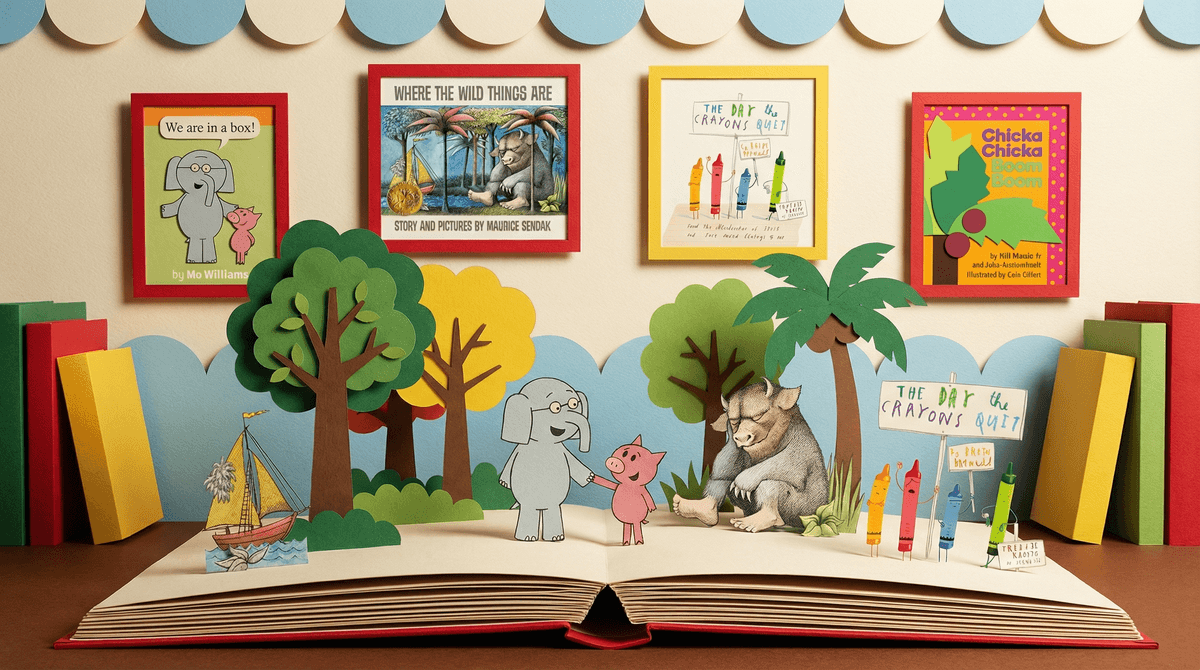
Here's the thing about kindergarten reading: you're not trying to create a tiny literary critic who can analyze symbolism in Where the Wild Things Are. You're building a foundation—helping a 5 or 6-year-old discover that books are fun, engaging, and worth their time when they could be asking to watch Bluey for the 47th time today.
The best books for kindergarteners hit a sweet spot: simple enough that kids feel successful, interesting enough that they actually want to turn the page, and rich enough to support genuine literacy development. We're talking predictable text patterns, repetition that builds confidence, vibrant illustrations that carry meaning, and stories that connect to a 5-year-old's actual world (even if that world includes believing their stuffed animals come alive at night).
Kindergarten is when reading shifts from "that thing adults do to me at bedtime" to "something I can actually do myself." Kids are learning that:
- Letters make sounds
- Sounds make words
- Words make stories
- Stories make sense of the world
But here's what research consistently shows: kids who enjoy reading become better readers. Not kids who are drilled on phonics flashcards for an hour daily (though phonics matters), but kids who genuinely like books and choose to engage with them.
The kindergarten year is also when reading gaps start to widen. Some kids come in already reading simple books; others are just learning letter names. Good book choices meet kids where they are while gently pushing them forward.
Not all picture books are created equal for this age. Here's what actually works:
Text Features:
- Predictable patterns - "Brown bear, brown bear, what do you see?" structures that kids can anticipate
- Repetitive phrases - Builds confidence when kids can "read" familiar chunks
- Rhyme and rhythm - Supports phonological awareness (the foundation of decoding)
- 1-3 sentences per page - Manageable chunks that don't overwhelm
- High-frequency sight words - "the," "and," "I," "see" show up a lot
Illustration Power:
- Pictures that tell the story even without text
- Clear connections between words and images
- Details kids can discuss and explore
- Diverse characters and settings
Content Considerations:
- Relatable themes: friendship, family, feelings, school, everyday adventures
- Age-appropriate humor (kindergarteners love silly, not sophisticated)
- Problems kids can understand and solutions that make sense
- Nothing too scary or emotionally complex
Early Readers & Decodable Books
These are specifically designed for kids learning to read independently. Think Bob Books, the Elephant & Piggie series by Mo Willems, or I Can Read Level 1 books.
The good: Controlled vocabulary, confidence-building, actual reading practice.
The reality: Some are painfully boring. "Sam sat. Sam sat on a mat." Cool story, Bob. Balance these with more engaging picture books so kids don't think all reading is this dry.
Classic Picture Books with Predictable Text
Brown Bear, Brown Bear, What Do You See? and Chicka Chicka Boom Boom are classics for a reason. Kids memorize the patterns, which builds confidence and lets them focus on matching spoken words to printed words.
Leveled Readers
Libraries and schools use systems like Guided Reading Levels (A-Z) or Lexile measures. For kindergarten, you're typically looking at levels A-D. These can be hit or miss—some are genuinely engaging, others feel like educational vegetables.
Engaging Picture Books for Read-Alouds
Don't abandon beautiful, complex picture books just because your kid can't read them independently yet. Books like The Day the Crayons Quit or anything by Oliver Jeffers build comprehension, vocabulary, and the understanding that books contain rich, interesting stories worth the effort of learning to read.
For Beginning Readers (kids just starting):
- Bob Books Set 1 - Boring but effective
- Elephant & Piggie series - Mo Willems is a genius
- Fly Guy series - Silly enough to be engaging
- Biscuit series - Simple, sweet, works
For Progressing Readers (gaining confidence):
- Frog and Toad series - Arnold Lobel's gentle stories
- Henry and Mudge series - Friendship and a big dog
- Mercy Watson series - Kate DiCamillo brings actual humor
- Early Dr. Seuss - Green Eggs and Ham, Hop on Pop
For Read-Aloud Time (building comprehension & love of stories):
- Anything by Mo Willems (seriously, all of it)
- Where the Wild Things Are - Maurice Sendak
- The Gruffalo - Julia Donaldson
- Dragons Love Tacos - Peak kindergarten humor
- Pete the Cat series - Repetitive, musical, chill vibes
Reading "levels" are guides, not laws. If your kindergartener is obsessed with a book that's "too hard," read it together. Interest trumps level every time.
Rereading is learning. When kids want the same book 400 times, they're building fluency, confidence, and comprehension. It's annoying for you, excellent for them.
Libraries are your friend. You don't need to buy 50 books. Get a library card, check out stacks, see what sticks. Most libraries have "early reader" or "beginning reader" sections that do the level-sorting for you.
Screen vs. book balance matters. If your kid spends 3 hours on Roblox or YouTube and you're trying to squeeze in 5 minutes of reading, the math isn't in your favor. Books need enough space in the day to become habit-forming. Learn more about balancing screen time with reading time .
.
Graphic novels and comics count. Dog Man, early graphic novels, comic-style books—these are reading. The visual literacy skills kids build are valuable, and the engagement is real.
Diversity in books matters. Kids should see themselves in books AND see experiences different from their own. This isn't political correctness; it's building empathy and understanding that the world is bigger than their immediate bubble.
Pushing too hard too fast. If reading becomes a battle, you're creating a kid who hates reading. Better to stay with "easy" books that build confidence than force frustration with books that are too hard.
Only choosing educational books. Not everything needs to teach a lesson. Silly books, weird books, books with no point except entertainment—these matter too.
Forgetting to model reading. Kids who see adults reading become readers. If your kid only sees you on your phone, that's the medium they'll value. (Yes, this is hard. Yes, it matters.)
Skipping the conversation. Reading isn't just decoding words. Ask questions: "What do you think will happen next?" "How do you think he feels?" "What would you do?" This builds comprehension.
The best books for kindergarteners are the ones your specific kid will actually engage with. Some kids love non-fiction books about sharks or space. Others want princess stories or silly monsters. Some are ready for chapter books; others need board books still. All of this is normal.
Your job isn't to create a perfect reading curriculum. It's to:
- Make books accessible (have them around, go to libraries)
- Make reading enjoyable (not a chore or punishment)
- Read together regularly (even 10-15 minutes daily compounds)
- Follow their interests (obsessed with dinosaurs? Get dinosaur books)
- Balance with other media (books can't compete if screens dominate)
The research is clear: kids who read for pleasure do better academically across the board. But "for pleasure" is the key phrase. You're building a reader, not checking boxes on a kindergarten reading list.
This week:
- Hit your local library and check out 10 books across different types (early readers, picture books, non-fiction)
- Create a cozy reading spot that's screen-free
- Set a realistic daily reading goal (10 minutes is fine)
This month:
- Notice what types of books your kid gravitates toward
- Explore alternatives to screen time that include books
- Consider starting a simple reading log or chart if your kid responds to that kind of motivation
Long-term:
- Make reading part of your daily rhythm, not an occasional activity
- Keep adjusting based on your kid's growing skills and interests
- Remember: you're building a lifelong relationship with reading, not just kindergarten skills
The goal isn't perfection. It's progress, engagement, and a kid who thinks books are worth their time. Start there.