

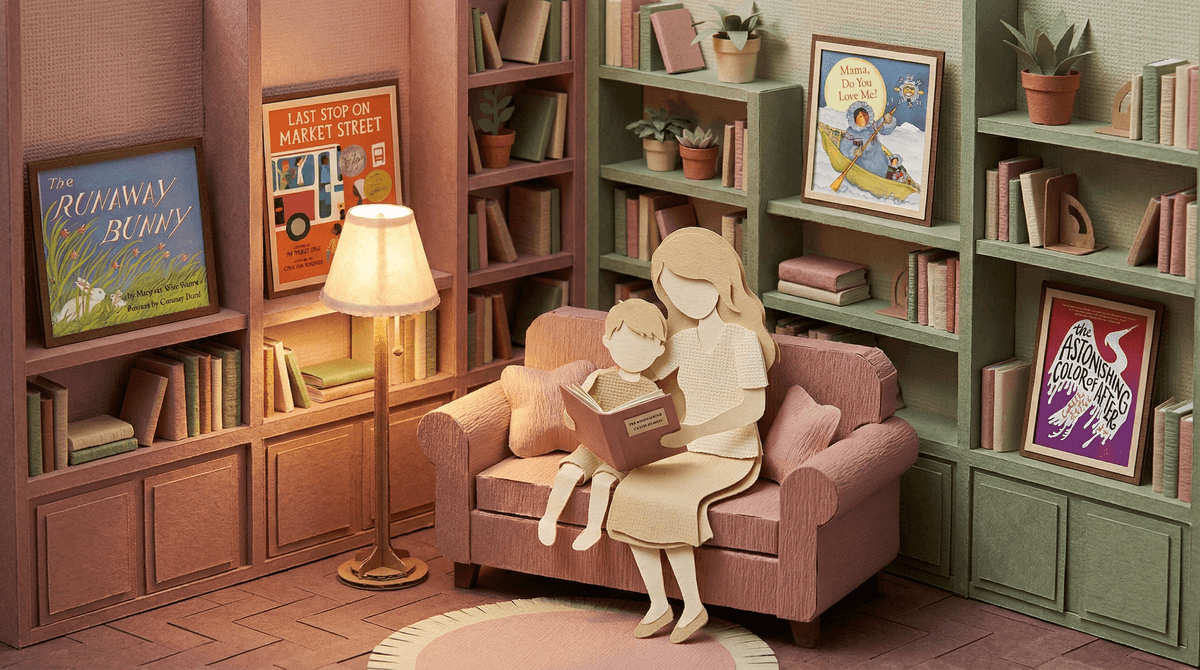
Look, we all know Mother's Day is coming up (or just passed, or hey, maybe it's just Tuesday and you need a win). Books about moms are exactly what they sound like—stories that center maternal relationships, celebrate motherhood in all its messy glory, or explore what "mom" even means.
These aren't just the saccharine "I love you, Mommy" board books (though those have their place at 2am when you need something that won't wake everyone up). We're talking about the full spectrum: picture books that make you ugly-cry at bedtime, middle grade novels about complicated mother-daughter dynamics, YA that doesn't shy away from maternal absence or imperfection, and yes, even some books that parents might want to read themselves.
The thing is, books about moms can be incredibly powerful tools for connection—whether you're reading with a kid who's working through big feelings about their own mom, you're a mom who needs to feel seen, or you're just looking for stories that reflect the reality that motherhood is beautiful and hard and sometimes really, really weird.
Here's what nobody tells you: kids are constantly processing their relationships with their parents, and books give them a safe space to explore those feelings. A story about a mom who makes mistakes? That's permission for your kid to acknowledge that you're human. A book about missing a mom? That's vocabulary for grief they might not have yet.
And for parents—especially moms—these books can be surprisingly validating. There's something about seeing your experience reflected back, even in a kids' book, that makes you feel less alone in the chaos.
Books about moms also:
- Help kids understand different family structures (single moms, adoptive moms, two moms, grandmas-as-moms)
- Model healthy parent-child communication (or show what unhealthy looks like)
- Normalize the full range of maternal experience—not just the Instagram-worthy moments
- Create opportunities for conversations you might not know how to start otherwise
Picture Books (Ages 3-8)
Love You Forever by Robert Munsch - Yes, it's emotionally manipulative. Yes, you will cry every single time. Yes, your kids will request it on repeat. It's the circle of life.
The Runaway Bunny by Margaret Wise Brown - A classic about unconditional love that hits different when you're the parent doing the chasing.
Mama, Do You Love Me? by Barbara M. Joosse - Set in the Arctic, this one explores the "what if I'm bad, will you still love me?" question every kid has.
Last Stop on Market Street by Matt de la Peña - A grandma (who's serving as mom) teaches her grandson about gratitude and seeing beauty everywhere. Gorgeous illustrations, important themes.
Middle Grade (Ages 8-12)
Wonder by R.J. Palacio - Auggie's mom is one of the most beautifully written parent characters in middle grade lit—fiercely protective but also learning to let go.
Esperanza Rising by Pam Muñoz Ryan - A mother-daughter relationship tested by immigration, loss, and survival. Heavy but essential.
The Penderwicks by Jeanne Birdsall - These kids lost their mom, and the series beautifully handles grief, memory, and new maternal figures.
Front Desk by Kelly Yang - Mia's mom is an immigrant working multiple jobs, and this book doesn't shy away from the sacrifice and complexity of that reality.
Young Adult (Ages 13+)
Everything I Never Told You by Celeste Ng - This is technically adult fiction but many teens read it. It's about a mother's expectations and how they can suffocate. Not a light read.
The Hate U Give by Angie Thomas - Starr's mom is a phenomenal character—strong, flawed, trying to protect her kids in an impossible situation.
Piecing Me Together by Renée Watson - Jade's relationship with her single mom is complicated by class, opportunity, and unspoken resentments.
The Astonishing Color of After by Emily X.R. Pan - About a daughter processing her mother's suicide through magical realism. Absolutely devastating and beautiful.
Not all mom books are happy books. Some of the most powerful stories about mothers involve loss, absence, mental illness, or conflict. That's okay. That's real. But you should probably read them first if you're worried about content.
These books will spark conversations. Be ready for questions like "Do you love me even when I'm bad?" or "Would you die for me?" (thanks, Love You Forever). These are good questions, even if they're hard.
Representation matters here too. Look for books that show different types of moms—working moms, stay-at-home moms, moms with disabilities, moms of different races and cultures, queer moms, adoptive moms. Your kid needs to see families that look like theirs and families that don't.
Some kids find these books comforting, others find them triggering. If your child has experienced maternal loss or trauma, tread carefully. A book about a loving mom might be painful rather than healing. Follow their lead.
Read them together, even with older kids. Yeah, your 12-year-old can read independently, but reading together creates space for discussion that "how was your day" never will.
Ask open-ended questions. Not "did you like it?" but "what do you think about how the mom handled that?" or "would you have done the same thing?"
Share your own feelings. "This part made me think about when you were little and..." Kids need to see that adults have emotions about this stuff too.
Don't force it. If your kid rolls their eyes at the Mother's Day book display, that's developmentally appropriate. Let them come to these stories on their own terms.
Books about moms aren't just for Mother's Day cards and sentimental moments. They're tools for understanding relationships, processing emotions, and seeing the full humanity of the people who raise us.
The best books about moms show that motherhood is complicated—it's love and sacrifice and frustration and joy and sometimes getting it really wrong. They show kids that their moms are people, and they show moms that they're not alone in the struggle.
So whether you're looking for a book to read with your kid, a gift for a mom who needs to feel seen, or just a story that acknowledges how hard and beautiful this whole parenting thing is—these books deliver.
Next Steps:
- Check your local library's "family relationships" section
- Search books about mothers and daughters
 or books about mothers and sons for more specific recommendations
 - Ask your kid's teacher or librarian for suggestions based on your child's reading level
- Don't sleep on audiobooks—sometimes hearing these stories together in the car hits different
And hey, if you end up crying into your kid's chapter book at bedtime? That's just proof you're doing it right.