

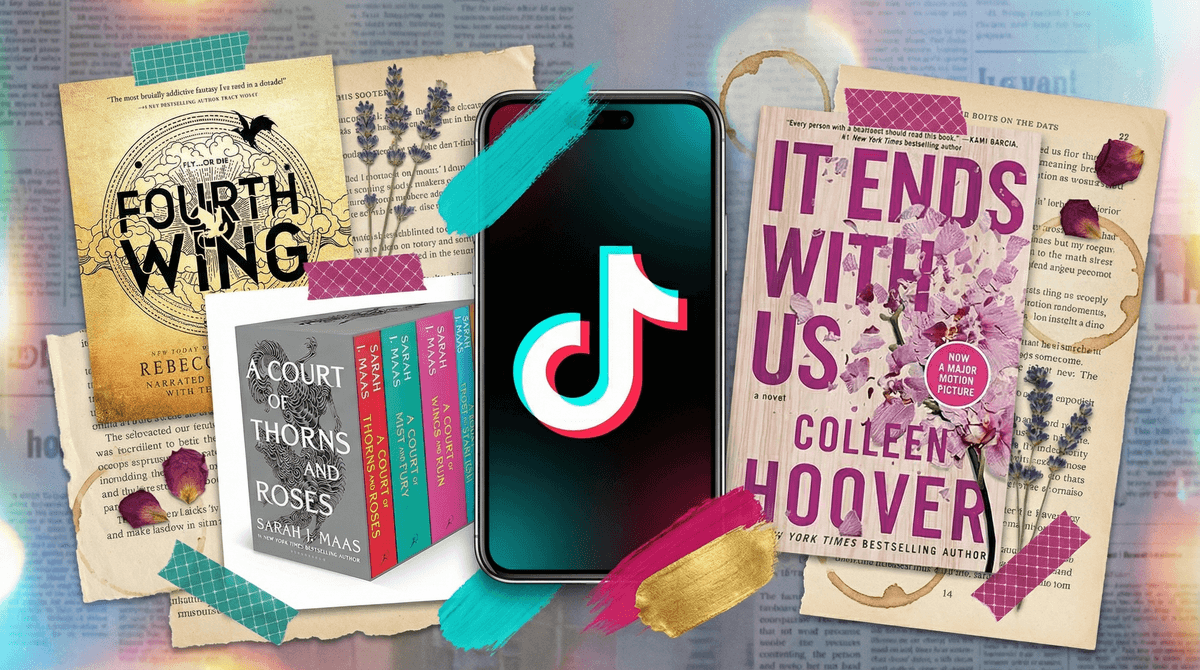
Okay so BookTok is basically the book-loving corner of TikTok where people (mostly teens and young adults) make short videos about books they're reading.
Think: dramatic readings, aesthetic book stack videos, people sobbing over fictional characters, "book haul" videos showing their latest purchases, and those "POV: you just finished that book" clips that somehow convey devastating emotional damage in 15 seconds.
It's genuinely become a cultural force. Like, BookTok recommendations have sent books to the top of bestseller lists. Publishers are now actively trying to make books "BookTok-friendly." Barnes & Noble has literal BookTok tables in stores.
The community uses hashtags like #BookTok (90+ billion views), #BookTokMadeMeBuyIt, and specific tags for genres like #DarkRomance or #FantasyBooks. And yes, your kid probably knows what "smut" means now thanks to BookTok's very enthusiastic romance novel community.
It makes reading feel social and cool
For the first time in maybe ever, being a reader is genuinely trendy among teens. BookTok creators have millions of followers. Kids are excited to talk about books the way they used to only talk about Netflix shows.
There's this whole culture of shared reading experiences—everyone crying over the same plot twist, making inside jokes about characters, creating fan content. It's community-building around literature, which is honestly pretty beautiful.
The algorithm actually works
Unlike your well-meaning librarian recommendations (no shade to librarians, they're heroes), BookTok's algorithm serves up books based on what similar readers actually enjoyed. Kids discover books that match their specific interests and reading level without the awkwardness of asking for help.
It's bite-sized and visual
A 30-second video can convey "this book wrecked me emotionally and you need to read it" way more effectively than a traditional book review. The format works for their brains.
The aesthetic is real
Let's be honest—those videos of color-coordinated bookshelves, cozy reading nooks, and artfully arranged book stacks are satisfying to watch. BookTok has made reading look aspirational.
Kids are actually reading more
Like, significantly more. Teen reading rates had been declining for years, but BookTok has genuinely reversed that trend for many kids. Publishers report that YA and teen fiction sales are up, and librarians are seeing increased circulation.
Your kid asking for a book instead of another video game? That's a BookTok win.
It's expanding their worlds
BookTok has amplified diverse voices and stories. Kids are discovering books by authors from different backgrounds, exploring different cultures and experiences, and finding stories where they see themselves represented.
The community is also pretty good at calling out problematic content and recommending better alternatives.
They're developing critical thinking
Reading multiple perspectives on books, learning to articulate what they liked or didn't like, discussing themes and character development—this is all good stuff. Many BookTok videos are actually pretty thoughtful literary analysis, just in a different format.
It can build confidence
For reluctant readers or kids who struggled with traditional school reading, finding books they actually want to read (and a community that celebrates reading) can be transformative.
Content appropriateness is all over the map
Here's the big one: BookTok doesn't really distinguish between books for 13-year-olds and books for adults. A lot of the most popular BookTok books contain very explicit sexual content, graphic violence, or mature themes.
Books like "A Court of Thorns and Roses" or "Fourth Wing" are marketed as fantasy but contain pretty detailed sex scenes. "It Ends With Us" deals with domestic violence. These aren't necessarily bad books, but they're written for adult audiences.
The algorithm doesn't care that your 12-year-old probably shouldn't be reading detailed smut. And BookTok culture can make kids feel like they're missing out if they haven't read these popular titles.
The TikTok platform itself
Even if your kid is only watching book content, they're still on TikTok with all its algorithmic rabbit holes, potential for inappropriate content, and the general concerns about social media and teen mental health.
BookTok can be a gateway to more TikTok time, not less screen time.
Consumerism is strong
The "book haul" culture can get expensive fast. Kids see creators buying 20 books at a time and feel like they need to do the same. Some families report spending hundreds of dollars on books their kids never finish.
There's also the environmental question of buying tons of books versus using libraries.
Reading for trends vs. reading for enjoyment
Some kids feel pressure to read what's popular on BookTok rather than what they'd actually enjoy. The focus on "boosting" books and following trends can make reading feel like another form of social media performance.
Spoiler culture
BookTok is TERRIBLE about spoilers. Major plot twists get casually dropped in videos. Some kids are getting spoiled for books before they even start them.
Ages 10-12: Proceed with caution
BookTok is really designed for older teens and adults. If your middle schooler is interested, I'd suggest:
- Watch BookTok videos together and talk about recommendations
- Focus on BookTokers who specifically create content for middle grade readers
- Use BookTok as a discovery tool but verify content appropriateness before purchasing
- Emphasize library borrowing over buying
- Maybe follow specific BookTok accounts on other platforms (like Instagram) where you have more control
Honestly? For this age, I'd probably steer them toward book blogs, Goodreads, or YouTube channels specifically for middle grade readers instead.
Ages 13-15: Supervised exploration
This is peak BookTok age, but still requires guidance:
- Have open conversations about content ratings and why some books are for older readers
- Follow some BookTok accounts yourself so you know what's trending
- Teach them to check content warnings and reviews before committing to a book
- Set expectations about screen time—BookTok scrolling still counts as TikTok time
- Encourage them to DNF ("did not finish") books that feel too mature or uncomfortable
- Talk about the difference between "popular" and "right for me"
Ages 16+: More independence with check-ins
Older teens can generally navigate BookTok more independently, but:
- Still have conversations about media literacy and critical thinking
- Discuss the difference between fantasy/fiction and real-world relationships (especially around some of the romanticized red flags in popular romance books)
- Set boundaries around spending if book buying is getting out of hand
- Encourage library use and book swapping with friends
Not all BookTok is created equal
There are BookTokers who create thoughtful, age-appropriate content and those who are basically just promoting whatever gets views. Some green flags for good BookTok creators:
- They mention content warnings
- They discuss themes and writing quality, not just plot
- They recommend books across different age ranges and genres
- They talk about libraries and borrowing, not just buying
- Their content feels educational, not just performative
You can use this as a connection point
If your kid is into BookTok, this is actually a great opportunity to connect. Ask what they're reading, watch some videos together, maybe read the same book and discuss it.
This is so much better than arguing about Fortnite time.
The library is your friend
Most libraries now have apps where kids can browse and request books. Many librarians are on BookTok themselves and creating "BookTok picks" displays.
You can let your kid explore BookTok recommendations without the financial burden by defaulting to library borrowing first.
Content warnings exist for a reason
Websites like DoesTheDogDie.com, CommonSenseMedia, and BookTriggerWarnings.com can help you (and your teen) preview content before diving in.
Teach your kid to check these resources. It's not censorship—it's informed decision-making.
Reading anything is better than reading nothing
Even if the BookTok-recommended book isn't high literature, if it gets your kid reading and enjoying books, that's a win. You can gently introduce more challenging or diverse options over time.
Don't shame them for liking what they like.
For younger kids getting interested:
"I love that you're excited about reading! BookTok has some great recommendations, but it's designed for older readers. Let's look at some of these books together and find ones that are perfect for where you are right now. We can also find some BookTokers who focus on books for kids your age."
For teens reading mature content:
"I noticed you're reading [book with mature content]. I'm not saying you can't read it, but I want to check in about some of the themes. This book deals with [violence/sexual content/abuse/etc.]. Do you feel ready to process that? Do you have questions about anything you're reading?"
About the spending:
"I love that you're so into reading, but we can't buy every book BookTok recommends. Let's set a budget—maybe one or two books a month that you really want to own, and we'll use the library for everything else. You can make a wish list and prioritize."
About screen time:
"I'm glad BookTok is introducing you to great books, but I've noticed you're spending a lot of time scrolling book videos instead of actually reading. Let's set a limit—maybe 15 minutes of BookTok, then actual reading time?"
BookTok is genuinely getting kids excited about reading again, and that's incredible.
But it's still TikTok—with all the algorithmic concerns, content appropriateness issues, and screen time questions that come with it.
The sweet spot is using BookTok as a discovery tool while maintaining parental awareness about what your kid is actually reading, setting boundaries around screen time and spending, and having open conversations about content.
If BookTok is the gateway that turns your kid into a reader? That's a massive parenting win. Just keep the lines of communication open and maybe read some of these books yourself so you know what you're dealing with.
(Fair warning: If you pick up "A Court of Thorns and Roses" to see what the fuss is about, you might understand why your teen won't put it down. Those books are addictive.)
This week:
- Ask your kid if they know about BookTok and what books they're interested in
- Check out a few BookTok videos yourself to understand the culture
- Look up any books your kid is currently reading on CommonSenseMedia
This month:
- Set up library apps on your kid's phone for easy borrowing
- Establish a book budget if spending is becoming an issue
- Maybe read a BookTok recommendation yourself and discuss it together
- Follow a few age-appropriate BookTok creators on Instagram or YouTube as alternatives
Ongoing:
- Keep asking about what they're reading (genuine interest, not interrogation)
- Balance BookTok scrolling time with actual reading time
- Celebrate their reading wins—finishing a long book, trying a new genre, etc.
- Stay curious about the books and creators they love
The fact that your kid is interested in books at all in 2026 is something to nurture, not shut down. Just do it with eyes open.