

Walk into any bookstore and you'll see tables piled high with bestsellers. But here's the thing: not all bestsellers are created equal, and what's selling isn't always what's worth your kid's time. Some books go viral on BookTok and fly off shelves despite being objectively mediocre. Others become genuine cultural touchstones that kids quote for years.
The good news? There are legitimately great books out there that kids are actually excited to read. The challenge is figuring out which ones are right for your family and separating the hype from the substance.
In an age where Roblox and YouTube compete for every spare moment, getting kids to read feels like a minor miracle. But when they find the right book, something magical happens. They're building empathy, expanding vocabulary, and developing critical thinking skills—without you nagging them about screen time.
Plus, books are one of the few media experiences where kids can go at their own pace, reread confusing parts, and let their imagination do the heavy lifting. No algorithm is deciding what they see next.
The New York Times Bestseller List is still the gold standard, but it measures sales velocity, not quality. A book can hit the list through bulk purchases or clever marketing, then disappear when kids realize it's not that good.
Amazon rankings are even more volatile and can be gamed. That "bestseller" badge might mean 50 copies sold in a niche category.
Goodreads and BookTok recommendations are where the real kid-driven buzz happens. These are books kids are genuinely talking about, though quality varies wildly.
Elementary (Ages 6-10)
Diary of a Wimpy Kid remains a gateway drug to reading for reluctant readers, and honestly? It's funny and well-written. Don't be a snob about it.
Dog Man by Dav Pilkey is similar—lots of potty humor, but also clever wordplay and genuine heart. Plus, the illustrations help bridge the gap for visual learners.
Percy Jackson is the classic for good reason. Rick Riordan makes Greek mythology accessible and exciting, with a protagonist who has ADHD and dyslexia. The whole series is solid.
Wings of Fire by Tui T. Sutherland is massive in elementary schools right now. It's dragons, political intrigue, and genuine character development. Kids devour these.
Middle Grade (Ages 9-13)
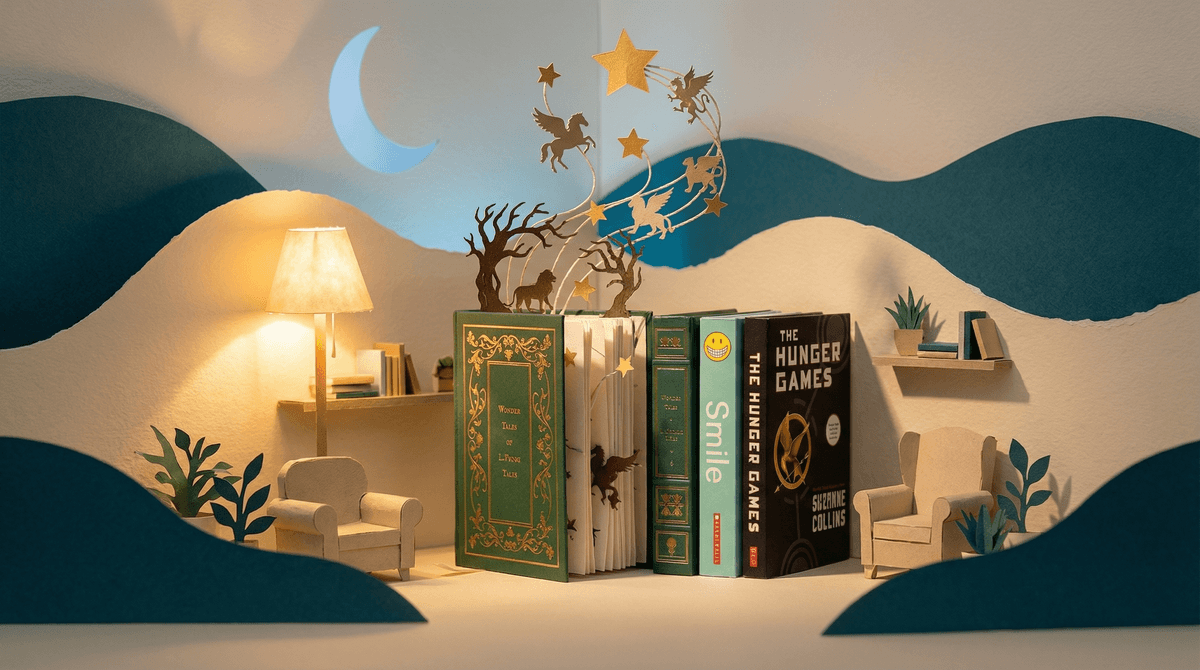
The Hunger Games still holds up. Yes, it's about kids killing kids, but it's also a sophisticated critique of media manipulation and authoritarian governments. Age 12+ is about right.
Wonder by R.J. Palacio is the empathy-building powerhouse. It's about a boy with facial differences starting mainstream school. Every kid should read this, full stop.
Refugee by Alan Gratz tells three refugee stories across different time periods. It's heavy but age-appropriate and builds genuine understanding of what displacement means.
Raina Telgemeier's graphic novels (Smile, Sisters, Guts) are perfect for kids who think they don't like reading. They're authentic stories about growing up, anxiety, and family dynamics.
Teen (Ages 13+)
The Hate U Give by Angie Thomas is essential reading. It's about a Black teen who witnesses her friend's death by police shooting. It's intense but incredibly well-written and important.
Six of Crows by Leigh Bardugo is fantasy heist perfection. Diverse cast, clever plot, actual character development. This is what good YA looks like.
They Both Die at the End by Adam Silvera went viral on BookTok for good reason. It's about two boys who get a call saying they'll die within 24 hours. Yes, it's sad. Yes, it's beautiful.
A word of caution: Colleen Hoover dominates YA bestseller lists, but her books often romanticize toxic relationships and aren't appropriate for younger teens despite the marketing. Read more about age-appropriate romance in YA .
.
Not every bestseller deserves a spot on your kid's shelf:
Romanticized abuse: Some popular YA romance normalizes controlling behavior, jealousy, and emotional manipulation as "passionate love." Read reviews before handing over books with heavy romance plots.
Trauma without purpose: Some books pile on trauma (SA, abuse, death) for shock value rather than meaningful storytelling. Check content warnings.
Pure fluff: Look, beach reads exist for adults too. But if your teen is ONLY reading romance novels with identical plots, maybe introduce some variety.
Let them choose. Even if it's not what you'd pick. Even if it's "below their reading level." A kid who's reading Diary of a Wimpy Kid is still reading.
Graphic novels count. They're not "cheating" or "less than" traditional novels. Check out our guide to graphic novels.
Series are your friend. Once a kid finds a series they love, they'll binge the whole thing. That's 8-12 books right there.
Read what they're reading. You don't have to love it, but knowing what they're into gives you conversation starters and helps you spot any concerning content.
Audiobooks are reading. Seriously. The comprehension and vocabulary building is the same. If your kid will listen to Percy Jackson on audiobook but won't pick up the physical book, that's a win.
The best book for your kid is the one they'll actually read. Yes, push them toward quality when you can. Yes, introduce diverse voices and challenging topics. But also? Don't let perfect be the enemy of good.
A kid reading "junk" is still building reading stamina, vocabulary, and a positive association with books. You can always introduce meatier options once the reading habit is established.
- Ask your kid's teacher or school librarian for recommendations based on what your kid actually likes
- Explore age-appropriate book recommendations
- Check out Goodreads lists curated by actual librarians and educators
- Visit your local bookstore and let your kid browse—sometimes the right book just calls to them
- Learn about building a reading habit
The goal isn't to raise a kid who's read every classic. It's to raise a kid who wants to read. Start there.