

Look, we all know what a wildlife documentary is—cameras pointed at animals doing animal things, narrated by someone with a soothing voice. But let's be real about what they've become: some of the most visually stunning, emotionally manipulative, and occasionally traumatizing content your kids will ever watch.
Modern wildlife docs exist on a spectrum. On one end, you've got the cozy "baby animals being adorable" stuff that's basically visual comfort food. On the other end? Brutal nature-is-metal footage of predators taking down prey in 4K slow-motion while your 7-year-old ugly-cries into a throw pillow.
The good news: there are genuinely incredible wildlife documentaries that hit the sweet spot—educational, awe-inspiring, and conversation-starting without requiring therapy afterward.
Wildlife documentaries are actually one of the few screen-time categories where the research is pretty universally positive. They:
- Build empathy and environmental awareness in ways that lectures about recycling never will
- Spark genuine curiosity about science, biology, and how ecosystems work
- Provide shared family experiences that lead to actual conversations (not just parallel phone scrolling)
- Normalize the idea that nature is worth protecting, which honestly, we need more of
Plus, they're one of the few things you can put on that won't make you want to claw your eyes out after the 47th viewing. Looking at you, Cocomelon.
Ages 3-6: Keep It Cozy
Our Planet II (Netflix, select episodes)
Not all of Our Planet is little-kid friendly, but episodes like "Frozen Worlds" focus on penguins, polar bears, and baby seals without the graphic predation. Stunning visuals, David Attenborough's voice as a bonus nap trigger.
Tiny World (Apple TV+)
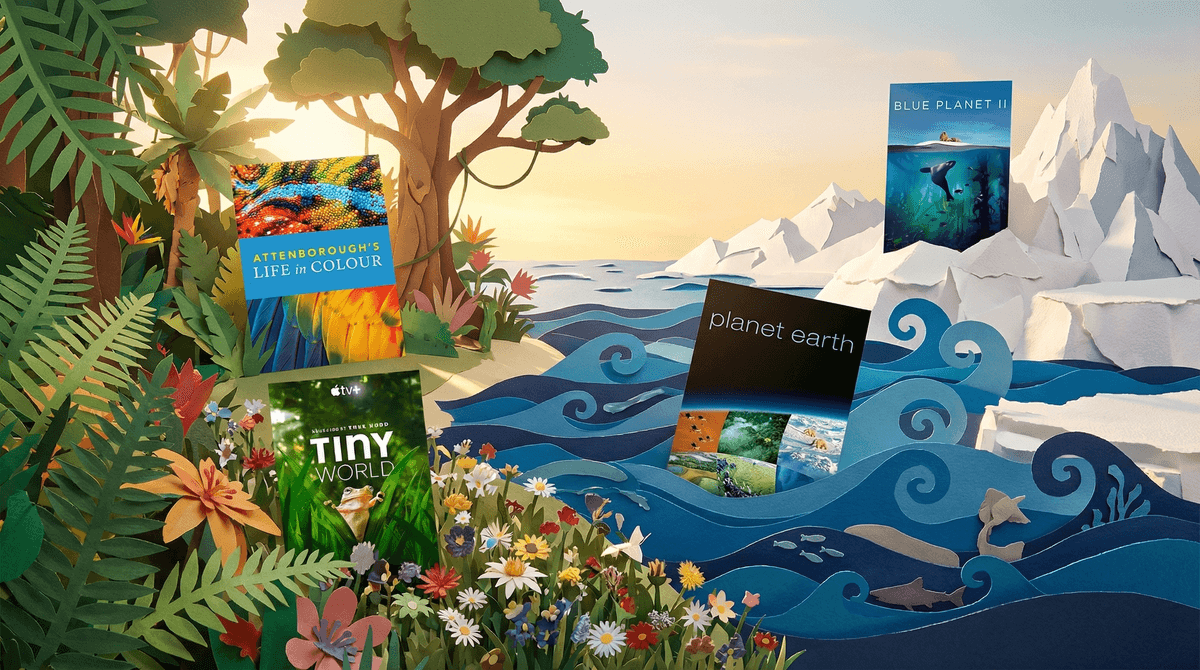
This is the move for young kids. Everything is small and cute—tiny chameleons, baby turtles, hamsters. Paul Rudd narrates with genuine enthusiasm. The stakes feel lower because everything is miniature, which somehow makes it less scary when a spider shows up.
Night on Earth (Netflix)
Nocturnal animals doing their thing with minimal predator drama. The night-vision cinematography is mesmerizing, and it's genuinely educational about how different animals have adapted to darkness.
Ages 7-10: Ready for Real Nature
Life in Color with David Attenborough (Netflix)
Focuses on how animals use color—for mating, camouflage, warning signals. It's visually gorgeous and the "science of color" angle makes it educational without feeling like homework. Some mild predation, but nothing gratuitous.
Dolphins (Disneynature)
The Disneynature docs are specifically designed for families. They follow individual animals with storylines, which makes kids more invested. Dolphins is charming, funny, and yes, there's some danger (sharks exist), but it's handled in a way that builds tension without being traumatic.
My Octopus Teacher (Netflix)
This won an Oscar for a reason. It's about a filmmaker who befriends an octopus in a South African kelp forest. It's deeply moving, genuinely educational about octopus intelligence, and yes, the octopus eventually dies (nature!), but it's handled beautifully. Great for kids ready to process the circle of life concept.
Ages 11+: The Full Nature Experience
Planet Earth II (BBC/streaming)
This is where you graduate to the full David Attenborough experience. Breathtaking cinematography, real stakes, actual predation. The "Cities" episode showing how animals adapt to urban environments is particularly great for sparking conversations about human impact.
The Elephant Queen (Apple TV+)
Follows an elephant matriarch leading her herd across Africa. It's emotionally heavy—there's death, drought, real danger—but it's also a masterclass in resilience, family bonds, and environmental challenges. Chiwetel Ejiofor narrates with the perfect balance of gravitas and warmth.
Chasing Coral (Netflix)
Technically more environmental documentary than pure wildlife, but it's essential viewing for tweens and teens. It documents coral bleaching and climate change impact in a way that's urgent without being preachy. Fair warning: it's a bit of a bummer, but it's the kind of bummer that motivates action.
The Predation Question
Every parent's first question: "Will my kid watch something get eaten?" Here's the thing—most modern nature docs show some predation because that's... nature. But there's a difference between showing a cheetah chase (exciting! educational!) and lingering on a graphic kill (unnecessary).
Preview anything for kids under 8. For older kids, a simple "hey, this shows how predators hunt, which can be intense" heads-up usually works.
The Anthropomorphization Trap
Disneynature docs and some others give animals names and storylines, which makes kids more emotionally invested. This is great for engagement, less great when kids get devastated if something happens to "their" animal. It's a trade-off. You know your kid's sensitivity level.
Streaming Service Reality
The best nature docs are scattered across platforms. Netflix has the most family-friendly selection, but Apple TV+ has been investing heavily in nature content. BBC's stuff (Planet Earth, Blue Planet) is gold standard but availability varies. Disney+ has the entire Disneynature collection.
The Climate Conversation
Many modern nature docs include climate change messaging—habitat loss, warming oceans, extreme weather. This is accurate and important, but it can be heavy. Be ready for "are the polar bears going to die?" conversations. The answer: "Not if we work together to help them," followed by age-appropriate action steps like learning about environmental conservation .
.
The Post-Doc Discussion
The real value comes from the conversation afterward. Try:
- "What animal surprised you the most?"
- "How do you think that animal's habitat is different from ours?"
- "What could we do to help protect that species?"
The Deep Dive
If your kid gets obsessed with a particular animal (and they will), lean into it. Books, museum trips, educational podcasts like Brains On!, even games like Planet Zoo can extend the learning.
The Family Ritual
Make it a thing. "Nature Documentary Fridays" with popcorn, no phones, full family investment. It's one of those rare screen time activities that actually brings everyone together instead of zoning everyone out.
Wildlife documentaries are basically the vegetables of screen time—actually good for you, occasionally delicious, and way better than the processed junk. They're educational without being preachy, entertaining without being brain-rotting, and they might just inspire the next generation to give a damn about the planet.
Start with something cozy for younger kids, work your way up to the full nature-is-beautiful-and-brutal experience for older ones, and don't stress if your kid needs to pause and process when something intense happens. That's literally the point—building empathy and understanding that we're all part of this ecosystem.
Now go forth and find something better to watch than YouTube unboxing videos.
Want more screen time wins? Check out the best educational shows that don't feel educational or explore nature and science content across platforms.
Ready to audit your family's whole screen situation? That's literally what Screenwise is for—personalized guidance based on your actual family, not generic internet advice.