

Best Spooky Stories for Kids and Teens: Age-Appropriate Scares That Won't Cause Nightmares
Here's the thing about spooky stories: the line between "delightfully creepy" and "up all night sobbing" is incredibly personal and varies wildly by kid. Some seven-year-olds mainline Goosebumps without flinching, while others need reassurance after a mildly tense scene in Bluey.
The sweet spot for spooky content is when it gives kids that thrilling adrenaline rush—the fun kind of scared where they can explore fear in a safe, controlled way—without tipping into genuine distress. Think of it like a training ground for processing bigger emotions later.
But let's be real: you know your kid best. This guide will give you the framework and specific recommendations, but trust your gut if something feels off for your particular child.
There's actual developmental value in age-appropriate scary content. When kids engage with spooky stories that match their maturity level, they're:
- Building emotional resilience by experiencing and managing fear in a safe context
- Developing critical thinking by predicting plot twists and identifying what makes something scary
- Processing real-world anxieties through metaphor (monsters under the bed are easier to tackle than existential worries)
- Bonding with peers over shared cultural touchstones (everyone's talking about Five Nights at Freddy's at school)
Plus, let's be honest—there's something deeply satisfying about being scared when you know you're actually safe. It's why horror is such an enduring genre.
Ages 4-7: Gentle Goosebumps
At this age, "scary" should be more silly than sinister. Think friendly ghosts, goofy monsters, and stories where everything resolves quickly.
Books:
- Room on the Broom by Julia Donaldson—a witch loses her hat, and it's delightful
- The Little Old Lady Who Was Not Afraid of Anything—repetitive and empowering
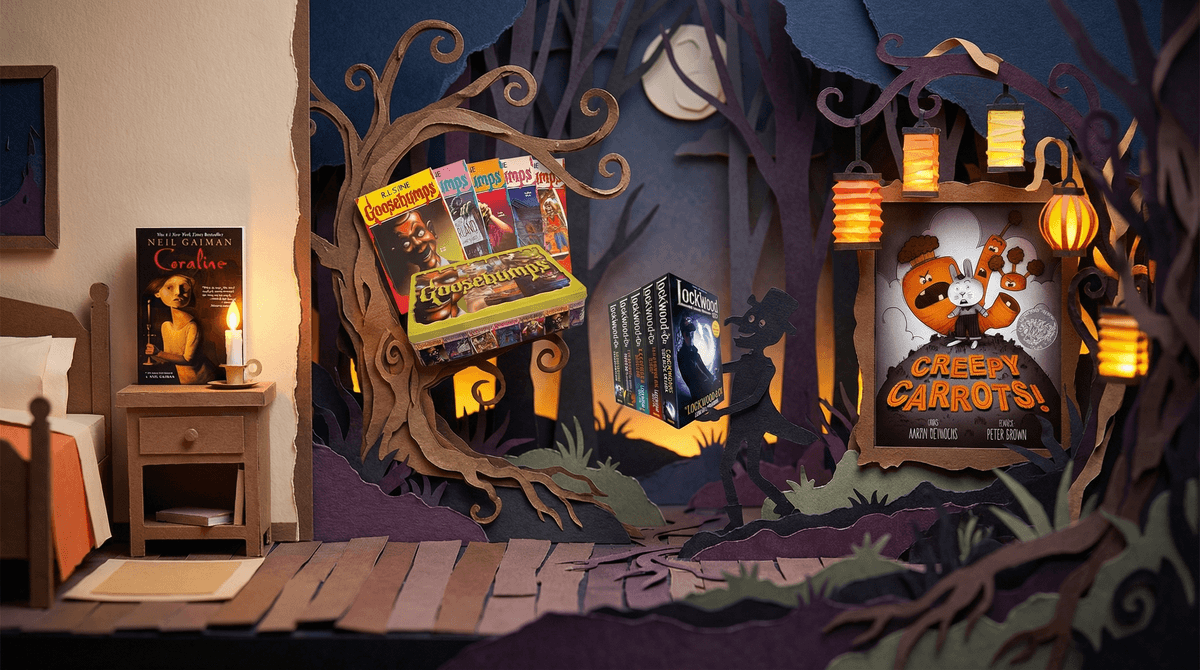
- Creepy Carrots—absurd and just spooky enough
Shows/Movies:
- Hotel Transylvania—monsters are the good guys
- Vampirina on Disney+—vampire family moves to Pennsylvania, very wholesome
What to watch for: Separation anxiety themes (getting lost, parents disappearing) can be more distressing than monsters at this age.
Ages 8-10: Classic Kid Scary
This is the golden age for gateway horror. Kids can handle more sustained tension and understand that scary stories are fiction, but graphic content is still a hard no.
Books:
- Goosebumps series by R.L. Stine—the OG for a reason, formulaic but effective
- Coraline by Neil Gaiman—genuinely unsettling but not gory
- Small Spaces by Katherine Arden—atmospheric and creepy
- Scary Stories for Young Foxes by Christian McKay Heidicker—spooky but with heart
Shows/Movies:
- The House With a Clock in Its Walls—Jack Black, magic, mild scares
- Hocus Pocus—a Halloween classic for good reason
- Gravity Falls—mystery, humor, and just enough weird
What to watch for: Jump scares can be genuinely distressing for sensitive kids. The slow-burn creepy stuff is often easier to handle than sudden shocks.
Ages 11-13: Ramping Up the Tension
Middle schoolers can handle more complex horror with actual stakes, though extreme gore and torture porn is still inappropriate. This is where kids start seeking out genuinely scary content.
Books:
- Lockwood & Co. series by Jonathan Stroud—ghost hunters in London, legitimately spooky
- Doll Bones by Holly Black—unsettling and atmospheric
- The Graveyard Book by Neil Gaiman—boy raised by ghosts, beautiful and eerie
- Miss Peregrine's Home for Peculiar Children by Ransom Riggs—creepy vintage photos add to the vibe
Shows/Movies:
- A Quiet Place—intense but not gory (though check sensitivity to jump scares)
- Stranger Things—cultural phenomenon, though note it gets darker in later seasons
- Wednesday—macabre humor, some violence
What to watch for: This age group is encountering more graphic content through peers and social media. Have honest conversations about what they're watching rather than blanket bans.
Ages 14+: Real Horror Territory
High schoolers can generally handle adult horror, though you might still want to steer them away from the most extreme stuff (looking at you, Human Centipede).
Books:
- Mexican Gothic by Silvia Moreno-Garcia—atmospheric Gothic horror
- Anything by Stephen King's back catalog—Carrie, The Shining
- The Haunting of Hill House by Shirley Jackson—psychological horror done right
Shows/Movies:
- Get Out—smart social commentary wrapped in horror
- The Haunting of Hill House (Netflix series)—family drama meets ghost story
- Hereditary—genuinely disturbing, not for the faint of heart
What to watch for: This is when kids might seek out extreme content to prove they can handle it. Remind them that choosing not to watch something isn't weakness—it's knowing yourself.
Watch for these signs that content might be too much:
- Persistent nightmares lasting more than a few days
- Avoidance behaviors (won't go in certain rooms, needs lights on constantly)
- Increased anxiety about unrelated things
- Obsessive talk about scary content (can't move on mentally)
- Physical symptoms (stomachaches, trouble sleeping)
If you're seeing these, pull back and stick with gentler content for a while. There's no prize for pushing through.
Preview when possible. Common Sense Media is your friend. Read reviews from other parents, check content warnings, and if you're really unsure, watch/read it yourself first.
Create viewing rituals. Scary content is less scary when it's framed as a special activity. Make it a Friday night thing with popcorn and the understanding that if anyone gets too scared, you can stop.
Debrief afterward. Talk about what was scary and why. Ask what they thought about the story. This helps kids process and gives you insight into their comfort level.
Respect their limits. If your kid says something is too scary, believe them. Don't push them to "toughen up"—that's how you create actual anxiety around media consumption.
Watch together. Especially for younger kids, experiencing scary content with a trusted adult makes it manageable. You're the safety net.
The best spooky stories are the ones that give your kid a thrill without genuine distress. Start conservative and let them tell you when they're ready for more. Some kids will be reading Stephen King at 12, others won't touch horror until college, and both are completely fine.
The goal isn't to push them into scary content—it's to provide age-appropriate options when they're curious, and to help them build the emotional tools to engage with challenging media thoughtfully.
And hey, if you're looking for more specific recommendations based on your kid's exact age and sensitivity level, Screenwise can help you dial it in.
- Browse horror and thriller options on your streaming services with the age filters in mind
- Check out Common Sense Media for detailed content breakdowns
- Ask your kid what their friends are watching—peer recommendations matter at every age
- Remember: you can always turn it off if it's too much
Happy (safe) haunting! 👻