

Look, I get it. You're trying to find something educational that doesn't feel like homework, entertaining enough that your kids won't immediately ask to switch back to Roblox, and—crucially—won't give anyone nightmares about climate collapse or serial killers. Peacock's documentary library is actually surprisingly solid for families, but you have to know where to look.
The streaming service has a decent mix of nature docs, science content, and history programming that can genuinely spark curiosity without the existential dread. Not every documentary needs to be a four-hour deep dive into true crime or political chaos. Sometimes you just want to watch penguins doing penguin things, you know?
Before we get into the picks, let's talk about why documentaries are worth prioritizing in your family's screen time diet. Good documentaries teach critical thinking—they show kids how stories are constructed, how evidence supports arguments, and how the real world is often more fascinating than fiction. Plus, they're one of the few types of content where "educational screen time" isn't just something we tell ourselves to feel better about parking kids in front of a screen.
That said, not all documentaries are created equal. Some are genuinely kid-friendly, while others are... well, let's just say there's a reason true crime documentaries are having a moment with adults who need something to watch at 11 PM when they can't sleep.
For Younger Kids (Ages 6-10)
Curious George: A Very Monkey Christmas Okay, technically this is more of a special than a documentary, but hear me out—it's got that educational PBS vibe and it's on Peacock. If you're looking for pure documentary content for this age group on Peacock specifically, you're going to have a tougher time. The platform skews older with its doc content.
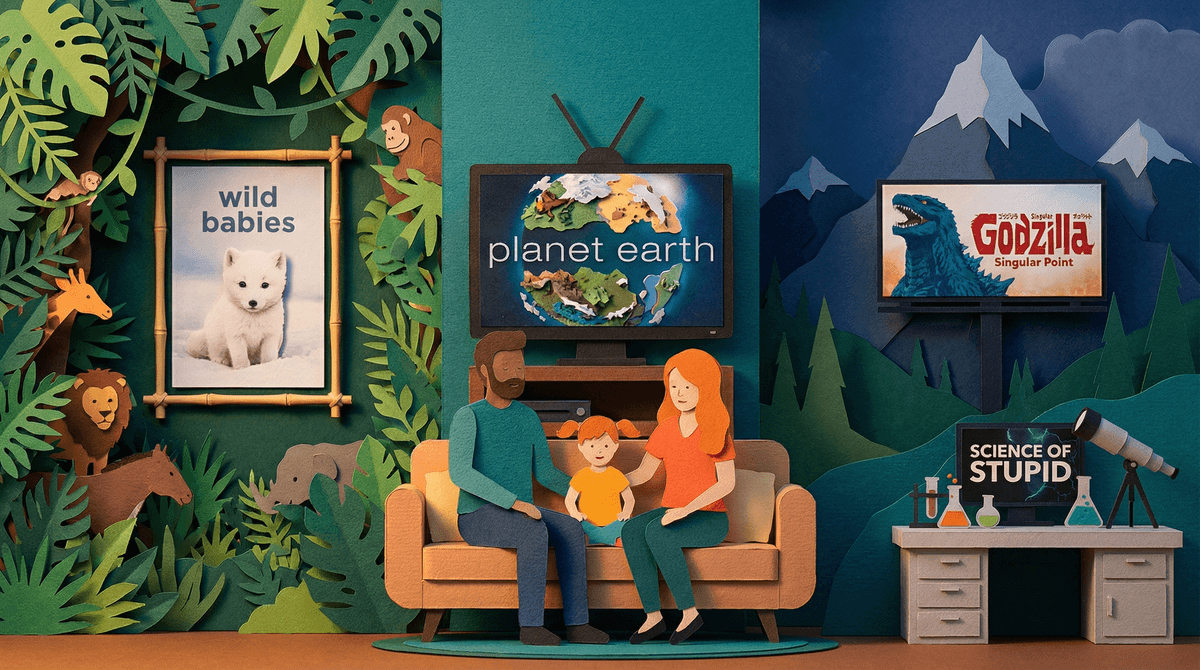
Planet Earth-style nature content Peacock has rotating BBC nature content that's absolutely stunning. The production quality is incredible, and watching animals in their natural habitat is genuinely captivating for kids. Just preview first—nature can be brutal, and not every kid needs to watch a lion take down a gazelle at age 7.
For Tweens (Ages 10-13)
Wild Babies (if available) This Netflix show occasionally pops up on other platforms through licensing deals. It follows baby animals learning to survive, and it hits that sweet spot of adorable and educational without being too intense.
Science of Stupid This is basically a show that explains the physics behind viral fail videos. Kids love it because it's funny, parents love it because it's actually teaching physics concepts. Win-win.
For Teens (Ages 13+)
The Tipping Point This explores climate science in a way that's informative without being completely paralyzing. Yes, teens need to understand climate change, but they also need to feel like they can do something about it rather than just spiral into eco-anxiety.
Music documentaries Peacock has various music docs that can be great conversation starters about culture, history, and artistic expression. Preview these first though—some get into heavy topics like addiction and mental health.
Here's the thing about documentaries: they can sneak up on you with intense content. A documentary about ocean life might suddenly show graphic footage of whaling. A history doc might include disturbing archival footage. A science doc might dive into existential questions about humanity's future that your 10-year-old isn't ready to process at bedtime.
Always check the rating and read a synopsis before hitting play. Common Sense Media is your friend here. And honestly? Watch the first 10-15 minutes with your kids. If it feels too intense, pivot to something else. No shame in that game.
Ages 6-9: Stick with nature documentaries focused on cute animals or clear science concepts. Avoid anything with predator/prey dynamics unless you're ready for questions about death. Keep it to 30-45 minutes max—their attention span and emotional processing capacity have limits.
Ages 10-12: They can handle more complex topics like ecosystems, space exploration, and historical events, but still benefit from co-viewing. This is a great age to start teaching media literacy—talk about how documentaries choose what to show and what to leave out.
Ages 13+: They can handle most documentary content, but you still want to be aware of what they're watching. Documentaries about social issues, mental health, or historical trauma can be valuable, but they might need someone to process it with afterward.
Let's be real: some kids will complain that documentaries are boring no matter what you do. Here are some tactics that actually work:
Make it interactive. Pause and ask questions. "Why do you think the penguin did that?" "What would you do in that situation?" Engagement beats passive watching every time.
Connect it to their interests. Kid obsessed with space? Find documentaries about astronauts or planets. Into animals? Nature docs all day. Gaming fan? There are actually some decent documentaries about game design and esports.
Keep it short. A 45-minute documentary is often better than a 2-hour epic for family viewing. You want to end while they're still engaged, not after they've mentally checked out.
Follow up with something hands-on. Watched a documentary about ocean life? Visit an aquarium. Learned about space? Check out a planetarium or download a stargazing app. Making it tangible helps the learning stick.
Here's something nobody talks about: Peacock's documentary library changes constantly. What's available today might be gone next month due to licensing agreements. This is true for all streaming services, but it's especially noticeable with documentary content.
If you find something great, watch it soon. Don't add it to your list and assume it'll be there in three months. And if a specific documentary matters to you, check if it's available for purchase or rent elsewhere so you're not at the mercy of streaming rights.
Also, Peacock has ads on most of its tiers. Heads up that documentary viewing will be interrupted unless you're paying for the premium ad-free plan. For some kids, those interruptions completely break their focus and engagement.
Peacock isn't necessarily the first streaming service I'd recommend for family documentaries—that honor probably goes to Disney+ for its National Geographic content or even Apple TV+ for its nature docs. But if you already have Peacock (maybe for Premier League or The Office reruns?), there's definitely watchable documentary content for families.
The key is being intentional about what you choose and actually watching with your kids, at least initially. Documentaries can be incredible tools for learning and conversation, but only if they're age-appropriate and you're there to help process what they're seeing.
Pro tip: Use documentary watching as a gateway to conversations about how media is made. Who decided what to film? What perspective are we seeing? What might be left out? These are critical media literacy skills that will serve your kids well beyond just watching documentaries.
And if the documentary isn't landing? That's fine. Switch to Bluey or literally anything else. Not every screen time moment needs to be educational. Sometimes good enough is actually good enough.