

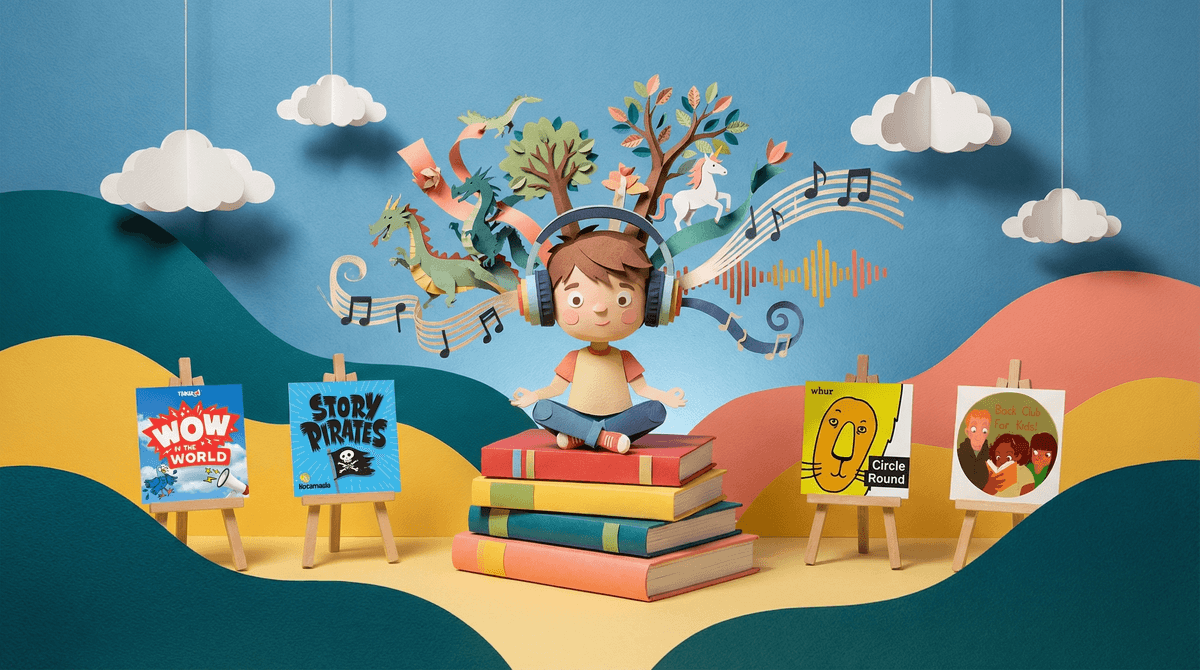
Look, I get it. You're trying to build a reader, but your kid would rather stare at a wall than pick up a book. Or maybe they do love reading, but you're stuck in the car for 45 minutes and need something that doesn't involve a screen. Enter: book-lover podcasts.
These aren't just audiobooks (though those are great too). Book-lover podcasts for kids are shows specifically designed to celebrate stories, build narrative comprehension, and make literature feel exciting. Think storytelling podcasts that adapt folktales and original stories, book club-style shows where kids discuss what they're reading, and literary podcasts that explore the craft of writing itself.
The best part? They're sneakily educational. Kids are building vocabulary, listening comprehension, and narrative structure understanding while they think they're just being entertained. It's the rare win-win that actually works.
For kids: These podcasts deliver stories without the commitment of sitting still with a book. They can listen while drawing, building Lego, or zoning out in the backseat. The best ones have sound effects, music, and voice acting that make stories feel cinematic.
For parents: They're screen-free, they don't require supervision, and they actually support literacy development. Plus, they give you something to talk about together that isn't Roblox drama or whatever fresh hell is happening on YouTube Shorts.
And honestly? Some of these podcasts are genuinely delightful even for adults. If you've ever found yourself finishing an episode of Circle Round after your kid has already gone inside, you're not alone.
Circle Round (Ages 4-10)
Circle Round is the gold standard. Produced by WBUR, it adapts folktales from around the world with professional voice actors (you'll recognize some from TV and movies). Each 15-20 minute episode includes sound effects and original music, plus a "Creativity Corner" segment where kids are prompted to create something inspired by the story.
Why it works: The stories have clear moral lessons without being preachy, the production quality is legitimately impressive, and the length is perfect for short attention spans or car rides.
Story Pirates (Ages 5-12)
Story Pirates takes stories written by actual kids and turns them into sketch comedy and songs. It's chaotic, weird, and hilarious. Your kid will absolutely want to submit their own story (and you should let them).
Why it works: It validates kids' creativity, shows them that their ideas matter, and demonstrates how stories can be adapted and interpreted in different ways. Also, it's genuinely funny.
Book Club for Kids (Ages 8-14)
Book Club for Kids features kids interviewing authors about their books. It's not dumbed down—these are real conversations about craft, inspiration, and the writing process. Recent episodes have included interviews with major middle-grade and YA authors.
Why it works: Hearing from actual authors makes books feel less like homework and more like something created by real people with interesting stories. It's especially great for kids who are starting to think about themselves as readers with opinions.
Brains On! (Ages 6-12)
Okay, Brains On! isn't specifically about books, but it's worth mentioning because it builds the same skills—curiosity, critical thinking, and love of learning through stories. Each episode tackles a science question with humor and sound-rich storytelling.
Why it works: If your kid loves nonfiction or "how things work" books, this is their gateway drug to narrative podcasts.
The Past and The Curious (Ages 7-12)
The Past and The Curious tells true stories from history in a way that feels like adventure tales. It's perfect for kids who devour books like Who Was...? or I Survived.
Why it works: History becomes story, which is exactly how good historical fiction works. It's building the same narrative muscles as reading, just through audio.
Wow in the World (Ages 6-10)
Another not-specifically-about-books entry, but Wow in the World is so good at storytelling that it deserves a spot. Hosts Mindy and Guy explore science and technology through silly, energetic narratives.
Why it works: It models enthusiasm for learning and demonstrates how information can be shaped into compelling stories—exactly what good nonfiction books do.
Ages 4-6: Start with Circle Round. The stories are short, the morals are clear, and the sound design helps hold attention. Don't expect them to sit still and just listen—let them color or play quietly while it's on.
Ages 7-9: This is the sweet spot for most story podcasts. Try Story Pirates, The Past and The Curious, or Brains On!. They can handle longer episodes and more complex narratives.
Ages 10-14: Book Club for Kids is perfect for this age. They're old enough to think critically about what they're hearing and might even get inspired to read the books being discussed.
Podcasts aren't a replacement for reading—but they're not supposed to be. They're a complement. Audiobooks and story podcasts build different literacy skills than print reading: auditory processing, narrative comprehension, and vocabulary acquisition through context.
Some kids will naturally transition from podcasts to books. Others won't, and that's okay too. The goal is building a love of story, not forcing a specific medium.
How to introduce them: Don't make it a big deal. Just put one on in the car or during dinner prep. If your kid doesn't bite immediately, try a different show. Not every podcast will land with every kid, just like not every book series works for everyone.
Tech note: Most podcast apps have kid-friendly sections now, but you'll probably want to curate the feed yourself initially. Save episodes to a playlist or download specific shows so your 8-year-old doesn't accidentally stumble into true crime podcasts (yes, this happens).
Book-lover podcasts are one of the easiest wins in the digital wellness toolkit. They're screen-free, educational, portable, and actually enjoyable for both kids and parents. They build the same narrative comprehension and vocabulary skills as reading, while meeting kids where they are—which for many kids is "definitely not sitting still with a book right now."
Start with one show, put it on during a low-stakes time (car ride, art project, pre-dinner chaos), and see what sticks. You're not trying to create a podcast addict—you're just introducing another way to love stories.
And who knows? You might find yourself genuinely invested in whether the clever fox outsmarts the tiger, or what happens when a kid writes a story about a time-traveling pickle. These shows are better than they have any right to be.
Try this week: Pick one podcast from this list and queue up three episodes. Put the first one on during your next car ride or while your kid is drawing. Don't force it—just let it play and see if they engage.
If they love it: Explore more story podcasts and audiobooks to build out their rotation.
If they don't: Try a different show with a different vibe. Story Pirates is wildly different from Circle Round, which is different from Book Club for Kids. One of them will probably click.