

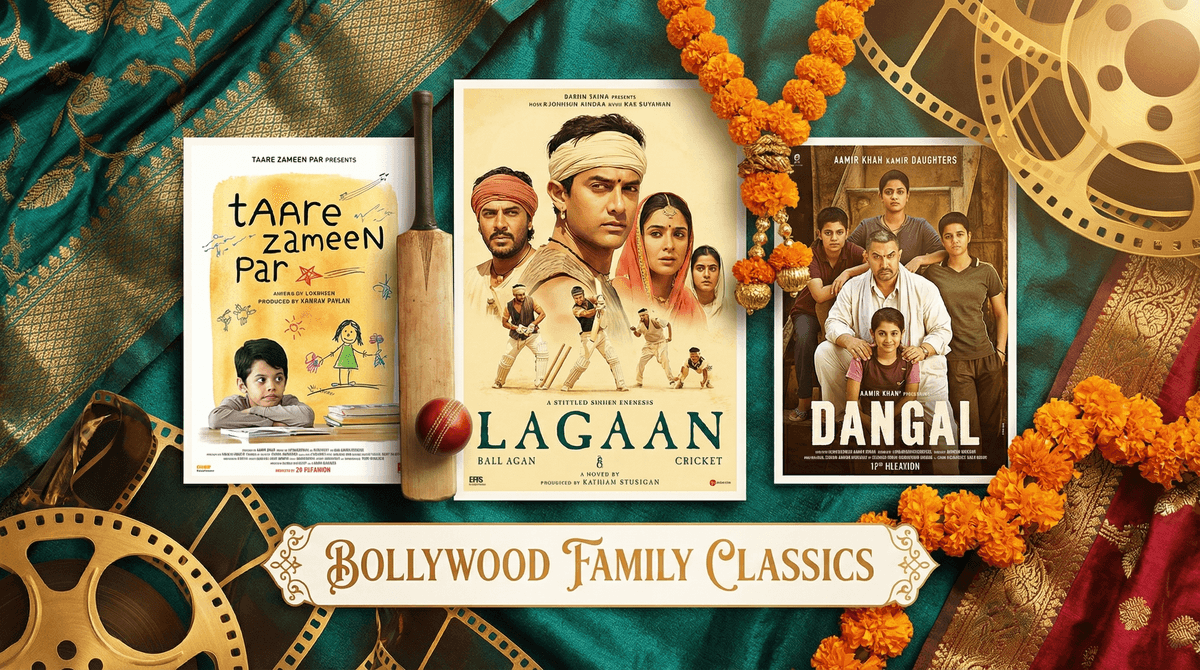
Best Bollywood Family Movies of All Time: A Parent's Guide
TL;DR: Bollywood offers some of the most visually stunning, emotionally rich family cinema out there—but navigating 100+ years of Indian film can feel overwhelming. Here are the essential family-friendly picks across generations, from epic adventures to heartwarming comedies, with real talk about what works for different ages.
Quick picks by age:
- Ages 6-10: Taare Zameen Par, Chillar Party, Stanley Ka Dabba
- Ages 10-14: 3 Idiots, Dangal, Zindagi Na Milegi Dobara
- Family movie night (all ages): Lagaan, Swades, Chhichhore
If your family's movie rotation is stuck in the Disney/Pixar/Marvel loop, Bollywood offers something genuinely different: three-hour emotional epics where characters break into choreographed dance numbers, complex family dynamics take center stage, and happy endings aren't guaranteed just because it's a "family film."
The best Bollywood family movies don't talk down to kids. They tackle real issues—learning disabilities, gender discrimination, economic inequality—while being wildly entertaining. Plus, the musical numbers? They're actually integral to the plot, not just filler. (And yes, your kids will start mimicking the dance moves. This is inevitable.)
Ages 10+ | 3 hours 44 minutes
Set in 1893 colonial India, this is basically The Sandlot meets Braveheart with cricket. A village facing crushing taxes challenges the British to a cricket match—if they win, no taxes for three years. If they lose, triple taxes.
What makes it great: The underdog sports story is universal, the stakes are crystal clear, and the cricket scenes are genuinely thrilling even if you've never watched a match. It's also a masterclass in showing (not telling) how colonialism worked.
Parent heads-up: It's long. Like, really long. But it moves. The runtime includes an intermission (standard for Bollywood), which is perfect for snack breaks. Some intense moments of British soldiers being cruel, but nothing graphic.
Conversation starters: Why would the British agree to this bet? What does it mean when they say "we'll play their game to beat them"? How did the villagers learn something completely new under pressure?
Ages 6+ | 2 hours 42 minutes
An 8-year-old struggling with dyslexia is sent to boarding school where a substitute art teacher recognizes what everyone else missed—he's not lazy or stupid, his brain just works differently.
What makes it great: This movie will wreck you in the best way. It's one of the most compassionate portrayals of learning disabilities in any cinema, anywhere. The animated sequences showing how Ishaan sees letters are brilliant visual storytelling.
Parent heads-up: Younger kids might find the scenes of Ishaan being punished and misunderstood genuinely upsetting. That's kind of the point, but be ready for questions about why adults aren't listening to him. Also, you will cry. Just accept this now.
Why it matters: If you have a kid who struggles in traditional school settings, this movie says "you're not broken" more powerfully than any parenting book.
Ages 10+ | 2 hours 50 minutes
Three engineering students navigate India's pressure-cooker education system while questioning whether success means following the system or following your passion. It's a comedy, a mystery, and a searing critique of rote learning—all at once.
What makes it great: The humor lands across cultures (physical comedy, clever wordplay, absurd situations), but it's also asking serious questions about what education is for. The "all is well" mantra becomes genuinely moving by the end.
Parent heads-up: Some crude humor (a drunk scene, bathroom jokes that middle schoolers will find hilarious), and a suicide subplot that's handled sensitively but is still heavy. The film takes academic pressure seriously—a student dies by suicide in the first act. This is worth discussing, not avoiding.
Perfect for: Families with middle or high schoolers feeling academic pressure. This movie gives kids language to talk about why they're stressed and what they actually want.
Ages 10+ | 2 hours 41 minutes
Based on a true story: A former wrestler trains his daughters to become world-class wrestlers in a culture that tells girls they should be preparing for marriage, not competition.
What makes it great: The sports sequences are phenomenal. The father-daughter relationship is complicated (he's pushing them hard, but also giving them opportunities no one else would). And it's genuinely inspiring without being cheesy about it.
Parent heads-up: The father cuts his daughters' hair without permission (a significant act in context), and there's real wrestling violence. Also, the movie doesn't pretend the path to equality is simple—the girls face mockery, discrimination, and institutional barriers.
Conversation gold: What does it mean that the dad wants his daughters to win medals he couldn't? Is he living through them, or giving them freedom? How do you balance cultural respect with changing unfair traditions?
Ages 12+ | 2 hours 23 minutes
When a man's son attempts suicide after failing an entrance exam, he tells his old college friends' story to show his son that failure isn't the end. It's The Breakfast Club meets Dead Poets Society, Bollywood-style.
What makes it great: It's hilarious and heartbreaking in equal measure. The flashback structure keeps things moving, and the message about redefining success is delivered through story, not speeches.
Parent heads-up: The framing device is a suicide attempt. The movie is explicitly about academic pressure and mental health, which makes it heavy but also makes it a conversation starter many families need.
Who needs this: Any family with high schoolers preparing for college. Any kid who thinks one test defines their worth. Actually, just... everyone.
Ages 12+ | 2 hours 35 minutes
Three friends on a bachelor party road trip through Spain confront their fears, their friendship, and what they actually want from life. It's a travel movie, a buddy comedy, and a quarter-life crisis film rolled into one.
What makes it great: Gorgeous cinematography, genuinely funny moments, and the rare Bollywood film where the romance isn't the main point. It's about male friendship, facing fears, and choosing joy over obligation.
Parent heads-up: Some drinking, a subplot about commitment issues, and brief sensuality. The "conquering your fears" sequences include skydiving and running with the bulls—exciting but intense.
Best for: Teens who need permission to not have everything figured out. The message is basically "life is short, take risks, be present"—which lands differently than when parents say it.
Ages 6+ | 2 hours 15 minutes
A group of kids in a Mumbai neighborhood befriend a homeless boy and his dog, then organize to fight when authorities try to remove them. Think The Little Rascals with social consciousness.
What makes it great: Kid protagonists who actually act like kids, a dog who steals every scene, and real stakes that matter. The kids use creativity and community organizing to solve problems—no adults swooping in to save the day.
Ages 7+ | 1 hour 36 minutes
Stanley never brings lunch to school, and a greedy teacher who steals kids' food makes this a problem. It's a small story with a big heart about childhood poverty, friendship, and dignity.
What makes it great: At 96 minutes, it's actually short for Bollywood. The child actors are natural, the humor is gentle, and the reveal of why Stanley doesn't bring lunch is handled with real sensitivity.
Why it matters: It introduces economic inequality without being preachy. Kids get that Stanley's situation isn't fair, and they see his friends being actual friends about it.
Runtime reality: Most Bollywood films are 2.5-3 hours. This isn't padding—it's the format. Use the built-in intermission for bathroom breaks, discussion, or just processing. Don't try to watch in one sitting if your kids are younger than 10.
Subtitles vs. dubbing: If available, go with subtitles. Dubbing often loses the emotional nuance, and kids who can read will pick up subtitles faster than you think. For younger kids or reluctant readers, look for Hindi films with simpler dialogue or more visual storytelling.
Content notes across the board:
- Violence: Generally less graphic than Hollywood action films, but emotional violence (characters being cruel, discrimination, poverty) is shown honestly
- Romance: Bollywood romance is often more chaste than Hollywood (less kissing, more longing looks), but arranged marriage plots might need context
- Language: Dubbed versions sometimes add profanity that isn't in the original. Check ratings carefully.
- Length: The runtime is real. Don't start these at 7pm on a school night.
Cultural context: You don't need to be an expert on Indian culture to enjoy these films, but a few minutes of "here's what's happening and why" helps. For example: Why is cutting hair significant? What's an arranged marriage? Why is cricket such a big deal? The movie breakdown can help answer these questions as they come up.
The musical numbers aren't random: In Bollywood, songs advance the plot, show character development, or compress time. When characters break into song, they're expressing emotions that dialogue can't capture. Once you accept this convention, it's actually pretty brilliant.
Happy endings aren't guaranteed: Unlike most Hollywood family films, Bollywood doesn't promise everyone gets what they want. Sometimes the underdog loses. Sometimes love isn't enough. Sometimes characters make noble sacrifices. This can be jarring if your kids are used to Disney logic, but it's also... real?
These films take family seriously: Multi-generational households, parental expectations, sibling bonds—Bollywood explores family dynamics with a complexity that most Hollywood family films skip. This makes for richer conversations but also means some conflicts might hit close to home.
Streaming reality: Many of these are on Netflix, Amazon Prime, or Disney+ Hotstar. Quality varies—some have excellent subtitles, others are auto-translated disasters. Check reviews before committing to a 3-hour film with bad subtitles.
Start with your kid's interests:
- Sports-obsessed? Lagaan or Dangal
- Struggling in school? Taare Zameen Par or 3 Idiots
- Loves adventure? Zindagi Na Milegi Dobara
- Younger kids? Chillar Party or Stanley Ka Dabba
Make it an event: The length of these films actually works in your favor—make it special. Order Indian food, talk about the intermission break like it's part of the experience, discuss predictions halfway through.
Use the pause button: These films are dense with cultural references, visual details, and subtext. Pausing to explain or discuss isn't "ruining" the movie—it's engaging with it.
Follow up with conversation: These films raise questions that don't have easy answers. What would you do in that situation? Was that character right or wrong? How would this story be different if it was set here? These discussions are where the real value lives.
Bollywood family films offer something genuinely different from the Hollywood formula: longer runtimes that let stories breathe, musical numbers that express what dialogue can't, and a willingness to tackle real issues without dumbing them down for younger audiences.
Yes, they're long. Yes, they require more active viewing than throwing on Bluey for the 47th time. But they're also visually stunning, emotionally rich, and genuinely entertaining across generations.
Start with one film that matches your family's interests. Use the intermission. Talk about what you're seeing. And maybe learn a few dance moves together—because if you're going to spend three hours watching something, you might as well get some choreography out of it.
Want to explore more? Check out our guides on best family movies on Netflix or how to talk to kids about different cultures through media.