

If you've got an 11-year-old who devours books faster than you can get to the library, you're probably noticing something: getting them away from screens is one thing, but getting them interested in "family game night" with the same old Monopoly? That's another battle entirely.
Here's the good news: the board game world has absolutely exploded in the last decade, and there are now incredible story-driven games that feel more like interactive novels than traditional roll-and-move games. We're talking games with narrative arcs, character development, meaningful choices, and worlds as rich as any fantasy series.
According to our Screenwise community data, about 55% of families with kids this age are gaming in some form, with an average of 4.2 hours of total screen time daily. But here's the thing—board games don't count toward that screen time, and they're actually developing the same strategic thinking and problem-solving skills that kids get from video games, just with way more face-to-face interaction.
Kids who love reading are drawn to stories, characters, and worlds they can get lost in. Traditional board games? Not so much. But modern story-driven board games scratch that same itch:
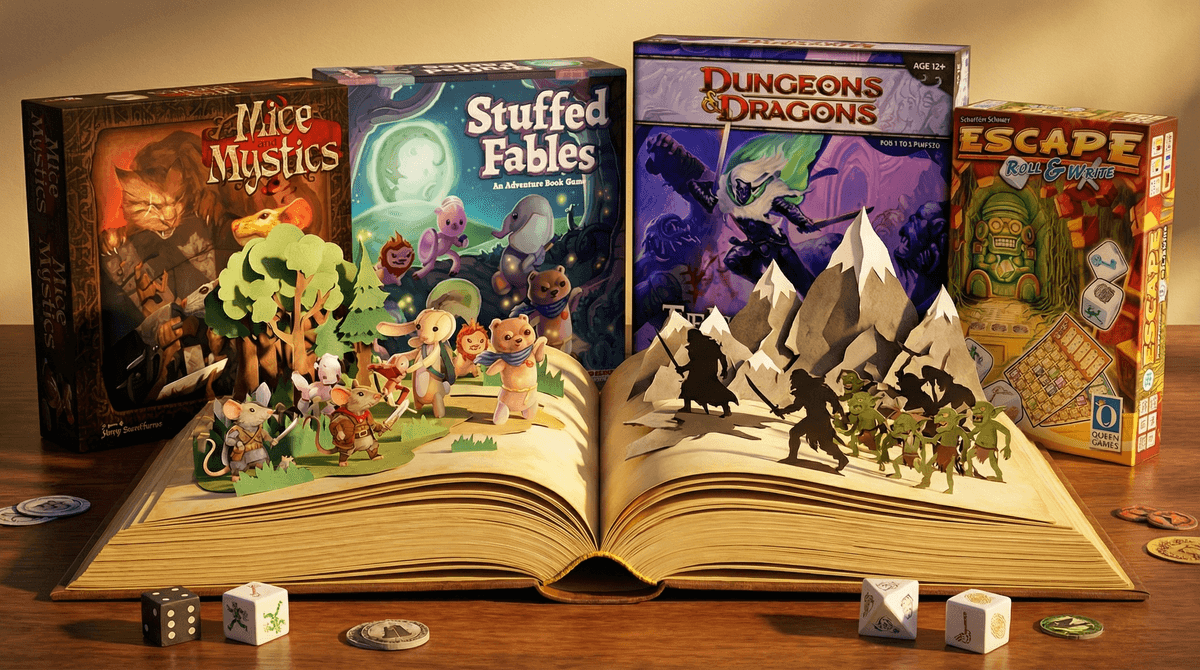
They're immersive. Games like Stuffed Fables and Mice and Mystics literally come with storybooks that you read as you play. You're not just moving pieces—you're living through a narrative.
They require reading. Unlike video games where everything is voice-acted, these games have quest cards, character backstories, and flavor text that actually matters. Your reader gets to use those skills in a social context.
They reward strategic thinking. Just like following a complex plot in a book requires keeping track of multiple threads, these games ask players to plan ahead, consider consequences, and think about cause and effect.
They're collaborative. Many of the best story-driven games are cooperative, meaning everyone works together against the game itself. This is huge for kids who might be intimidated by competitive games or have younger siblings they want to include.
Based on recommendations from parent communities and board game experts, here are the standouts:
Ages 7+, 2-4 players, 60-90 minutes
This is the gateway drug. Players are stuffed animals protecting their child from nightmares and monsters. The game comes with a massive storybook that serves as your game board, and you literally turn pages as you progress through chapters. The writing is genuinely good, and the cooperative gameplay means everyone's invested in the outcome. Plus, the theme is accessible enough for younger siblings without feeling babyish for an 11-year-old.
Ages 7+, 1-4 players, 60-90 minutes
Think Redwall meets Dungeons & Dragons. Players are mice on an epic quest, and the story unfolds over multiple sessions (you can save your progress). The narrative is surprisingly complex, with betrayal, loyalty, and real stakes. Fair warning: this one has a bit of a learning curve, but for a kid who can follow a multi-book series, the rules won't be an issue.
Ages 10+, 1-6 players, 20-40 minutes
This cooperative game has you working together to migrate birds across the world. What makes it perfect for readers is that you can play "open hand"—meaning everyone can see each other's cards and strategize together. Parents recommend this specifically for kids who need reading support, since the collaborative nature means they can always get help without feeling singled out.
Ages 8+, 1-5 players, 10 minutes
Okay, this one's less story-heavy but worth mentioning because it's chaos in the best way. You're explorers trying to escape a temple in real-time (there's a 10-minute soundtrack that plays), and everyone's rolling dice and yelling simultaneously. It's a great palate cleanser between heavier story games, and the frantic energy appeals to kids who might otherwise gravitate toward fast-paced video games.
Ages 10+, 2-4 players, 30 minutes
Not story-driven per se, but consistently recommended for this age group. You're a gem merchant in the Renaissance building a trading empire. The strategic depth is real—lots of planning ahead and resource management—but the rules are simple enough to teach in five minutes. Great for kids who love the planning and strategy aspects of reading (like figuring out how a mystery will unfold).
Ages 7+, 2-5 players, 35 minutes
You're building a medieval landscape tile by tile, and while there's no explicit story, kids who love world-building in books often love this. Every game creates a different map, and there's something satisfying about watching a world take shape. Plus, the strategy is deep enough to stay interesting for years.
These games aren't cheap. Quality board games run $30-60, which feels steep compared to a $10 movie. But here's the math: a game you play 20 times over two years? That's way better value than most entertainment. And unlike Roblox, there are no microtransactions or surprise charges.
Setup and cleanup are real. These aren't "grab it and go" activities. You're looking at 5-10 minutes to set up, plus cleanup time. But honestly? That's part of the ritual. Kids this age can absolutely help with setup, and it builds anticipation.
You'll need to play too, at least at first. Most of these games require 2+ players, and your 11-year-old will need someone to play with while they learn. The good news? These games are actually fun for adults. You're not just enduring Candyland for the 800th time—you're genuinely engaged.
Reading level matters, but not as much as you think. An 11-year-old who loves reading will have zero problem with the text in these games. But if you have younger siblings who want to join, the cooperative nature of most of these games means the older kid can help read cards and explain rules, which actually reinforces their own understanding.
If you're trying to compete with Minecraft or Fortnite for your kid's attention, a story-driven board game won't replace screens entirely. But it fills a different need—one that kids who love reading are especially primed for.
These games offer narrative depth, strategic thinking, and actual human interaction. They're not about "reducing screen time" (though they do that). They're about giving your reader another outlet for the same skills that make them love books: following complex stories, making meaningful choices, and getting lost in another world.
Start with one game—Stuffed Fables is probably your best bet—and see what happens. You might be surprised how quickly "can we play that board game again?" becomes a regular request.
And if you want more recommendations based on your specific family setup, check out our personalized game guides or Find games that match your kid's interests .
.