

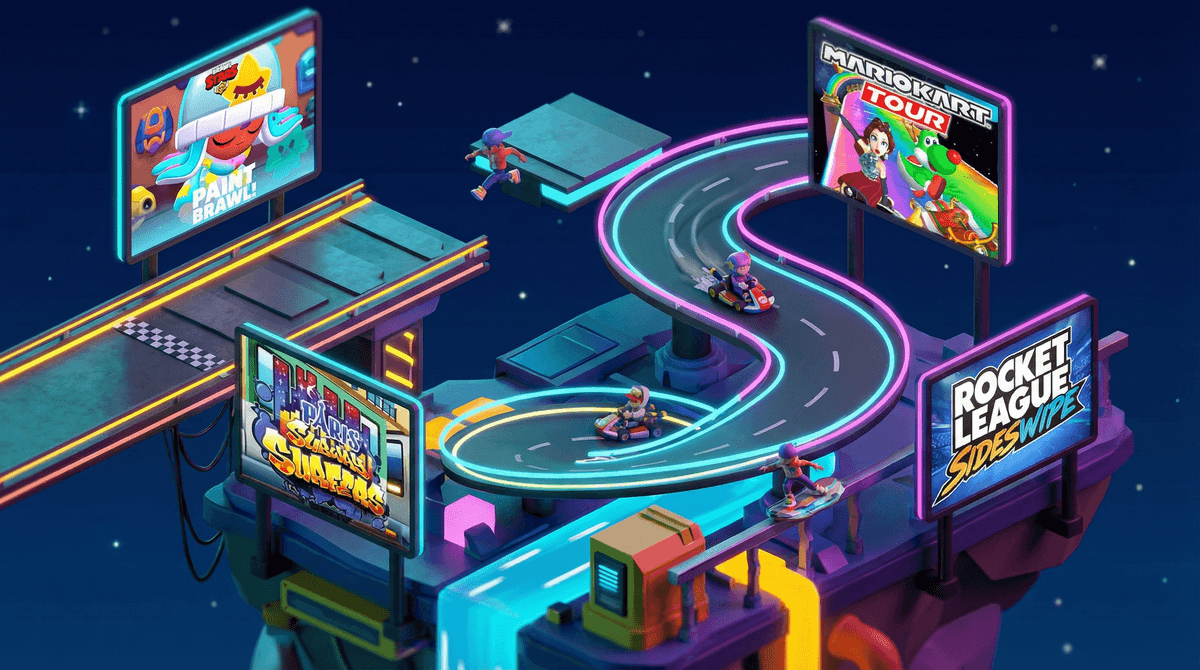
Action apps are games and interactive experiences that get your kid's heart racing—racing games, battle royales, platformers, rhythm games, fighting games, and anything else that requires quick reflexes, strategic thinking, and usually a lot of tapping, swiping, or button-mashing. Think [Brawl Stars](https://screenwiseapp.com/media/brawl-stars-app, Mario Kart Tour, Subway Surfers, and yes, Fortnite.
The action genre is massive, and it's where a lot of kids naturally gravitate. The dopamine hits are real, the skill progression is visible, and the social currency is high. Your kid isn't just playing—they're getting better, competing with friends, and building competence in a space that feels genuinely theirs.
But not all action apps are created equal. Some are legitimately great for developing hand-eye coordination and problem-solving. Others are thinly-veiled gambling simulators wrapped in cartoon graphics. Let's break down what's actually worth your kid's time (and your sanity).
Immediate feedback. You jump, you land (or you don't). You shoot, you hit (or you miss). There's no ambiguity, no waiting for a grade, no adult telling you "good job for trying." The game tells you exactly how you did, right now.
Visible skill progression. Kids can feel themselves getting better. Last week they couldn't beat level 3; this week they're on level 8. That sense of mastery is intoxicating, especially for kids who might struggle to see progress in school or sports.
Social connection. A huge chunk of action gaming is social. Kids are playing with friends or against friends, comparing scores, sharing strategies, and building a shared language. When your kid says "I got a Victory Royale," they're not just reporting a game outcome—they're participating in a cultural moment.
Stress relief. Look, sometimes kids just need to blow off steam. A few rounds of Stumble Guys after a hard day at school? That's not screen addiction—that's emotional regulation.
Ages 6-8: Gateway Action Games
At this age, you want action that's forgiving, colorful, and doesn't require reading complex instructions or navigating predatory monetization.
Sonic Dash - Endless runner that's fast-paced but not overwhelming. Sonic is a known quantity for parents, and while there are in-app purchases, the game is totally playable without them.
Crossy Road - Frogger for the modern age. Simple tap controls, no violence, and genuinely charming. The monetization is there but not aggressive.
Fruit Ninja - Classic for a reason. Satisfying swipe mechanics, no reading required, and you're slicing fruit, not zombies.
LEGO Builder's Journey - Okay, this is more puzzle than pure action, but it's gorgeous, screen-time-defensible, and has enough movement to keep action-loving kids engaged.
Ages 9-11: Skill-Building Action
This is the sweet spot where kids can handle more complex mechanics, multiplayer dynamics, and games with actual depth.
[Brawl Stars](https://screenwiseapp.com/media/brawl-stars-app - Top-down shooter with short matches (3 minutes), team play, and a progression system that rewards skill more than spending. Made by Supercell, so it's polished and not a cash-grab clone. That said, the in-app purchases are real, and kids will ask for the Brawl Pass. Set expectations early .
.
Mario Kart Tour - Racing with familiar characters, straightforward controls, and multiplayer options. The gacha mechanics are annoying (you're collecting drivers and karts through random pulls), but if your kid just wants to race, they can ignore most of it.
Stumble Guys - Battle royale obstacle course game. Think Wipeout meets Fortnite, but way less intense. Matches are quick, there's no voice chat by default, and losing is funny instead of rage-inducing.
Geometry Dash - Rhythm-based platformer that is hard. Like, really hard. But it's also completely ad-free if you pay the upfront cost ($3.99), and the difficulty is part of the appeal. Kids who love a challenge will obsess over this.
Ages 12+: Full-Throttle Action
At this point, your kid probably already knows what they want to play. Your job is to understand what they're playing and why, not to curate a perfect list of "approved" games.
Fortnite - The elephant in the room. Yes, it's a shooter. Yes, there's a battle royale mode where 100 players fight until one remains. But it's also cartoonish (no blood, no gore), deeply social, and has creative modes that are basically digital playgrounds. If your kid is playing Fortnite, learn how to set up parental controls and talk about voice chat norms.
Rocket League Sideswipe - Soccer with cars, mobile edition. Fast-paced, skill-based, and surprisingly deep. Matches are 2 minutes, so it's not a huge time sink, and the competitive scene is real if your kid wants to go that route.
Call of Duty Mobile - Look, if your teen is going to play a shooter, this is one of the more polished options. It's rated 17+ for a reason (realistic violence, blood), so this is a family decision. But it's also where a lot of high schoolers are playing together, and pretending it doesn't exist won't make it go away.
Genshin Impact - Action RPG with anime aesthetics, massive open world, and gacha mechanics that are... a lot. The game is free and genuinely beautiful, but the monetization is designed to make you spend. If your kid plays this, have a real conversation about gacha mechanics and gambling psychology.
The Monetization Talk
Most action apps are free-to-play, which means they make money through in-app purchases, battle passes, loot boxes, or ads. Your kid will ask to spend money. The question is whether you're going to have a proactive conversation about it or a reactive fight about it.
Set a budget. Some families do $10/month of in-game currency. Some do zero. Some let kids earn it through chores. Whatever you choose, make it clear and consistent.
Explain the psychology. These games are designed by very smart people to make you want to spend. That's not evil, but it's also not an accident. Help your kid understand the difference between wanting something because it's cool and wanting something because the game made you feel like you need it.
Distinguish between cosmetic and pay-to-win. A skin in Fortnite doesn't make you better at the game—it just makes you look cooler. That's a very different purchase than a game where spending money gives you an actual competitive advantage.
The Social Dynamics
Action games are social spaces. Your kid isn't just playing a game—they're hanging out with friends, making plans, talking trash, and navigating social hierarchies. This is normal and, honestly, kind of healthy. But it also means you need to pay attention to:
Voice chat. Most action games have voice chat, and most voice chat is... not great. Toxic language, bullying, and random adults yelling at kids. Learn how to manage voice chat settings and talk to your kid about when to mute, block, or report.
Friend requests from strangers. If your kid is playing multiplayer games, they'll get friend requests from people they don't know. Have a clear rule: friends from real life only, or at minimum, talk to a parent before accepting.
Time pressure. "I can't pause, it's online!" is a real thing. If your kid is in the middle of a match, they genuinely can't pause without screwing over their team. Build in buffer time for finishing matches, or set expectations that they don't start a new game if dinner is in 10 minutes.
The Violence Question
Let's be real: a lot of action games involve shooting, fighting, or blowing things up. Whether that's okay for your kid is a family decision, and there's no single right answer.
What research does show is that context matters. Cartoonish violence (Fortnite, Brawl Stars) is different from realistic gore (Call of Duty). Playing with friends in a silly, chaotic way is different from solo rage-grinding. A kid who plays shooters and also plays sports, reads books, and has a social life is different from a kid whose entire identity is wrapped up in one game.
If you're uncomfortable with shooting games, there are plenty of action alternatives—racing games, platformers, rhythm games. But if your kid is drawn to them, it's worth asking why instead of just saying no. Are they playing with friends? Do they like the strategy? The competition? Understanding the appeal helps you make better decisions.
Action apps aren't inherently good or bad—they're tools that can be used well or poorly. The best action games teach timing, strategy, and resilience. They let kids build competence and connect with friends. The worst ones are designed to extract money and attention without giving much back.
Your job isn't to find the "perfect" app or ban the "bad" ones. It's to stay curious, ask questions, and help your kid navigate a digital world that's designed to be compelling. Play a round with them. Ask what they like about it. Notice when they're having fun versus when they're frustrated or compulsive.
And if you're not sure where to start? Pick one game from the list above, download it, and play it together. You might be surprised by what you learn—about the game, about your kid, and about why they say "GG" after literally everything.
- Try before you commit. Download a free game and play it yourself before handing it to your kid.
- Set up parental controls. Most games have them—use them. Here's how.
- Check in regularly. Ask what they're playing, who they're playing with, and what they're enjoying. Make it a conversation, not an interrogation.
- Explore alternatives. If you want action without the monetization or social pressure, check out premium games with no in-app purchases.