

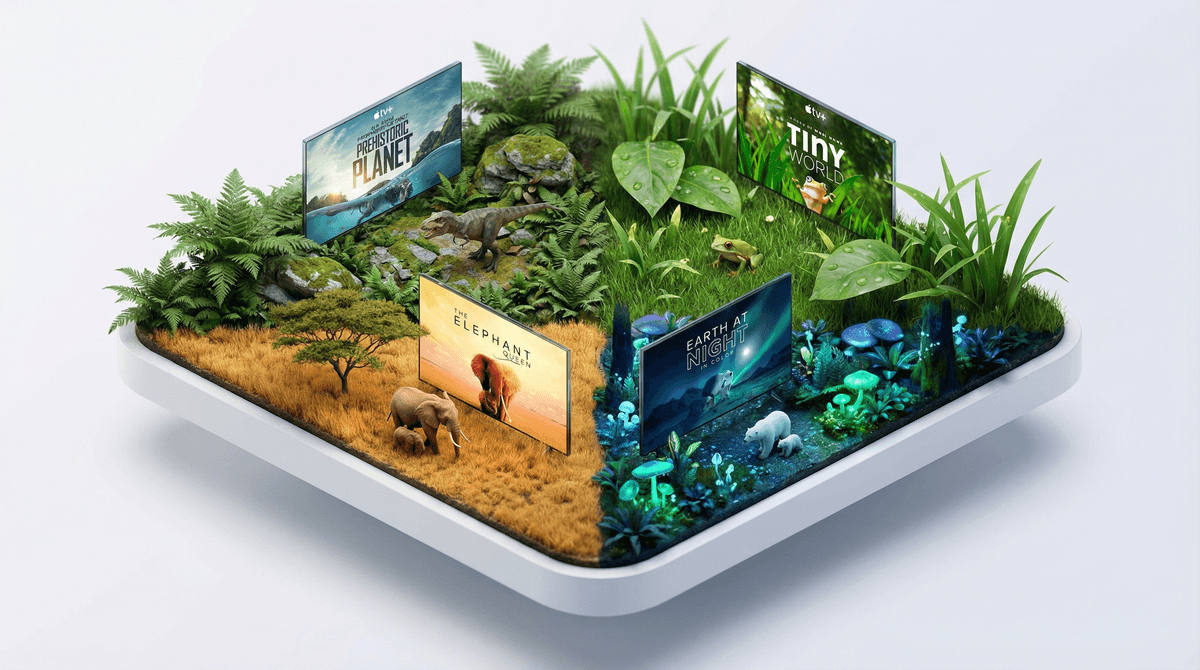
Apple TV+ has quietly become the streaming service with some of the most gorgeous, thoughtful documentaries out there. While Netflix churns out true crime and Disney+ focuses on franchise content, Apple has been investing in the kind of high-quality docs that actually make you feel smarter after watching—and many of them are genuinely great for family viewing.
The thing about Apple TV+ documentaries is they tend to be beautifully shot (Apple loves their cinematography), well-researched, and refreshingly free of the sensationalism that plagues so much documentary content these days. They're not trying to manufacture drama or stretch a 30-minute story into six episodes. They're just... good.
But here's the catch: not all of them are kid-friendly, and Apple's age ratings can be a bit all over the place. So let's break down the best picks for families who want to watch something together that's actually worth your time.
Prehistoric Planet (Ages 6+)
This is the dinosaur documentary for the modern age. Narrated by David Attenborough (because of course), it uses cutting-edge CGI to show dinosaurs as they actually lived—not as movie monsters, but as real animals with behaviors based on current paleontology research.
It's visually stunning, scientifically accurate, and my only complaint is that each episode is relatively short. Kids who are into dinosaurs will be absolutely glued to this, and parents won't be bored either. There's some predator-prey stuff (it's nature), but nothing gratuitous.
Tiny World (Ages 5+)
Paul Rudd narrates this series about small animals in their natural habitats, and it's exactly as charming as that sounds. The cinematography is incredible—they use specialized cameras to film at the scale of tiny creatures, so you're seeing the world from a mouse's or a beetle's perspective.
It's gentle enough for younger kids but interesting enough that older kids and adults will stay engaged. Perfect for a weekend morning watch.
The Elephant Queen (Ages 6+)
This one's a feature-length documentary following an elephant matriarch and her herd across the African savanna. Chiwetel Ejiofor narrates, and it's structured almost like a narrative film—you get emotionally invested in these elephants.
Fair warning: there are some emotional moments involving young elephants in danger, and the realities of drought and survival are present. It's not traumatizing, but sensitive kids might need some reassurance. That said, it's a beautiful entry point for conversations about climate change, animal behavior, and ecosystems.
Earth at Night in Color (Ages 8+)
Tom Hiddleston narrates this series filmed entirely at night using special low-light cameras. You see nocturnal animals doing their thing in full color, which is genuinely mind-blowing from a technical standpoint.
Some episodes have predator-prey dynamics (lions hunting, etc.), so it's better for kids who can handle nature documentary realities. But it's not graphic—just real.
The Year Earth Changed (Ages 10+)
This documentary looks at how wildlife responded during the COVID-19 lockdowns when humans largely stayed inside. It's narrated by David Attenborough and it's surprisingly hopeful—showing how quickly nature can rebound when given space.
Great for middle schoolers who lived through the pandemic and might appreciate seeing it from a different angle. Also a solid jumping-off point for conversations about human impact on the environment .
.
They Call Me Magic (Ages 12+)
A docuseries about Magic Johnson's life and career. It covers his basketball legacy, his HIV diagnosis, and his business empire. It's well-made and inspiring, though some of the content about his diagnosis and the AIDS crisis of the 1980s requires some maturity.
Good for sports-loving tweens and teens, and honestly a great way to have conversations about stigma, health, and perseverance.
Billie Eilish: The World's a Little Blurry (Ages 13+)
If you have a teen who's into music, this behind-the-scenes look at Billie Eilish's rise to fame is fascinating. It's long (2.5 hours) but genuinely interesting—showing the creative process, family dynamics, and the reality of sudden fame.
There's some language and discussion of mental health challenges, so it's better for older teens. But it's also a really honest look at what it means to be a young artist in the modern music industry.
The quality is consistently high. Apple isn't pumping out dozens of mediocre docs—they're selective, which means most of what's there is actually worth watching.
Nature docs are the sweet spot for family viewing. The wildlife documentaries on Apple TV+ are some of the best available anywhere, and they're genuinely appropriate for a wide age range.
Check the ratings, but also trust your kid. Apple's age ratings are sometimes conservative. A documentary rated TV-PG might be fine for your mature 8-year-old, while another might be too intense for your 10-year-old. You know your kid.
These are great conversation starters. Unlike a lot of kids' content that's just... content, these documentaries tend to spark actual discussions. "How do they film that?" "Why are the elephants doing that?" "What happened to the animals after the pandemic?"
Apple TV+ might not have the massive library of Netflix or the nostalgic pull of Disney+, but for families who want to watch something together that's beautiful, educational, and not dumbed down, their documentary selection is genuinely excellent.
Start with Prehistoric Planet if you have dinosaur fans, Tiny World if you want something gentler, or The Elephant Queen if you're ready for something with more emotional depth.
And honestly? Watching a gorgeous nature documentary together is a pretty solid use of screen time. No guilt needed.
Set a documentary night. Pick one night a week where you watch something educational together. It doesn't have to be every week, but making it a semi-regular thing helps establish that screens can be for learning and connection, not just passive consumption.
Follow up with books or activities. If your kid gets really into dinosaurs from Prehistoric Planet, hit the library. If they love the nocturnal animals in Earth at Night in Color, maybe do a night hike. Documentaries work best when they're a jumping-off point, not an endpoint.
Use the "what did you notice?" question. Instead of quizzing kids on facts, ask them what they noticed or what surprised them. It keeps the conversation open and curious rather than turning it into a test.
If you're looking for more educational content across different platforms, check out our guide on best educational shows for kids or explore alternatives to YouTube for more curated learning content.