

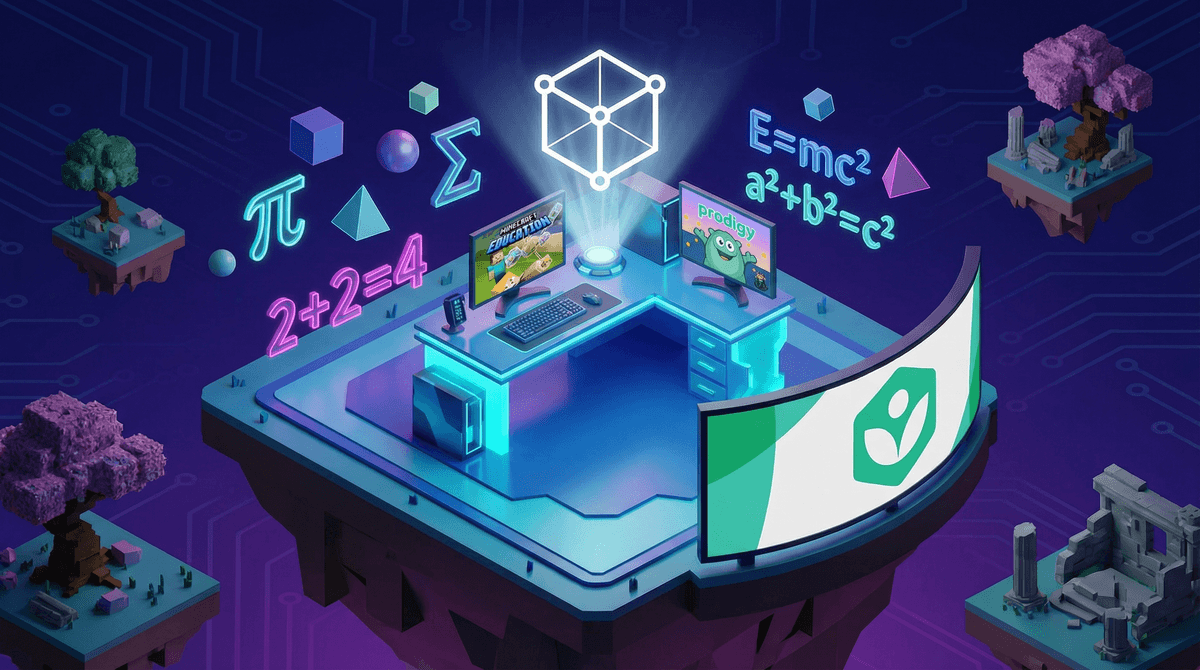
Seventh grade math is where things get real. We're talking pre-algebra, ratios, proportions, integers, and the dreaded word problems that make kids (and let's be honest, many adults) break into a cold sweat. This is the year math stops being about simple arithmetic and starts building the foundation for high school algebra and geometry.
Math learning games for 7th graders are digital tools designed to teach these specific middle school concepts through interactive gameplay. Unlike the colorful, cartoon-heavy math apps for younger kids, these games understand that 12 and 13-year-olds need something that doesn't feel babyish while still making abstract concepts click.
The best ones disguise practice as actual gameplay—think puzzle-solving adventures, strategy games, or competitive challenges where mastering equations is the key to winning, not just the annoying educational part tacked on.
Here's the thing: 7th grade is a critical inflection point for math confidence. Kids who struggle here often develop math anxiety that follows them through high school and beyond. But it's also the grade where things can suddenly click if concepts are presented differently than the standard textbook approach.
The right math games can:
- Make abstract concepts visual and interactive (finally understanding what negative numbers actually mean)
- Provide immediate feedback without the embarrassment of getting it wrong in front of the class
- Let kids practice at their own pace without feeling behind or bored
- Build genuine confidence through mastery, not just participation trophies
Plus, let's be real—if your 7th grader is going to be on a screen anyway, having them actually strengthen math skills instead of watching YouTube Shorts feels like a parenting win.
Prodigy Math
Prodigy Math is the heavyweight champion here. It's a fantasy RPG where kids battle monsters and complete quests—but every battle requires solving grade-level math problems. The game adapts to your kid's level and aligns with curriculum standards.
The reality: The free version is solid, but there's definitely pressure to upgrade to the paid membership for pets, cosmetics, and other features. Your kid will ask. Multiple times. That said, the core math content is genuinely effective, and many teachers actually assign it as homework.
Best for: Kids who like RPGs and don't mind that it's obviously educational. Works well for practice and reinforcement.
DragonBox Algebra
DragonBox Algebra is brilliant because it teaches algebraic thinking without initially looking like algebra at all. Kids manipulate cards and symbols in puzzle-style gameplay, and before they realize it, they're solving equations.
The reality: It's not free (around $8-15 depending on the version), but it's a one-time purchase with no ads or subscriptions. The progression is thoughtfully designed, moving from visual/intuitive to traditional algebraic notation.
Best for: Kids who say "I hate math" or have algebra anxiety. The game mechanics are genuinely fun, not just dressed-up worksheets.
Khan Academy
Yes, Khan Academy is more platform than game, but the gamification elements (points, badges, energy streaks) work surprisingly well for motivated kids. The 7th grade math curriculum is comprehensive and completely free.
The reality: This requires more self-direction than pure games. It's better for kids who can handle some structure or for parents who want to assign specific topics. The instructional videos are genuinely excellent.
Best for: Kids who are okay with a more traditional learning approach but need something more engaging than a textbook. Great for targeted practice on specific weak areas.
Minecraft Education Edition
Hear me out on this one. Minecraft Education Edition has specific math worlds and lessons designed for middle schoolers, covering ratios, area, volume, and coordinate planes through building challenges.
The reality: This requires a school subscription or individual purchase, and setup is more involved than other options. But if your kid already loves Minecraft, leveraging that obsession for math learning is chef's kiss.
Best for: Minecraft-obsessed kids who will engage with literally anything in that blocky universe.
Mathigon
Mathigon is a free, interactive textbook platform with explorable explanations, puzzles, and games. The 7th grade content includes interactive manipulatives for understanding integers, equations, and geometry.
The reality: It's more exploratory and less game-like than others on this list, but the interactive elements are genuinely clever. Think of it as the cool, modern textbook your kid's school probably doesn't have.
Best for: Curious kids who like understanding why math works, not just memorizing procedures.
Let's set realistic expectations: no game is going to magically transform a struggling math student into a prodigy. These tools work best as supplements to regular instruction, not replacements.
The sweet spot is 15-30 minutes of focused gameplay, 3-4 times a week. More than that and it becomes a chore. Less and you won't see much impact.
Also, be prepared for the fact that your kid might initially resist anything labeled "educational." Seventh graders are deeply concerned with not looking uncool, even in the privacy of their own home. Let them explore the options without hovering, and don't make a huge deal about it being "math practice."
Start with a trial period: Let your kid try 2-3 options for a week each. What works for one kid might feel painfully boring to another.
Connect it to actual homework: If your kid is struggling with a specific concept (like negative numbers or solving equations), point them to that specific section in the game/app rather than just general play.
Don't make it a punishment: "You got a C on your math test, so now you have to play Prodigy for an hour" is a great way to make them hate both math AND games.
Celebrate actual progress: When they master a concept in the game, acknowledge it. "Hey, you figured out those integer operations—that's the same stuff you were stuck on last week."
The best math learning game for your 7th grader is the one they'll actually use. If you have to nag them constantly, it's not working regardless of how pedagogically sound it is.
Start with the free options (Khan Academy or Prodigy Math), and only invest in paid apps if your kid shows genuine engagement. And remember: these games work best as one tool in the toolkit, alongside good teaching, homework practice, and occasionally just sitting down together to figure out why the heck that word problem about trains leaving stations in opposite directions matters.
Seventh grade math doesn't have to be a nightmare. Sometimes it just needs better packaging.