

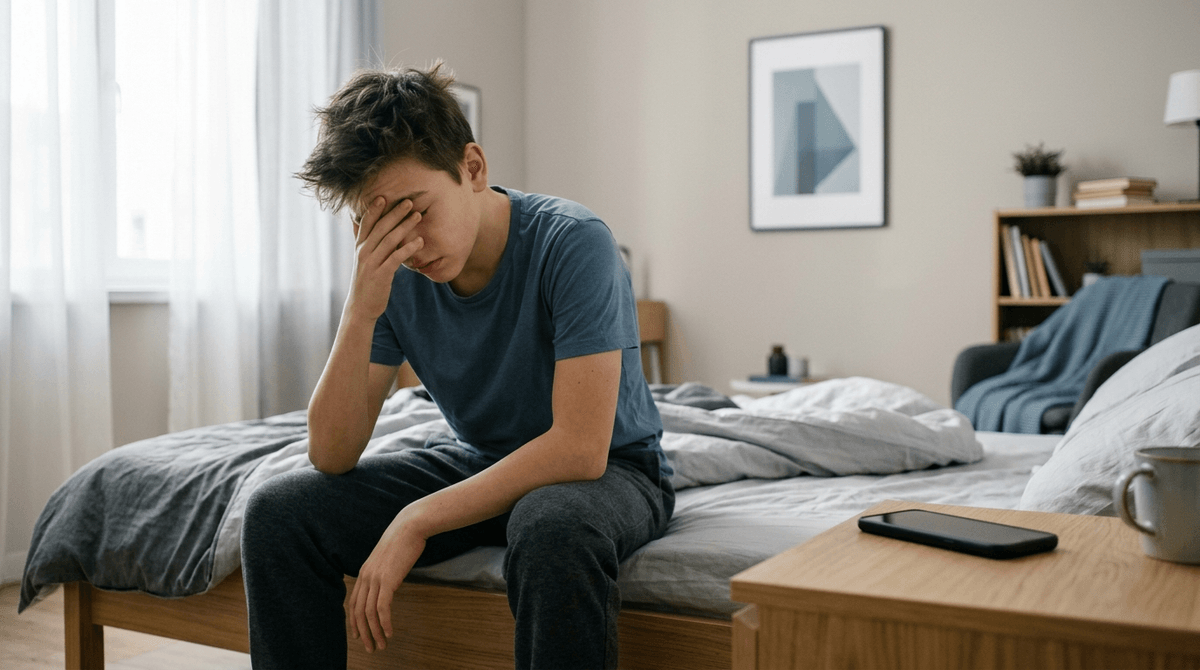
Your child’s phone is ruining their sleep even if they aren't touching it. Just having a device in the bedroom creates a "psychological reach" that keeps the developing brain in a state of high alert, preventing the deep, restorative rest required for growth and learning.
Simply placing a smartphone or tablet in a child’s bedroom is linked to significantly worse sleep, even if the device is never powered on after lights-out.
Sleep is the physiological foundation of cognitive development, and modern bedtime routines are systematically dismantling it. This finding shifts the goalposts for parents from monitoring usage to controlling physical access. If your child is struggling with focus, mood swings, or declining grades, the high-impact fix might be as simple as moving the charging station to the kitchen.
We often focus on the "blue light" emitted by screens, but this research suggests the mental tether to the digital world is just as damaging. For a child, a phone in the room is a promise of social connection that never ends, making it impossible for their nervous system to fully downshift into a sleep state. Establishing a "no-phones-in-the-bedroom" policy is a more effective health intervention than simply setting a "no-scrolling-after-9pm" rule.
Researchers recognized that portable screens are fundamentally different from the stationary TVs of previous generations because they follow children into their most private, restorative spaces. While older studies focused on total daily screen time, these authors wanted to isolate the specific impact of "reachability"—the 24/7 access that defines the smartphone era.
The study was designed to answer a specific question: Is the mere presence of a device in the sleep environment as harmful as active use? By synthesizing data from over 125,000 children, the researchers sought to provide a definitive answer to parents and pediatricians who were seeing a global spike in adolescent sleep deprivation and daytime grogginess.
The data reveals a direct and consistent link between device access and poor sleep outcomes across twenty international studies. The sheer scale of the participant pool—more than 125,000 kids with a mean age of 14—lends significant weight to the findings.
- Active use is a sleep killer. Kids who use devices at bedtime are more than twice as likely to get insufficient sleep compared to those who don't.
- Presence alone is disruptive. Even if they don't touch the screen, children with a device in the room have a 79% higher risk of inadequate sleep quantity and a 53% higher risk of poor sleep quality.
- Daytime consequences are real. Children with bedroom device access were twice as likely to suffer from excessive daytime sleepiness, impacting their ability to learn and regulate emotions.
- Consistency is key. The negative association between devices and sleep was found in every single study analyzed, regardless of the country or specific device type.
The "psychological reach" of a device is likely more disruptive than the light it emits. A phone on a nightstand is a tether to a social world that never sleeps; the anticipation of a notification, a "like," or a message keeps the brain in a state of low-level arousal. It is biologically difficult for a child’s brain to enter deep REM sleep when the gateway to their entire social life is vibrating two feet from their pillow.
The researchers are essentially pointing to a "digital umbilical cord." Even when the screen is dark, the child is mentally "on call." This creates a state of hyper-vigilance that is the exact opposite of the relaxation required for sleep. For teens especially, the social cost of being "offline" while a phone is within reach creates a cognitive load that prevents the brain from truly disconnecting.
These findings are observational and cross-sectional, meaning they show a strong correlation but cannot definitively prove that the phone caused the sleep loss. There is a possibility of "reverse causality"—the idea that kids who are already struggling to sleep reach for their phones because they are awake and bored, rather than the phone keeping them awake in the first place.
Additionally, the research did not distinguish between how the devices were used. We don't know if a child listening to a calming meditation app has the same sleep profile as a child scrolling through a high-intensity social media feed. The data also relies heavily on self-reporting from children and parents, which is traditionally less accurate than lab-monitored sleep studies using sensors.
- If your child is consistently groggy or irritable in the morning, move all portable electronics to a central family charging station in a common area like the kitchen at least 30 minutes before bedtime.
- If you currently allow "background noise" from a tablet to help a child fall asleep, replace the device with a dedicated white noise machine or a screenless audio player to remove the temptation of late-night scrolling.
- If your teenager argues they need their phone in the room to use as an alarm clock, buy them a standalone digital alarm clock to eliminate the primary excuse for keeping the device on the nightstand.
- If you are implementing new house rules, prioritize a "no-devices-in-the-room" policy over a "no-usage" policy, as the physical absence of the hardware is the most reliable way to ensure the brain actually powers down.
Remove the phone to restore the sleep. Managing "screen time" is a losing battle if the hardware stays in the bedroom overnight; the only way to ensure a child's brain truly disconnects is to physically separate them from the device. You have the evidence-based permission to make the bedroom a screen-free sanctuary for the sake of your child’s long-term mental and physical health.
Ben Carter, Philippa Rees, Lauren Hale et al. (2016). Association Between Portable Screen-Based Media Device Access or Use and Sleep Outcomes: A Systematic Review and Meta-analysis. JAMA Pediatrics. doi:10.1001/jamapediatrics.2016.2341 — jamanetwork.com