

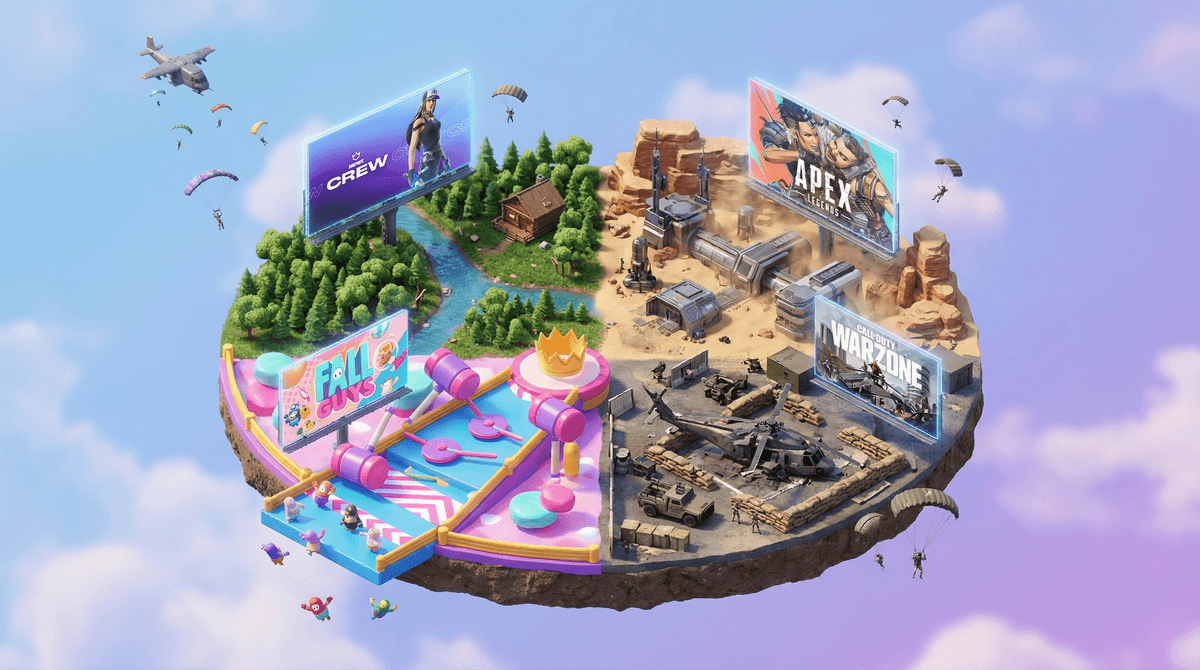
Picture this: 100 players parachute onto an island, scramble to find weapons and supplies, and fight until only one person (or team) remains standing. That's a battle royale game. The name comes from the 2000 Japanese film Battle Royale, but the gaming genre exploded around 2017 with PlayerUnknown's Battlegrounds (PUBG) and then absolutely dominated youth culture with Fortnite.
The core mechanic is simple: last one standing wins. But what makes these games addictive is the shrinking play area (often called "the storm" or "the zone") that forces players closer together as the match progresses, the randomness of loot drops, and the adrenaline rush of those final moments. Matches typically last 15-25 minutes, which feels like just the right amount of time for "one more game."
The big names parents should know: Fortnite (cartoony, building mechanics, massive cultural phenomenon), Apex Legends (team-based, more realistic graphics), Call of Duty: Warzone (military shooter, older audience), and PUBG (the original hit, more tactical). There's also Fall Guys, which brilliantly adapted the format into a goofy obstacle course game that's actually pretty wholesome.
The social element is huge. Battle royales are built for squads—most kids aren't playing solo, they're dropping in with 2-3 friends, using voice chat to strategize, celebrate victories, and laugh about ridiculous deaths. It's the digital equivalent of neighborhood kids playing capture the flag, except the neighborhood is global and includes elaborate dance emotes.
Every match feels different. The randomness of where you land, what weapons you find, and who you encounter means no two games play out the same way. This unpredictability keeps it fresh even after hundreds of matches.
The skill ceiling is high but the entry barrier is low. A beginner can occasionally get lucky and place well, but mastering building in Fortnite or perfecting your aim in Apex takes real practice. Kids love games they can get better at, and battle royales provide endless opportunities for improvement and those dopamine-flooding clutch moments.
It's free. Well, sort of. Most battle royales are free-to-play, which means your kid can download and play without asking for $60 upfront. We'll get to the monetization concern in a second, but this accessibility is a big part of why these games spread so quickly through friend groups.
Let's address the elephant in the room: yes, these are shooting games where the goal is to eliminate other players. But here's the nuance parents need to understand.
Fortnite, the most popular among younger kids (we're talking 8-14 year olds here), has a cartoony art style with no blood or gore. When you eliminate someone, they dissolve into pixels and drop their loot. It's more Looney Tunes than Saving Private Ryan. The ESRB rates it T for Teen (13+), but the reality is that tons of younger kids play it, and many parents feel comfortable with that choice given the visual style.
Apex Legends and Warzone are different beasts—more realistic graphics, military themes, and rated M for Mature (17+). These are legitimately not appropriate for elementary schoolers, and even middle schoolers might not be ready depending on your family's values and their maturity level.
The research on video game violence is honestly mixed and nuanced—there's no clear evidence that playing these games causes real-world aggression , but there's also legitimate concern about desensitization and whether we want kids spending hours practicing shooting mechanics, even in cartoon form. This is a values call for your family, not a universal right answer.
Microtransactions are the bigger wallet threat. These free-to-play games make money through cosmetic purchases—character skins, weapon wraps, dance emotes, battle passes. Fortnite alone generated $9 billion in 2018-2019. Kids feel intense pressure to own certain skins, and the FOMO is real when their friends are rocking the latest cosmetics. The battle pass system (pay $10-20 per season for exclusive unlockables) is particularly effective at creating ongoing spending pressure.
Voice chat with strangers is a safety issue. Most battle royales include voice chat, and when your kid is matched with random teammates, they're potentially talking to anyone. The language can be toxic, the behavior can be inappropriate, and occasionally there are predatory adults. See how to manage voice chat settings in these games.
The "one more game" loop is by design. These games are engineered to keep players engaged. Short match times, variable rewards, social pressure from friends who are still playing—it all adds up to kids having a genuinely hard time stopping. This isn't a character flaw; it's effective game design meeting developing brains.
Rage and frustration are common. Losing when you're in the top 10 feels terrible. Watching your squad get eliminated because one person made a mistake creates real interpersonal tension. The emotional regulation required for these high-stakes competitive games is significant, and not all kids (or adults!) handle it well.
Ages 8-10: If you're considering Fortnite at this age, set up parental controls immediately. Disable voice chat with non-friends, set spending limits, and keep gaming in shared spaces. Honestly, many kids this age would be better served by Minecraft or Splatoon 3 (Nintendo's colorful ink-shooter that scratches a similar itch without the battle royale intensity). Fall Guys is also a great alternative that captures the excitement without any shooting.
Ages 11-13: This is prime Fortnite territory. Most middle schoolers are playing or know friends who play. The social aspect becomes more important here—being able to squad up with friends is genuinely valuable for maintaining friendships. Set clear time limits (maybe 1 hour on weekdays, 2 hours on weekends?), establish a monthly spending limit (including zero as an option), and have regular check-ins about their emotional state during and after playing.
Ages 14+: Teens might gravitate toward more realistic battle royales like Apex Legends or Warzone. If you're okay with M-rated content, these can actually require more strategic thinking and teamwork than Fortnite. The same rules apply: time limits, spending boundaries, and open conversations about online interactions. At this age, you're coaching more than controlling.
Changes in mood or behavior. If your kid is consistently angry, anxious, or irritable around gaming—or if they're sneaking extra playtime or lying about how much they're playing—that's a red flag worth addressing.
Social isolation. Battle royales should enhance friendships, not replace them. If gaming is the only way your kid connects with friends, or if they're declining in-person activities to play, that's worth a conversation.
Sleep disruption. These games are particularly hard to stop at bedtime because friends are still online and "just one more match" is always tempting. Enforce device-free bedrooms or clear stop times.
Spending that's out of control. If you're seeing unauthorized charges or constant requests for "just this one skin," it's time to remove payment methods from the account and establish clearer boundaries.
Battle royale games aren't inherently evil, and they're not going anywhere. For many kids, they're a legitimate social space and a way to build skills like strategic thinking, teamwork, and persistence. The cartoony ones like Fortnite occupy a weird middle ground where they're technically teen-rated but functionally played by tons of preteens, and that's a choice you'll need to make for your family.
The key is active involvement. Know which game your kid is playing, understand the monetization model, set up parental controls, and maintain open dialogue about their experiences. Watch them play occasionally. Ask about their squad dynamics. Talk about what they do when they encounter toxic behavior.
These games can be part of a healthy digital diet—but like actual diet, moderation and mindfulness matter. They shouldn't be the only thing on the menu, and you get to decide the portion sizes.
- Set up parental controls for Fortnite if your kid plays
- Explore alternatives to battle royale games that might fit your family better
- Learn about gaming addiction warning signs
- Have a family conversation about spending limits in free-to-play games