

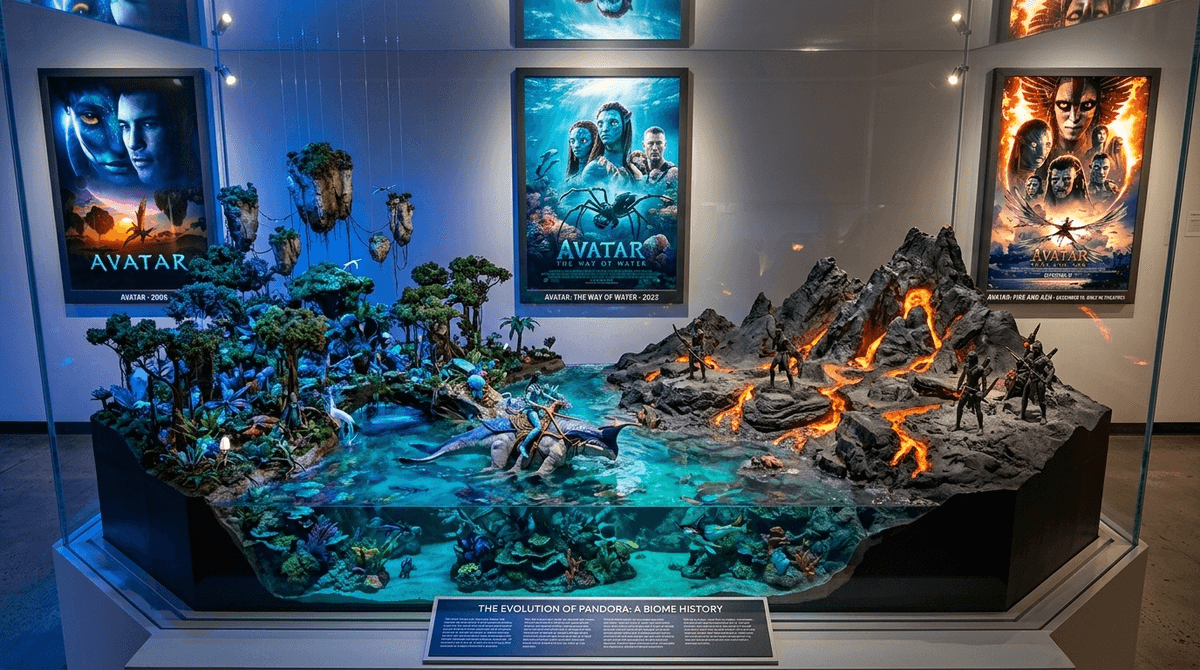
Avatar: Fire and Ash is a breathtaking, three-hour endurance test that’s significantly darker than its predecessors, introducing a villainous Na'vi tribe that might complicate your kid's "blue people are the good guys" worldview. If your family handled the underwater intensity of The Way of Water, you’re probably fine here, but be prepared for more visceral violence and a story that trades "save the whales" vibes for "survive the volcanic cult."
TL;DR
- Age Rating: PG-13 for intense violence, some language, and thematic elements.
- Runtime: Approximately 3 hours (plan your popcorn and bathroom breaks accordingly).
- The Big Change: The "Ash People" (the People of Ash) are aggressive Na'vi, showing kids that conflict isn't just "Humans vs. Nature."
- Where to Watch: Now streaming on Disney+ (as of early 2026) or available on 4K/Blu-ray.
- Best for: Kids 11+ who can sit through long epics and handle some "scary" character designs.
See if Avatar: Fire and Ash is ok for a 9-year-old
Set shortly after the events of Avatar: The Way of Water, this third installment in James Cameron’s saga takes us to a volcanic region of Pandora. We meet the "Ash People," led by a formidable Na'vi named Varang. Unlike the forest-dwelling Omatikaya or the reef-dwelling Metkayina, the Ash People aren't exactly welcoming. They represent the darker, more destructive side of Na'vi culture.
The story continues to follow Jake Sully and Neytiri as they realize that the threat to their family doesn't just come from the "Sky People" (humans), but from within Pandora itself. It’s a massive visual spectacle that pushes the boundaries of CGI once again, but it feels more like a war movie than a nature documentary this time around.
Pandora is essentially the ultimate "open world" for kids who grew up on Minecraft and Roblox. The world-building is so immersive that it feels real. For middle schoolers and teens, the appeal lies in the high-stakes action and the relatable "teen angst" of the Sully children.
Kiri and Lo'ak have become major icons for Gen Z and Gen Alpha, representing that feeling of being an outsider. While the first Avatar was for the parents, this new trilogy is very much focused on the kids' perspectives, making it a "must-watch" to stay in the loop at school.
The biggest shift in Avatar: Fire and Ash is the introduction of Na'vi antagonists. In the previous films, the moral lines were very clear: Na'vi are good/spiritual, Humans are bad/greedy. This movie blurs those lines.
The Ash People use fire as a weapon and have a much more aggressive, cult-like social structure. For younger kids (under 10), this might be confusing or even frightening. The character designs for the Ash People are intentionally "edgier" and less traditionally "pretty" than the Na'vi we've seen before. If your child is sensitive to "scary" looking creatures or themes of betrayal within a community, you might want to pre-screen this one.
Let’s be real: three hours is a long time for any human to sit still, let alone a 10-year-old. James Cameron builds these movies to be "experiences," but for parents, they can be endurance tests.
If you’re watching at home on Disney+, the "intermission" is your best friend. Breaking the movie into two 90-minute chunks can actually help kids process the dense plot and heavy themes better. According to our community data, about 40% of parents of kids under 12 reported that their children lost interest or got "fidgety" around the two-hour mark during the theatrical run.
- Violence: This is the most violent Avatar yet. Expect more hand-to-hand combat, spears, fire-based weapons, and intense creature battles. While it’s mostly "blue blood," the emotional weight of the violence is heavier.
- Language: Typical PG-13 fare. A few "S-words" and some mild profanity, similar to what you’d hear in a Marvel movie.
- Thematic Elements: Themes of grief, the cycle of violence, and the idea that "nature" isn't always kind. There is a strong emphasis on family loyalty, which is a great talking point, but it comes with the stress of characters being in constant peril.
This movie offers a great opportunity to move past "good vs. evil" conversations. You can ask your kids:
- "Why do you think the Ash People are so angry compared to the Reef People?"
- "Does Jake Sully's history as a human make him a better or worse leader for the Na'vi?"
- "How does the environment (volcanoes vs. ocean) change the way people live and act?"
If your kids are interested in the environmental themes but need something a bit lighter after the intensity of Pandora, we highly recommend The Wild Robot by Peter Brown or the Wings of Fire series, which also deals with warring tribes and complex loyalties in a way that's more accessible for the 8-12 crowd.
If the older kids are watching Avatar: Fire and Ash and the 7-year-old feels left out, don't just let them "hang out" in the room. The imagery is too intense. Instead, try:
- The Legend of Korra: Similar themes of balance and elemental powers but in a more kid-friendly (though still mature) format.
- Ori and the Will of the Wisps: A stunningly beautiful game that captures the "bioluminescent" feel of Pandora without the PG-13 violence.
- Abzu: If they loved the water scenes in the previous movie, this is a peaceful, non-violent exploration game.
Q: Is Avatar: Fire and Ash appropriate for an 8-year-old?
Most 8-year-olds will find the 3-hour runtime and the aggressive "Ash People" too intense. Unless your child is very mature and has already seen and enjoyed the first two films without issue, we recommend waiting until they are at least 10 or 11.
Q: Do we need to watch the first two Avatar movies first?
Yes, absolutely. The plot of Fire and Ash relies heavily on the character arcs established in The Way of Water. Without that context, the emotional stakes for the Sully family won't make much sense.
Q: Are there any jump scares in Avatar 3?
There aren't many traditional "horror" jump scares, but there are several moments of sudden, loud violence and intense creature attacks that can be startling. The "fire" sequences are particularly loud and chaotic.
Q: How does the violence compare to Marvel movies?
It's slightly more visceral than your average Avengers movie. Because the Na'vi are biological creatures (not robots or aliens turning to dust), the impact of spears and arrows feels more "real," even if the blood isn't red.
Avatar: Fire and Ash is a cinematic achievement that your kids will likely be talking about for months. It’s dark, it’s long, and it’s complicated—but it’s also a rich world that encourages imagination and discussions about environmental stewardship and community. Just make sure you’ve got a comfortable couch and a plan for the 180-minute runtime.