

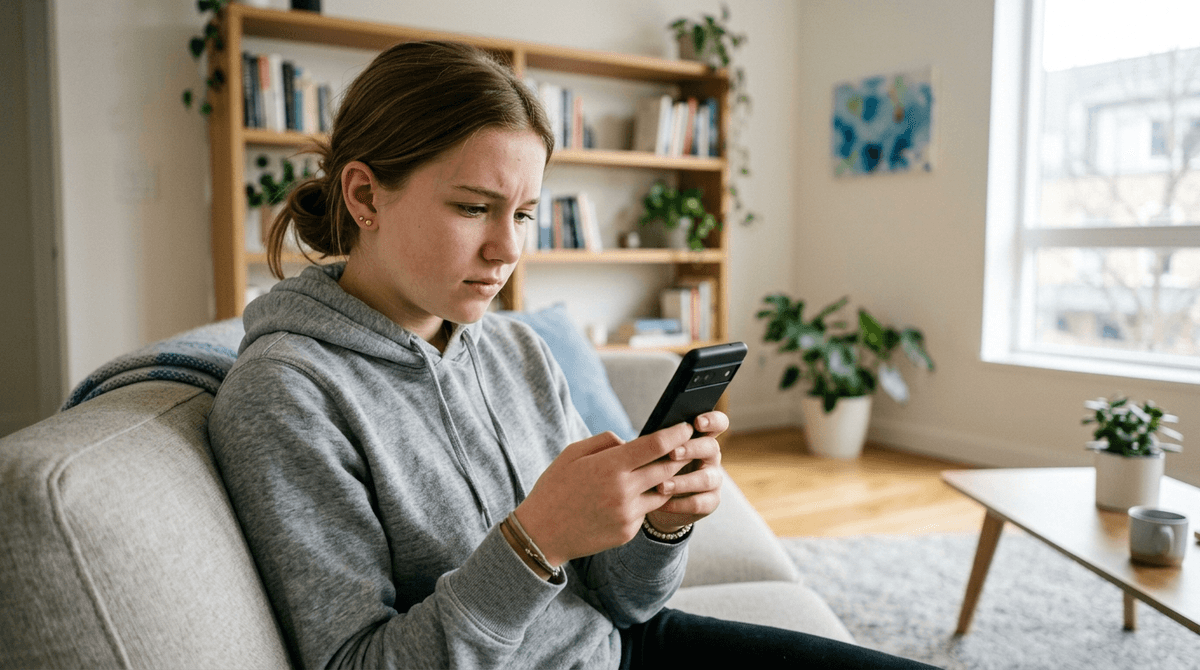
Australia’s proposed social media ban for under-16s might solve the problem of algorithmic manipulation while creating a new set of risks, potentially driving teenagers toward unregulated, underground corners of the internet where safety controls do not exist.
Government-mandated age limits threaten to backfire by stripping teenagers of vital digital support networks and pushing them toward less secure platforms that lack moderation or parental oversight.
This analysis suggests that a "quick fix" legal ban provides a false sense of security for parents. Relying on a hard age gate to protect your teen's mental health may actually increase digital inequality and cut off their ability to seek help or find community online. Instead of removing the risk, a blanket ban might simply move the risk to places where you—and the law—cannot see it.
For families, this means the work of teaching "digital street smarts" remains the most effective defense. A law that bars entry to mainstream platforms does not solve the underlying problem of extractive platform design, nor does it prepare a child for the day they eventually turn 16 and gain full, unrestricted access without prior experience.
Policymakers are scrambling to address a genuine mental health crisis linked to addictive algorithms and predatory platform designs. Bioethicists are stepping into the debate because current legislative efforts often ignore the "cost of protection." Specifically, they are weighing whether we are violating a teenager's right to participate in modern society—and their developing autonomy—in the name of safety. The authors argue that the current focus is on "digital paternalism" rather than building a digital world that is safe by design.
Social media platforms are not neutral tools; they use specific design features and algorithms that intentionally manipulate adolescent decision-making and preferences. However, applying a principle-based bioethical framework—autonomy, non-maleficence (doing no harm), beneficence (doing good), and justice—reveals that a total ban is ethically fraught.
- Help-seeking is at risk. For many teenagers, social media serves as a primary channel for finding mental health resources, crisis lines, or niche communities that offer support. A ban could effectively silence these help-seeking channels.
- The "Underground" effect. When mainstream platforms are blocked, teenagers are likely to migrate to less secure, underground online environments. These spaces often lack the reporting mechanisms, moderation teams, and safety filters found on major apps.
- Digital inequality. These bans are likely to affect families differently. Tech-savvy families or those with more resources will find ways to circumvent restrictions, while more vulnerable populations may be left entirely disconnected or stuck in riskier digital spaces.
- Gradual autonomy over absolute gates. The authors suggest that "safe-by-design" mandates—which force companies to change how their apps work for everyone—are more ethical and effective than absolute age gates.
The real danger of a ban is that it may cause parents to stop the conversation. If a parent assumes the law is successfully protecting their child, they might stop actively monitoring or discussing digital habits. A ban treats the symptom (access) but ignores the disease (manipulative design). It essentially delays a child's digital "puberty" without providing the tools they need to handle it when the ban eventually lifts.
This is a theoretical bioethical analysis, not a clinical or empirical study. The authors did not track actual teenagers or measure behavioral changes; they evaluated the ethical logic of the Australian Online Safety Amendment Act 2024. Because this specific policy has not been fully implemented or studied long-term, the predictions about teenagers moving to "underground" platforms are speculative, based on historical patterns of how people bypass digital restrictions.
- If you are considering cutting off social media access entirely... ensure your teenager has alternative, reliable ways to reach their support systems and friends so that the loss of digital connection does not lead to social isolation or a loss of mental health resources.
- If you are worried about your child’s digital safety... prioritize platforms that offer "safe-by-design" features, such as chronological feeds instead of algorithmic ones, and granular privacy controls rather than relying solely on the app’s age rating.
- If your teenager is likely to use a VPN or secondary account to bypass restrictions... focus on building digital literacy and open communication about why certain platforms are risky, rather than relying on software blocks that they will eventually outsmart.
- If you want to prepare your teen for digital independence... adopt a "gradual autonomy" model. Slowly unlock specific app features or increased screen time as they demonstrate responsible use, rather than moving from a total ban to total freedom on their 16th birthday.
A legal age limit is not a substitute for active, engaged parenting. While bans aim to protect, they often move the risk to darker corners of the internet where you have less influence. Focus on teaching your child how to navigate the digital world they will eventually inherit, rather than assuming a policy can keep them out of it forever.
Özçiftci VM, Demir M (2026). Digital paternalism and adolescent autonomy: ethical reflections on Australia's under-16 social media ban. BMC medical ethics. doi:10.1186/s12910-026-01473-9 — https://pubmed.ncbi.nlm.nih.gov/42092904/