

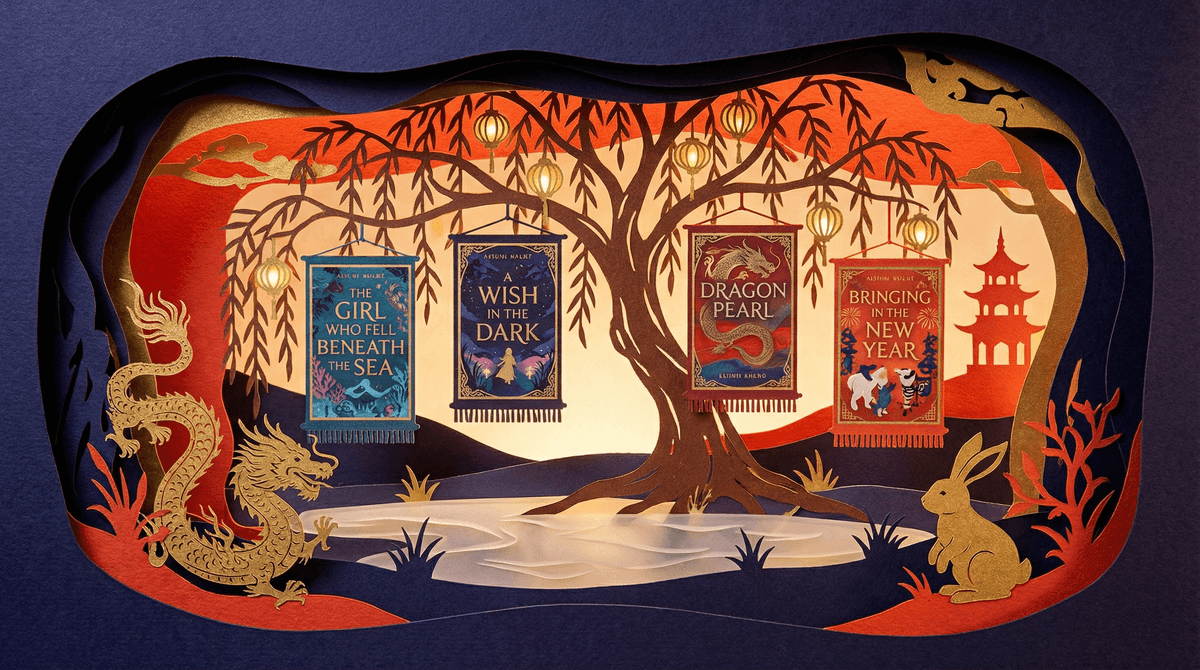
Asian folklore books are collections of traditional stories, myths, and legends from across Asia—think China, Japan, Korea, Vietnam, India, the Philippines, Thailand, and dozens of other countries with thousands of years of storytelling traditions. These aren't just "once upon a time" tales. They're stories about clever rabbits outwitting tigers, moon goddesses making impossible choices, monkey kings causing chaos in heaven, and brave children facing down demons.
Unlike a lot of Western fairy tales that got the Disney treatment and smoothed out all the weird edges, Asian folklore often keeps its strange, magical, sometimes dark elements intact. You'll find shape-shifting foxes, hungry ghosts, dragons that control the weather, and heroes who succeed through cleverness rather than brute strength.
The best part? These stories come with built-in life lessons about respect, family loyalty, courage, and humility—but they're wrapped in adventures wild enough that kids don't feel like they're being lectured.
Here's the thing: representation in stories matters, and not just for Asian kids (though yes, especially for them). When Asian American kids see their cultural heritage reflected in the books they read, it validates their identity and gives them pride in where they come from. When non-Asian kids read these stories, they learn that "normal" doesn't mean one culture's way of doing things.
But beyond the diversity angle, Asian folklore is just good storytelling. These tales have survived hundreds or thousands of years because they're compelling, imaginative, and teach something true about being human. They're also a fantastic antidote to the algorithmic sameness of so much digital content. Instead of another Roblox session or YouTube binge, you're giving your kid access to stories that have been tested across centuries and continents.
Plus, in an age where AI-generated content is everywhere and kids are consuming more screen-based media than ever , physical books with deep cultural roots offer something genuinely different—texture, history, and human connection across time.
Ages 3-6: Picture Books with Big Illustrations
Young kids need visually engaging stories with simple narratives. Look for:
- "The Runaway Rice Cake" by Ying Chang Compestine - A fun chase story based on Japanese folklore
- "Bringing in the New Year" by Grace Lin - Not strictly folklore but rooted in Chinese cultural traditions
- "The Tiger Who Would Be King" by James Thurber - Indian-inspired fable about pride
At this age, focus on books with repetition, clear morals, and happy endings. Save the scarier yokai (Japanese spirits) and hungry ghosts for later.
Ages 7-10: Chapter Books and Longer Tales
This is the sweet spot for folklore collections. Kids can handle more complex plots, moral ambiguity, and slightly spooky elements:
- "Dragon Pearl" by Yoon Ha Lee - Korean mythology meets space opera
- "The Girl Who Fell Beneath the Sea" by Axie Oh - Korean folklore retelling
- "A Wish in the Dark" by Christina Soontornvat - Thai-inspired fantasy
These ages can also handle anthology collections where you get multiple stories from different cultures. Look for books that include context about where the stories come from.
Ages 11+: Complex Retellings and Graphic Novels
Tweens and teens can appreciate:
- "American Born Chinese" by Gene Luen Yang - Graphic novel weaving together the Monkey King legend with contemporary Asian American experience
- "The Astonishing Color of After" by Emily X.R. Pan - Taiwanese folklore and magical realism
- "Forest of a Thousand Lanterns" by Julie C. Dao - Vietnamese-inspired fantasy (think evil queen origin story)
At this age, kids can handle stories that interrogate and reimagine traditional tales, question authority figures, and explore darker themes.
Not All Asian Folklore Is the Same
Asia is huge. Like, 48 countries huge. Chinese folklore is different from Japanese folklore is different from Filipino folklore is different from Indian folklore. Don't lump it all together as "Asian stories." When possible, choose books that specify the cultural origin and provide context.
Some Stories Have Dark Elements
Traditional folklore wasn't always written for children. You'll find stories about death, punishment, sacrifice, and consequences. This isn't necessarily bad—kids can handle more than we think—but preview books if your family is sensitive to certain themes. Many Asian folktales include elements that might surprise Western parents who grew up on sanitized Disney versions of European fairy tales.
Look for #OwnVoices Authors
When possible, choose books written and illustrated by people from the culture being represented. They're more likely to get the nuances right, avoid stereotypes, and present stories with authenticity and respect. Authors like Linda Sue Park, Lenore Look, and Marjorie Liu are doing incredible work.
Use These as Conversation Starters
After reading, ask your kids what they think the story was trying to teach. Talk about how the values in the story (like filial piety or community responsibility) might be similar to or different from your family's values. These books are perfect for building critical thinking skills.
Asian folklore books offer something rare in our digital age: stories with staying power. They're imaginative enough to compete with video games, meaningful enough to spark real conversations, and diverse enough to expand your kid's worldview beyond the algorithm's echo chamber.
Start with one or two books that match your kid's age and interests. Read them together. Talk about them. Let your kids see that great stories don't all come from the same place or look the same way.
And if you're looking for a break from Minecraft or Roblox negotiations, suggesting "let's read about the Monkey King causing chaos in heaven" is a pretty solid alternative.
Ready to dive in? Hit your library or bookstore and ask for Asian folklore recommendations by age. Librarians love this stuff.
Want more book ideas? Check out alternatives to screen time for other ways to fill those after-school hours.
Curious about how other families balance books and screens? Screenwise can help you understand your family's media habits in context with your community—and find the right balance for your household.