

Look, we all know the irony of reading a digital article about getting kids away from screens. But hear me out: art books might be one of the most underrated tools in your parenting arsenal for creating genuine breaks from the digital dopamine cycle.
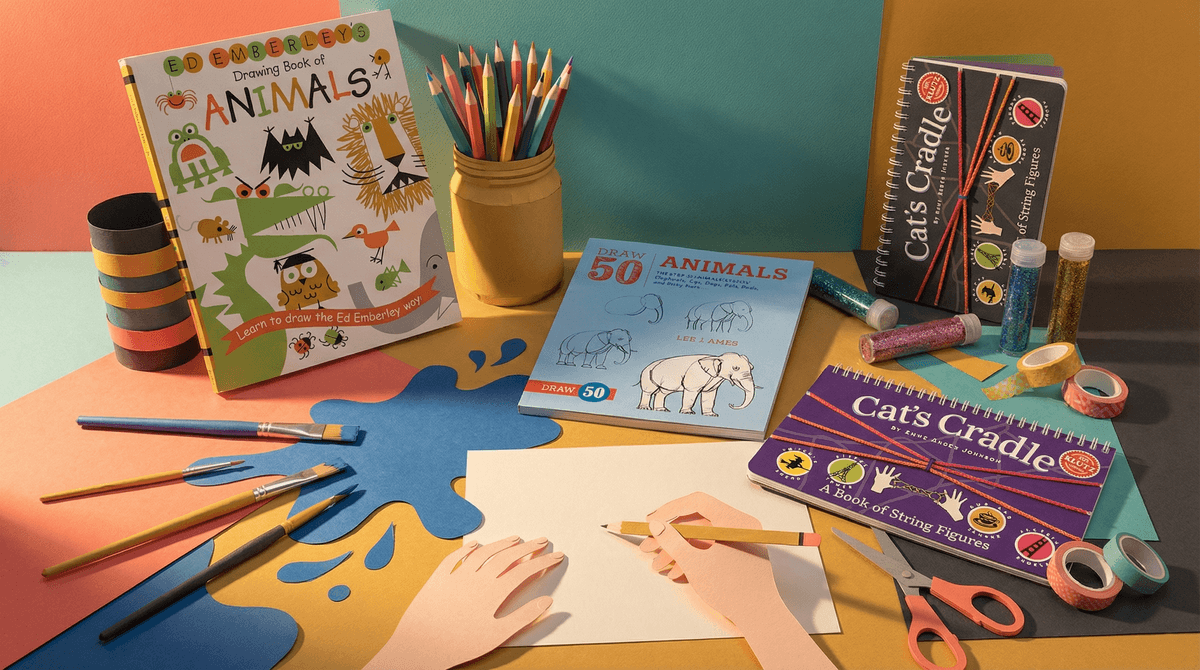
Art books for kids aren't just coffee table décor or the dusty volumes from your own childhood. Today's options range from step-by-step drawing tutorials to stunning visual encyclopedias, from comic-making workbooks to books that teach watercolor, animation concepts, or digital art fundamentals. Some are activity-based (think Klutz kits that come with supplies), while others are pure inspiration—gorgeous collections of illustrations, museum art, or photography that kids can just flip through and absorb.
The magic is that art books occupy this sweet spot: they're engaging enough to compete with screens, but they activate completely different parts of the brain. They're analog, tactile, and self-paced. No notifications, no autoplay, no comment sections.
Here's what makes art books different from just handing your kid a random coloring book and hoping for the best:
They build real skills. Unlike passive scrolling, working through an art book—whether it's learning to draw manga characters or understanding color theory—creates genuine competence. Kids can see their progress, which is intrinsically motivating in a way that's totally different from unlocking a new skin in Fortnite.
They're naturally screen-free but not a punishment. This isn't "no screens because I said so." It's "here's something legitimately cool to do." Big difference in how it lands with kids.
They meet kids where they are. Your kid obsessed with Pokémon? There are art books for drawing Pokémon. Into Minecraft? There are books about pixel art and game design concepts. You're not asking them to abandon their interests—you're giving them a different way to engage with them.
They work across ages. A 6-year-old can enjoy a simple drawing tutorial. A 13-year-old can dive deep into perspective and shading. You're not constantly aging out of content the way you do with apps and games.
Ages 4-7: Process over product
At this age, it's about exploration and building confidence. Look for books with simple, achievable steps and lots of visual examples. Ed Emberley's drawing books are classics for a reason—they break down drawings into basic shapes that young kids can actually replicate successfully. Usborne's "That's Not My..." series isn't strictly art books, but they're tactile and visual in ways that build early appreciation for illustration and texture.
Ages 8-11: Skill-building and variety
This is prime time for art books. Kids have the fine motor skills and attention span to follow more complex tutorials, but they're still experimental and not yet self-conscious about their work. Klutz activity books are phenomenal here—they come with actual supplies and teach everything from friendship bracelets to clay modeling to comic creation. The "Draw 50" series (Draw 50 Animals, Draw 50 Buildings, etc.) gives kids structured practice. For kids interested in comics or manga, there are tons of step-by-step books that teach panel layout, character design, and storytelling through art.
Ages 12+: Specialization and serious technique
Tweens and teens often want to go deeper into specific styles or mediums. This is when you might invest in books about digital art, animation principles, realistic portraiture, or specific media like watercolor or pen-and-ink. "Drawing on the Right Side of the Brain" by Betty Edwards sounds academic but is genuinely transformative for kids ready to understand how to see like an artist. Books about favorite artists or art movements can be inspiring—not just how-to, but why-to.
Art books aren't just for "artistic" kids. The kid who builds elaborate Roblox worlds? That's spatial reasoning and design. The one who spends hours customizing characters? That's an eye for detail and aesthetics. Art books can channel those same interests into analog form.
The best art books get used, not preserved. Don't buy beautiful art books and then panic when your kid dog-ears pages or gets paint on them. That's literally the point. If you want a pristine coffee table book, buy two.
Supplies matter, but start simple. A fancy art book is useless if your kid doesn't have the basic tools to use it. But you don't need to drop $100 at an art store. Decent colored pencils, a sketchbook, and some markers will cover 90% of projects. Upgrade as interests solidify.
Make them visible and accessible. Art books shoved on a high shelf might as well not exist. Keep them where kids can grab them during that "I'm bored" twilight zone between activities. Coffee table, bedroom bookshelf, the basket by the couch—wherever your kid naturally lands when they're between things.
It's okay if they don't finish them. Art books aren't novels. Kids might work intensely through 10 pages, then abandon it for three months, then come back. That's normal. The goal isn't completion; it's engagement.
Are art books going to magically eliminate screen time? No. Will your kid suddenly become the next Picasso? Probably not. But here's what actually happens: you create an alternative. A legitimate, appealing option that exists in the same mental space as "things I might choose to do."
Over time, some kids discover they genuinely prefer the focused, meditative quality of drawing or painting. Others just appreciate having a go-to activity that doesn't require a charged device. And honestly? Even if an art book buys you 30 minutes of quiet, focused engagement once a week, that's a win.
The best part is that art books don't require your involvement (though you can participate if you want). They're not another thing on your mental load. You're not managing playdates or driving to classes. You're just... providing access to materials and stepping back.
Art books won't solve all your screen time struggles, but they're a low-pressure, high-reward tool for creating genuine alternatives to digital entertainment. They build skills, spark creativity, and give kids a way to engage with their interests that doesn't involve a glowing rectangle.
Start with one or two books that match your kid's current interests. Make them accessible. Don't overthink it. See what happens.
And if your kid never touches them? Well, at least your coffee table looks cultured.
Try this: Next time you're about to buy another Roblox gift card or in-app purchase, redirect that $15-25 toward an art book instead. See if you can find one related to something your kid already loves—there are drawing books for everything from Pokémon to fashion design to architecture.
Put it somewhere visible, don't make a big announcement, and just... see if they pick it up. Sometimes the best interventions are the ones that don't feel like interventions at all.