

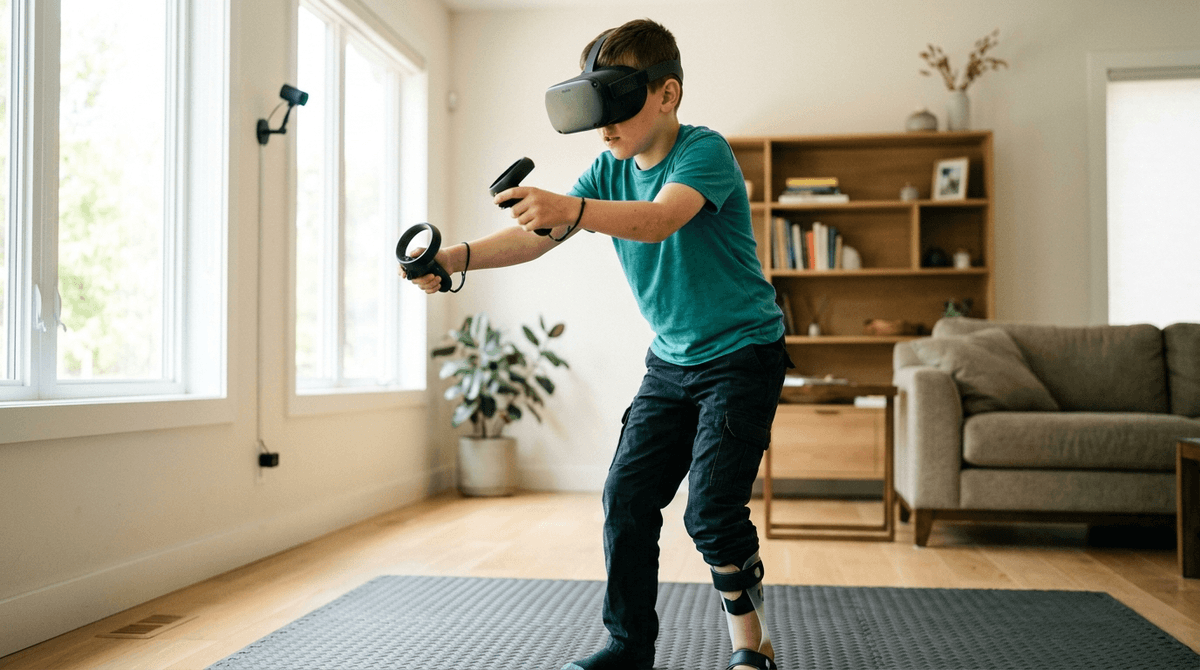
Active video games and virtual reality are effective tools for improving motor function in children with cerebral palsy, transforming traditional physical therapy into an engaging digital experience.
Gamified physical therapy improves motor function and physical activity levels for children with cerebral palsy. While the evidence for cognitive or emotional boosts is still thin, the physical gains from movement-based video games are measurable and real for children under age 18.
This shifts screen time from a passive, sedentary activity into a legitimate clinical tool. For children with neuromuscular conditions, the right gaming setup isn't just a distraction—it is a form of rehabilitation that can supplement traditional therapy sessions at home. Understanding that "active gaming" has a different clinical profile than standard gaming allows parents to make better choices about which consoles and titles to bring into the house.
Traditional physical therapy for children is often repetitive and difficult to maintain over the long term. Researchers conducted this massive review of 192 studies to see if the "fun factor" of gaming could solve the engagement gap and whether digital interventions actually produce the same physical results as clinic-based exercises.
Physical benefits are well-documented, but other areas of child development remain under-researched in the gaming context.
- About 90 percent of the studies reviewed focused specifically on physical outcomes, showing consistent improvements in movement and motor function.
- Research is heavily lopsided toward cerebral palsy, with 173 studies focused there compared to only seven for muscular dystrophy.
- Data on quality of life and cognitive impact is sparse, with fewer than one in four studies measuring these factors.
- The technology is "heterogeneous," meaning setups range from a basic Nintendo Wii in a living room to high-end, custom-built virtual reality labs.
The lack of a standardized "dosage" means the medical community hasn't yet found the sweet spot for playtime. While the research proves the technology works for movement, parents and therapists are currently in a "trial and error" phase regarding how many minutes or hours per week lead to the best physical gains. The move toward "adaptive" gaming—using specialized controllers—is the next major frontier for children with more limited ranges of motion.
Comparing these studies is difficult because the technology and measurement tools vary so widely. Because this was a "scoping review," it maps out what currently exists in the field rather than providing a statistical "meta-analysis" that proves exactly how much better gaming is than traditional therapy. Most findings are based on observational data, and many studies lack the long-term follow-up needed to see if these physical gains last into adulthood.
- If your child is working on specific motor skills like balance or arm reach, prioritize "Active Video Games" (AVGs) that require full-body movement or camera-based tracking over sedentary, button-only titles.
- If you are looking for evidence-backed games for muscular dystrophy or rarer neuromuscular conditions, be aware that the current data is extremely limited compared to the research available for cerebral palsy.
- If the standard controller is a barrier to play, consult a physical therapist about "adaptive technologies" or modified controllers that can be tailored to your child’s specific range of motion and strength.
You can stop viewing every minute of gaming as "wasted" time if the games involve physical movement and effort. For children with cerebral palsy, active gaming is a proven way to build motor skills while keeping them motivated and engaged in their own recovery.
Stevenson J, Martin SE, English MG et al. (2026). Gaming Technology in Pediatric Cerebral Palsy and Related Neuromuscular Conditions: A Scoping Review. NeuroRehabilitation. doi:10.1177/10538135261445647 — pubmed.ncbi.nlm.nih.gov