

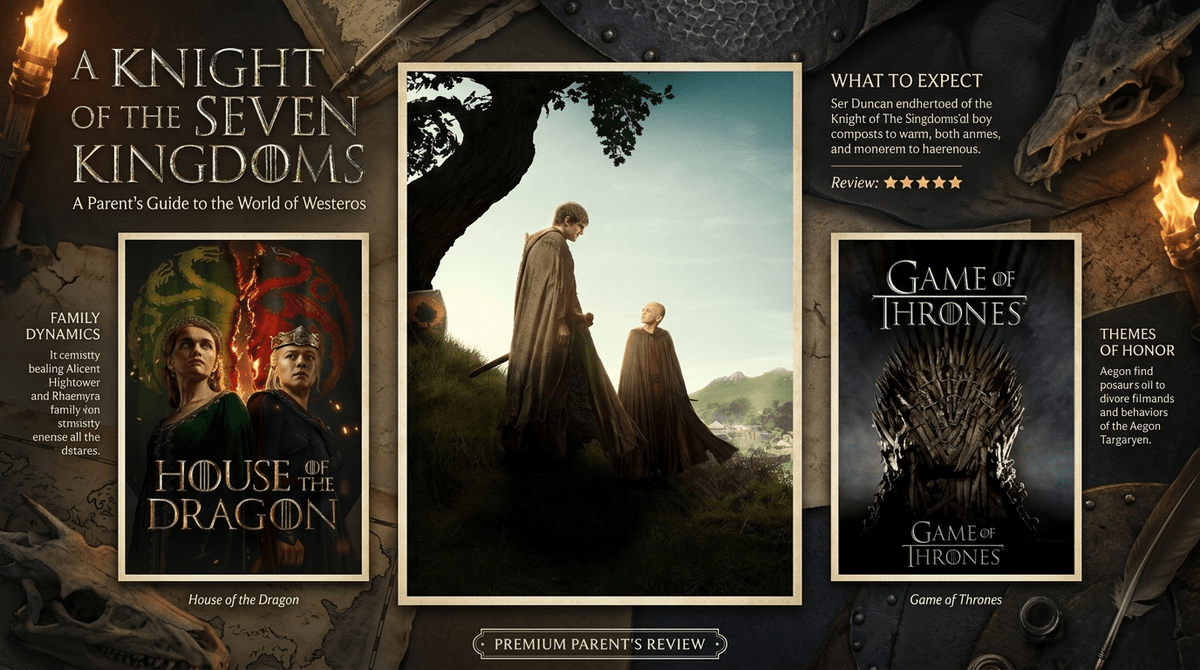
TL;DR: A Knight of the Seven Kingdoms is the "lighter" sibling in the Game of Thrones universe, but "lighter" is a relative term when you're dealing with Westeros. While it swaps the sprawling political incest and dragon-fueled genocide of House of the Dragon for a more focused, "buddy-cop" adventure, it still carries a TV-MA rating. Expect visceral jousting violence, some harsh language, and the grim reality of feudal life. It’s likely a "no" for middle schoolers, but a "maybe" for mature older teens who have already navigated The Lord of the Rings or The Witcher.
Get an age-appropriateness comparison between this and House of the Dragon
If your kids have been hearing the buzz about "Dunk and Egg," they aren't talking about a new breakfast combo at Dunkin'. A Knight of the Seven Kingdoms is based on a series of novellas by George R.R. Martin, specifically The Hedge Knight.
Set about 100 years before the events of Game of Thrones, the story follows Ser Duncan the Tall (a massive, naive, but honorable "hedge knight") and his diminutive squire, Egg (who—spoiler alert for the lore nerds—is actually Aegon V Targaryen in disguise).
Unlike the main series, which jumps between twenty different characters across two continents, this is a much more intimate, linear story. It’s a road trip through a kingdom that is currently at peace, which makes it feel much more like a traditional fantasy adventure than a dark political thriller.
Westeros has a massive cultural footprint. Even if your kid has never seen a single episode of the original shows, they’ve seen the memes, the Roblox roleplay rooms, and the TikTok edits of dragons.
A Knight of the Seven Kingdoms is being marketed as a more "accessible" entry point. It has a "big brother, little brother" dynamic that appeals to younger audiences, and the stakes—winning a jousting tournament or defending one's honor—feel a lot more like A Knight's Tale than the end-of-the-world stakes of the White Walkers.
HBO and various reviews have called this a "lighter" take on the world, but we need to be careful with that word. In the context of George R.R. Martin, "lighter" just means "fewer than ten people get decapitated per episode."
Jousting Injuries and Physical Violence
The show centers heavily around knightly tournaments. If you think jousting is just guys in shiny suits poking each other with sticks, this show will correct that very quickly. We’re talking about splintering lances through visors, horses crushing riders, and the kind of blunt-force trauma that makes a football concussion look like a tickle. It is visceral and loud.
Thematic Weight
While there isn't the same level of pervasive sexual violence that made Game of Thrones so controversial for parents, the world is still cruel. There are themes of classism, the abuse of power by "true" knights against the poor, and the ever-present threat of execution for minor slights.
Language and Nudity
It’s HBO. While the "sexposition" of earlier series has been toned down significantly here, the language remains "salty" (to use a medieval term). Expect the standard array of four-letter words that come with a TV-MA rating.
Check out our guide on understanding TV ratings vs. actual content
Ages 0-12: Hard No
Despite Egg being a child character, this is not a show for children. The pacing is deliberate, the dialogue is dense, and the sudden bursts of violence are designed to shock. If they want knights and swords, stick with The Letter for the King or The Dragon Prince.
Ages 13-15: Parental Discretion (With a Heavy Hand)
This is the "gray zone." If your 14-year-old has read The Hunger Games and watched The Mandalorian, they can probably handle the story. However, the graphic nature of the injuries might still be a lot. If you decide to let them watch, maybe make it a "co-watch" situation so you can hit the mute button or talk through the more intense scenes.
Ages 16+: Generally Okay
For older teens, A Knight of the Seven Kingdoms is actually a pretty great study in character and ethics. Dunk is one of the few truly "good" characters in this universe, and his struggle to do the right thing in a broken system is a conversation worth having.
If your teen is dead-set on watching it, or if they’ve already binged the first few episodes at a friend's house, here are a few ways to turn it into a conversation instead of a confrontation:
- The "True Knight" Concept: Dunk isn't a "Ser" by birth or even necessarily by legal right. Talk about the difference between a title (like a "verified" badge on social media) and actual character. Who are the "knights" in their world who don't have the title?
- The Reality of Violence: Modern media often makes sword fighting look like a dance. This show makes it look like a car accident. Ask them why they think the directors chose to make the jousting look so painful and unglamorous.
- Power Dynamics: Egg is a prince, but he’s learning about the world from the perspective of a servant. Ask your teen how their perspective changes when they have to "serve" someone else (like in a job or a team sport).
A Knight of the Seven Kingdoms is a high-quality, beautifully shot, and emotionally resonant show. It is "lighter" than its predecessors, but it is still firmly rooted in an adult world.
If you’re looking for a fantasy show to watch with your kids, this probably isn't the one to start with unless they are late-stage high schoolers. But if you're looking for a show to watch yourself after the kids are in bed—one that happens to have a lot less "ick factor" than the original Thrones—this is a fantastic pick.
- If they want the story without the gore: Have them read The Hedge Knight or the graphic novel adaptation. The books are still mature, but the "visual shock" is mitigated.
- If they want a "safe" fantasy fix: Check out Willow or The Chronicles of Narnia.
- If you're unsure: Watch the first episode alone. The tone is established very quickly in the first twenty minutes.