The tactile "everything" factor
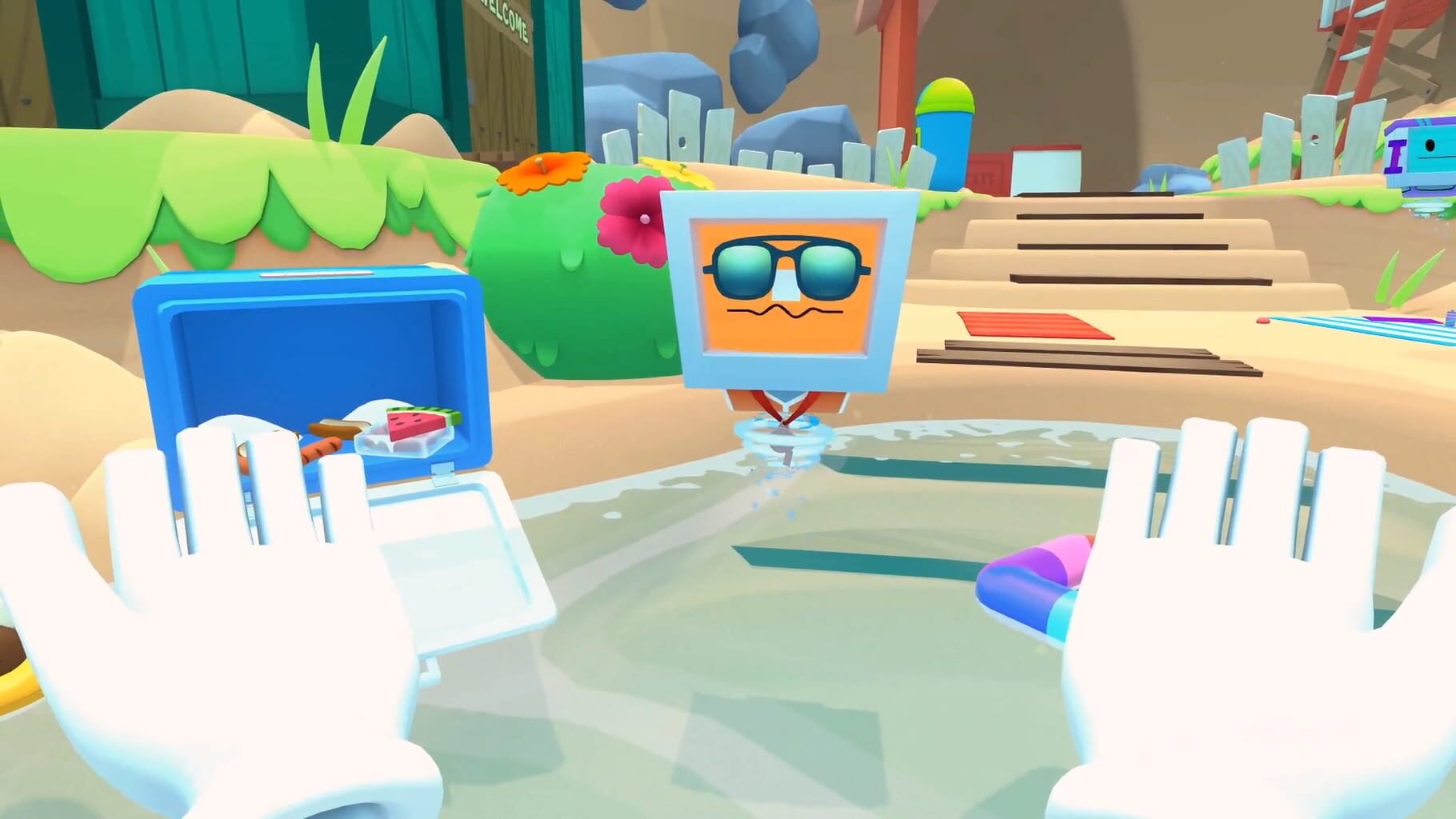
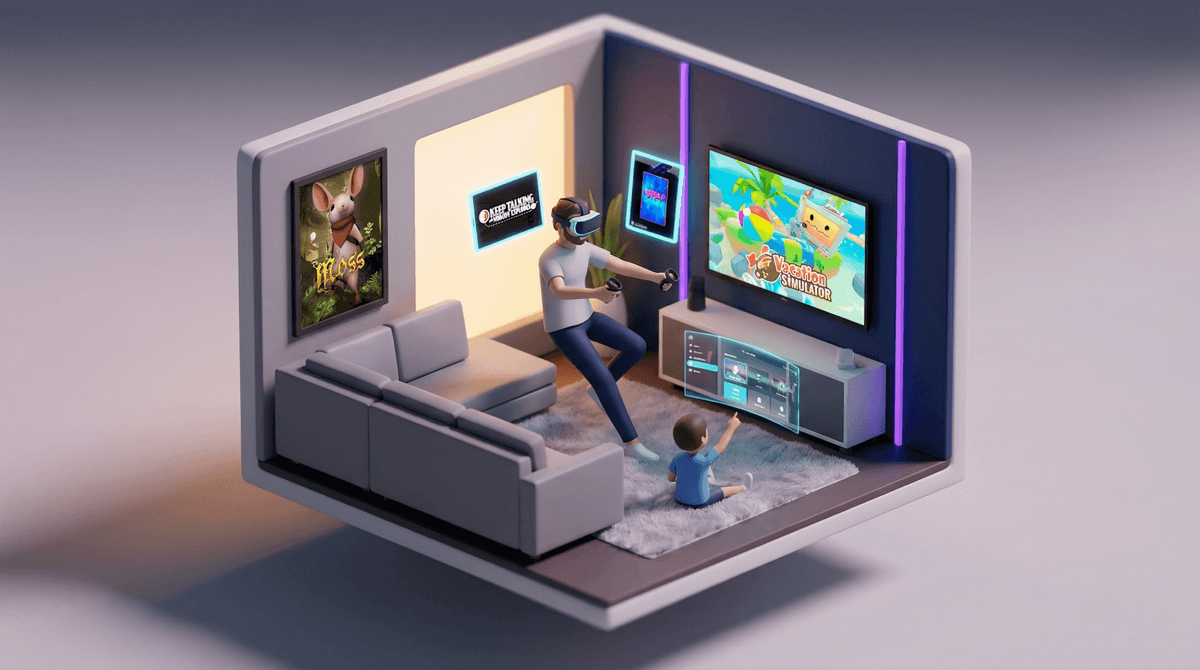
Vacation Simulator works because the developers understand the one thing that makes VR satisfying: if you see an object, you should be able to touch it, throw it, or eat it. Most VR titles feel like museum tours where you can only look at the art. Here, if you see a burger, you can grill it. If you see a camera, you can take a selfie.
This tactility is what keeps kids engaged. It isn't about "winning" in the traditional sense. It’s about the discovery of what happens when you put a waffle in a blender or try to wear three hats at once. For an eight-year-old, that kind of agency is a massive win. It builds a sense of competence with the hardware that more "on-rails" games just can't match.
A break from the "forever loop"
If your household is currently trapped in the dopamine-heavy grind of something like Pet Simulator 99, this game is going to feel like a literal vacation. There are no daily login bonuses, no "Forever Packs," and no pressure to trade with strangers in a chaotic plaza.
It’s a finite experience. Your kid explores the Beach, the Forest, and the Mountain, completes some puzzles, laughs at a few robot jokes about "human pastimes," and eventually, they're done. There’s a beginning, a middle, and an end. That’s a refreshing change of pace in a media landscape designed to keep users hooked indefinitely. You aren't fighting a "one more level" addiction here; you're just letting them play in a digital sandbox.
Living with the hardware
Let’s talk about the friction. VR isn't as simple as handing over an iPad. You have to worry about floor space, battery life, and the physical weight of the headset on a smaller head. If you’re still on the fence about the logistics, our VR Games for Families guide is the best place to start for the technical "how-to" and safety basics.
One specific thing to watch for: the humor in Vacation Simulator is very dry. It’s a satire of corporate culture and human habits through the eyes of robots. Younger kids might miss the irony, but they’ll still love the mini-games. For teens, the "cutesy" aesthetic might feel a bit young, but the IGDB score of 80 exists for a reason. The puzzles are actually clever enough to keep an adult's brain moving. It’s the rare "kid game" that doesn't treat the player like they're boring.
Why it sticks
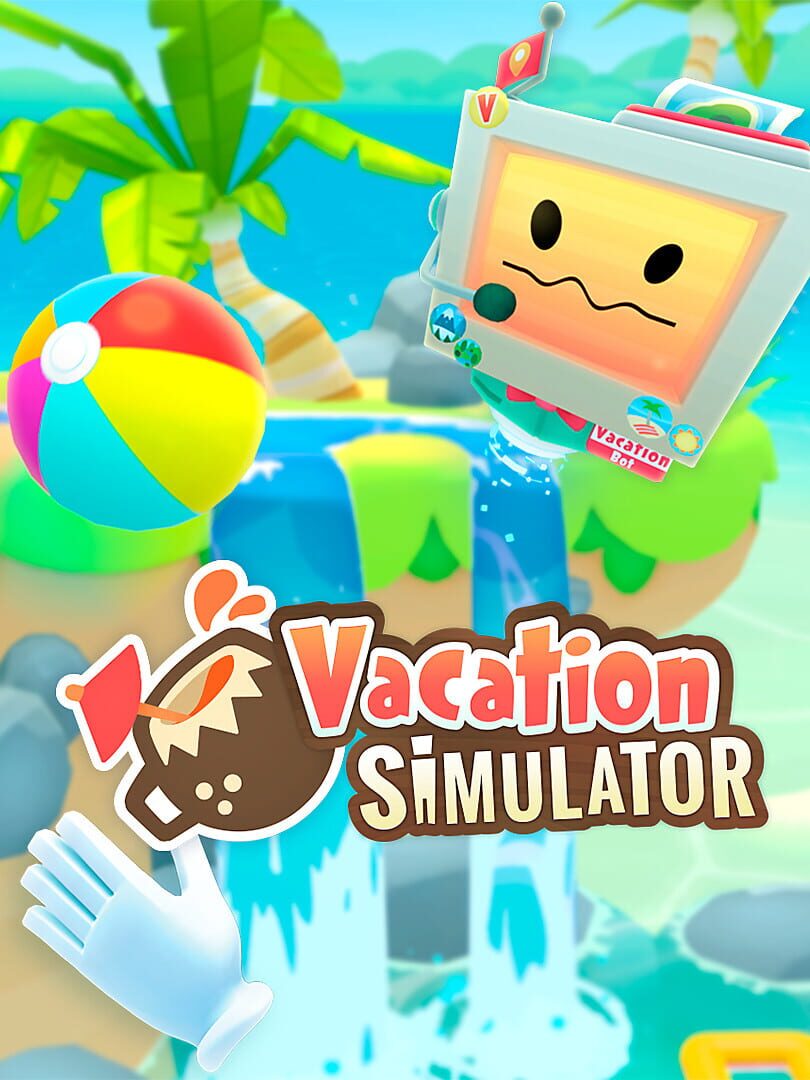
Ultimately, this is the gold standard for introductory VR. It teaches the language of virtual reality—how to teleport, how to grab, and how to look around—without the stress of being shot at or falling off a ledge. It’s a safe, high-quality playground that respects the player’s time. If you already have the hardware, this is an essential part of the library.