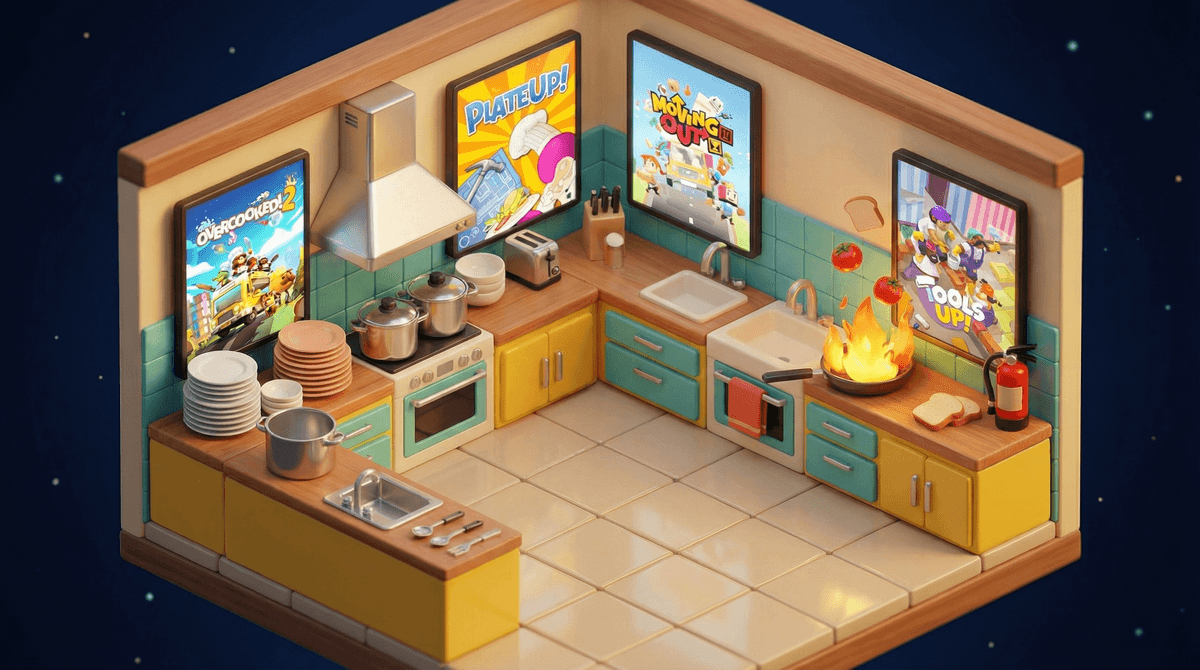
The Overcooked-to-Tools-Up pipeline
If you’ve ever tried playing Overcooked 2 with a six-year-old, you know the exact moment the "fun family activity" turns into a stress test. Someone is screaming about a lettuce, the kitchen is on fire, and a controller is usually about three seconds away from being launched at the drywall.
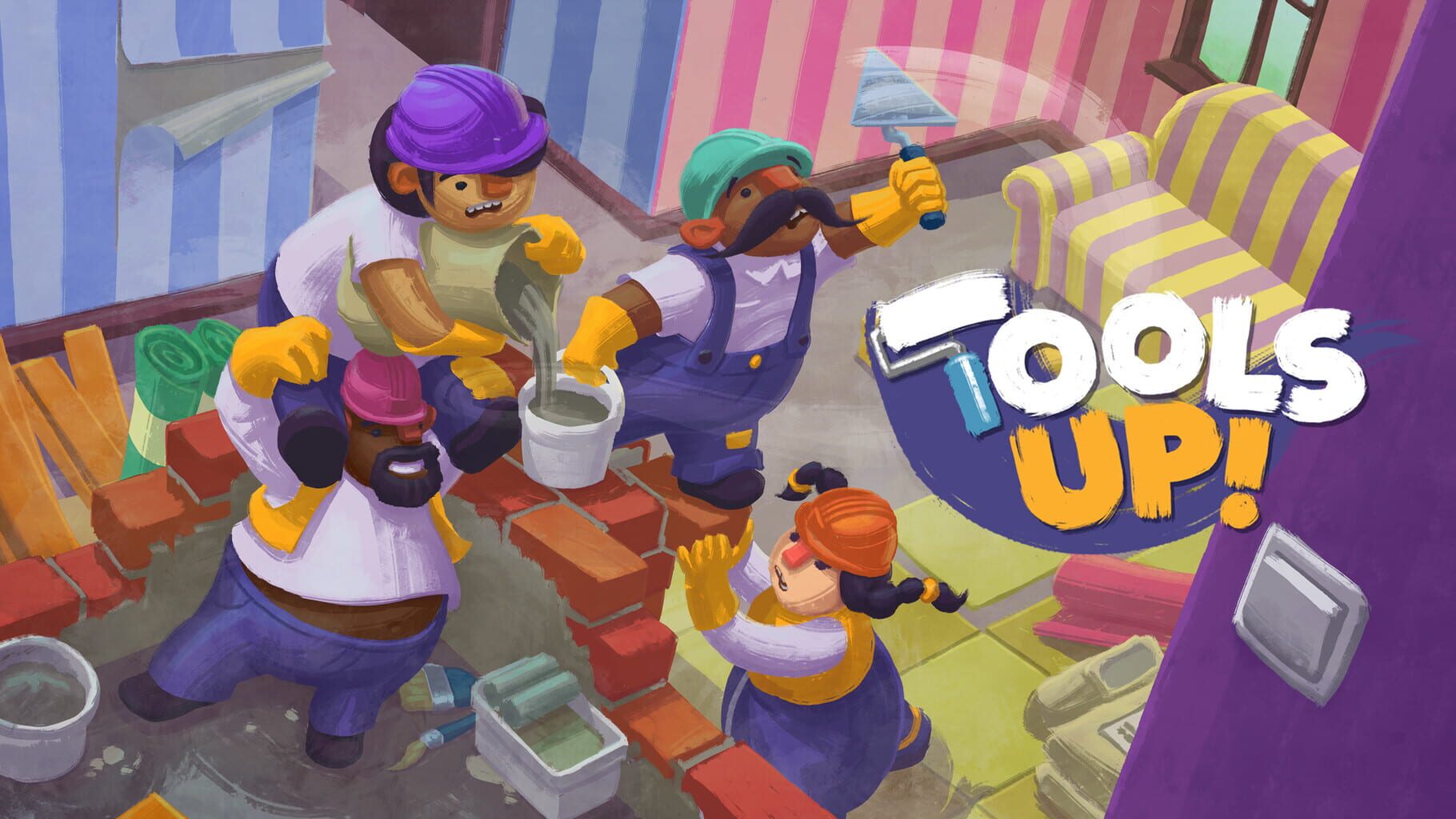
Tools Up! exists specifically for the parents who want that cooperative "work together or fail" energy but don't want to spend their Friday night managing a digital panic attack. It swaps the high-speed culinary chaos for home renovation. Instead of plating burgers, you’re tearing up carpet and slapping paint on walls. The stakes are lower, the movement is slower, and the vibe is significantly more chill.
Logistics over reflexes
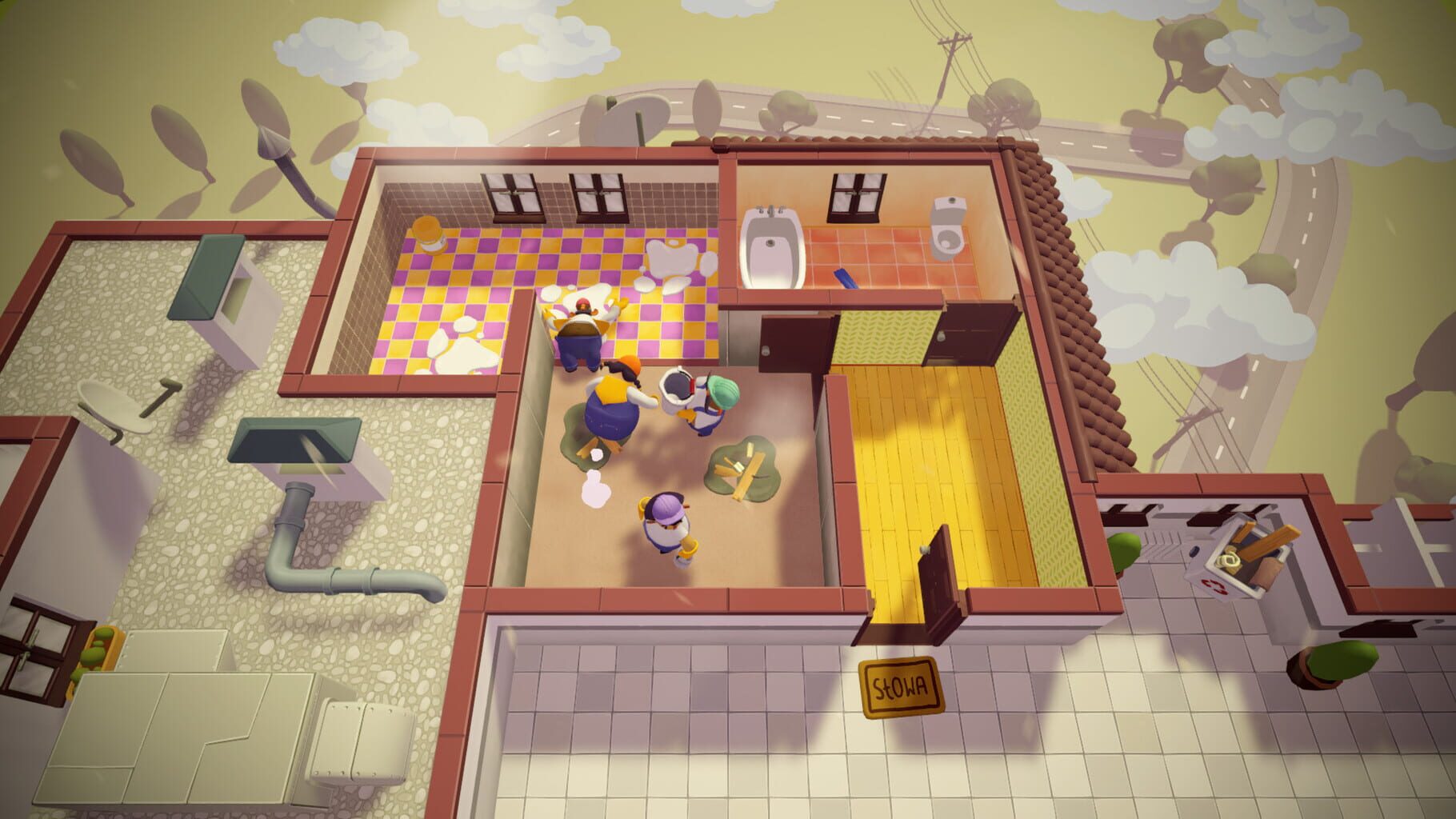
The core loop here isn't about how fast you can press buttons; it’s about logistics. One player has the blueprint (the only way to see what the finished rooms should look like), which means they have to act as the foreman. They tell everyone else where the "Vibrant Carpet" goes while everyone else tries not to trip over the bucket of glue.
The specific friction that makes the game work—or makes it annoying, depending on your patience—is the physical clutter. You can’t just walk through doors while carrying a couch. You have to coordinate who is holding the door and who is moving the furniture. If you spill paint, someone has to clean it up or everyone starts slipping and sliding like a slapstick routine. It’s a great way to see which of your kids has a natural talent for project management and which ones just want to throw a bucket of grout out the window.
Why it’s a "weekend" game
Critics and fans generally land on a score around 70 for a reason: it’s a solid B-minus. It does exactly what it says on the tin, but it doesn't have the depth to become a household obsession. You aren't going to find secret lore or complex skill trees here. You’re going to find 30 levels of increasingly weird apartment layouts.
This is the game you pull out when you have a rainy Saturday or a cousin visiting who doesn't play many games. Because there’s no jumping or combat, the barrier to entry is almost zero. It’s a "play it, beat it, delete it" experience. If you’re looking for a deeper dive into how this fits your specific family dynamic, checking out a parent’s guide to Tools Up! can help you decide if the repetition is a dealbreaker or a feature.
The "mess" factor
The most "Screenwise" takeaway here is how the game handles mistakes. In most games, a mistake means you die or lose a life. In Tools Up!, a mistake just means the house is a mess. You might fail the timer, but you don't "lose" in a way that feels punishing. For kids who are sensitive to failure or get frustrated by "Game Over" screens, this is a much safer space to practice losing. It turns failure into a funny moment of "Why is there wallpaper in the hallway?" rather than a reason to quit.