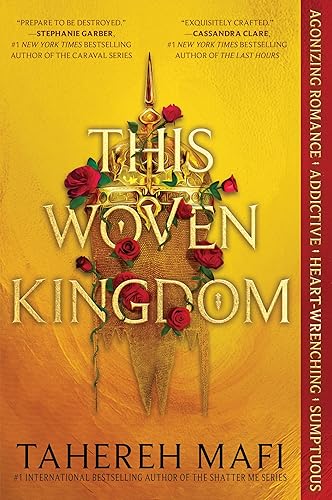
Tahereh Mafi is a titan in the YA world, but if your teen is coming over from her earlier, more frantic dystopian work, they need a heads-up: this is a different beast entirely. It’s a move toward high fantasy that prioritizes prose over pulse-pounding sequences. While it’s a staple of BookTok's 'Unhinged' Reads, it’s the "classy" cousin of that genre—more interested in the weight of a silk dress or the tension of a shared glance than in constant cliffhangers.
The "Boring" Factor
You’ll see a lot of reviews calling this book slow, and they aren't lying. If your kid is used to the breakneck speed of a typical thriller, they might struggle to get through the first hundred pages. Mafi spends a massive amount of time on the internal lives of her characters and the minute details of their surroundings.
It’s a slow-burn in every sense of the word. The romance isn’t about quick payoffs; it’s about the agony of being in the same room as someone you can’t have. For the right reader—the one who likes to linger on a beautiful sentence—it’s a feature, not a bug. For the kid who just wants to know who wins the fight, it might be a DNF.
A Different Kind of World-Building
The real draw here is the Persian influence. Most fantasy defaults to a generic medieval European setting that we’ve all seen a thousand times. By pulling from the Shahnameh, Mafi gives the story a flavor that feels fresh even when the tropes (like the "chosen one" or the "hidden royal") are familiar.
It’s a "smarter" pick for a teen who is starting to outgrow standard middle-grade fantasy but isn’t quite ready for the grimdark violence of adult series. The conflict is driven more by social class and ancient prejudice than by simple good-versus-evil.
Why It Sticks
If your kid liked These Hollow Vows but wanted something with a bit more literary weight, this is the move. It’s also a great bridge for readers who usually stick to contemporary romance but want to try fantasy. The magic is there, but the longing is the real engine.
It’s the kind of book that invites a lot of "what would you do?" conversations regarding duty versus desire. It doesn't talk down to its audience, and it assumes the reader is smart enough to handle a narrative that takes its time to arrive. Just don't expect a lot of explosions in the first half.