This Is Not My Hat

This Is Not My Hat

book

2012, Children's Books, Growing Up & Facts of Life

WISE
83%

WISE Score

4.7

Amazon

A tiny fish steals a hat and thinks he'll get away with it. Spoiler: the illustrations know better.

Amazon4.7
Common Sense Media

Where to Read

Our reviews and ratings are 100% unbiased, but as an Amazon Associate, Screenwise earns an affiliate fee if you buy a book or game by clicking one of our links. We don't get any credit if you just Google it instead :)

Screenwise Verdict

This is picture book perfection—simple, smart, and surprisingly dark. Jon Klassen doesn't talk down to kids; he trusts them to understand that stealing has consequences and that sometimes narrators lie.

The genius is in the gap between text and illustration. The little fish insists he's safe while the pictures scream otherwise. Kids become detectives, spotting the big fish's open eye, tracking movement through the weeds, noticing who's watching. It's suspenseful, funny, and teaches visual literacy better than most books twice its length.

The ending will divide families. It's not shown, but it's clear the little fish doesn't make it. Some parents love the no-nonsense morality; others find it too dark for bedtime. But honestly? Most kids think it's hilarious and want to read it again immediately. It's been a decade and this book still hits.
Age Fit

Best for ages 4-8 who can handle a darkly humorous ending and enjoy figuring out visual clues. Preschoolers will need help understanding the irony, while older kids appreciate the sophisticated storytelling.

WISE Breakdown
Wholesome
72

A deadpan morality tale about theft and consequences. The little fish steals a hat and insists he won't get caught—but the illustrations tell a different story. It's darkly funny rather than preachy, with an implied (not shown) comeuppance that sparks good discussions about right and wrong. The tone is sly and understated, not chaotic or mean-spirited.

Imaginative
88

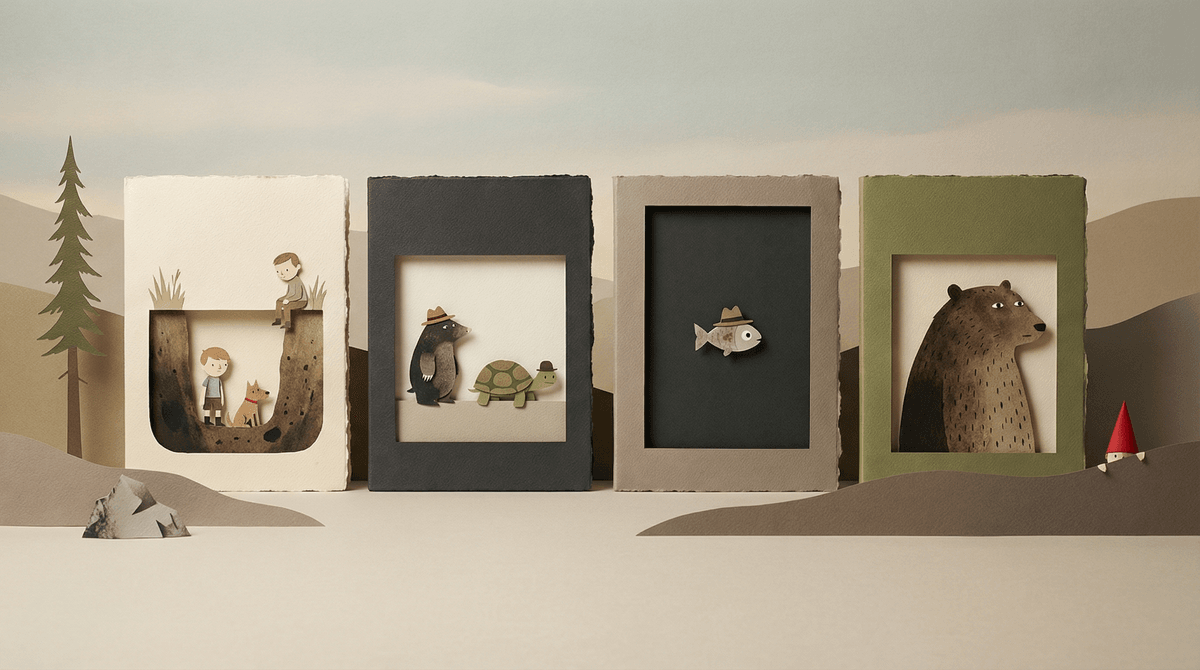
Jon Klassen's minimalist art style is brilliant—dark backgrounds, simple shapes, and expressive eyes that do all the storytelling. The gap between what the narrator says and what the pictures show creates a visual puzzle kids love solving. It's a masterclass in visual literacy that invites multiple readings and close observation.

Safe
78

The ending is deliberately ambiguous—the big fish goes into the weeds after the little fish, and neither comes out, though the hat reappears on the big fish. It's implied the little fish got eaten, but nothing graphic is shown. Some sensitive kids might find this unsettling, but most find it darkly humorous. Common Sense Media notes the 'moral comeuppance' angle.

Enriching
82

Teaches visual literacy, unreliable narration, and consequences in a sophisticated way. Kids learn to 'read' the illustrations against the text, understanding that what characters say isn't always true. The moral lesson about theft and overconfidence emerges naturally without being didactic. Caldecott Medal winner for good reason.

Parent Info

Why It Might Be Great

  • Caldecott Medal winner with stunning minimalist artwork that tells a different story than the text
  • Teaches visual literacy and critical thinking—kids learn to spot an unreliable narrator
  • Darkly funny without being mean; sparks great conversations about honesty and consequences
  • Short, punchy, and suspenseful—even beginning readers stay glued to every page
  • Part of Jon Klassen's beloved 'hat trilogy' that kids genuinely want to read multiple times

What to Watch For

  • The ending is deliberately ambiguous—the little fish likely gets eaten (off-page), which some sensitive kids might find upsetting
  • The humor is dry and deadpan; younger preschoolers might miss the joke entirely
  • Not a warm-fuzzy book—it's more Roald Dahl than Mr. Rogers in tone

Conversation Starters

  • "What do you think happened when the big fish went into the weeds? Why do you think that?"
  • "The little fish kept saying no one would catch him. What were the pictures showing us?"
  • "Have you ever thought you wouldn't get caught doing something you shouldn't? What happened?"
  • "Why do you think the crab looked at us like that at the end?"

Ask Anything

Get a personalized guide on any topic