If your kid knows George Takei, it’s probably as the guy from Star Trek or the witty octogenarian with a massive social media following. That’s exactly why They Called Us Enemy works so well. It takes a pop-culture icon and rewinds the tape to show a four-year-old boy who didn't understand why his country suddenly viewed his face as the face of the enemy. It’s a gut-punch of a memoir, but because it’s told through the eyes of a child, it manages to be accessible without sanitizing the reality of the internment camps.
The "Real Reading" hurdle
I still talk to parents who worry that do comics and graphic novels count as reading when the subject matter is this serious. The answer here is a hard yes. Harmony Becker’s art does something a standard history book can't: it captures the cognitive dissonance of childhood. You see young George finding the barbed wire and the barracks exciting—it’s an adventure to him—while the expressions on his parents' faces tell the real story.
This visual layer makes it one of the most effective graphic novels about history for the middle-school set. It allows kids to process the emotional weight of "legalized racism" through the characters' body language before they even wrap their heads around the complex political failures of the 1940s. It’s not "history lite"; it’s history with a human pulse.
Why it sticks
Most school curricula treat the internment of Japanese Americans as a brief, unfortunate footnote. Takei forces a longer look. He doesn't just show the camp; he shows the "loyalty questionnaire" that tore families apart and the struggle to rebuild a life from nothing after being released.
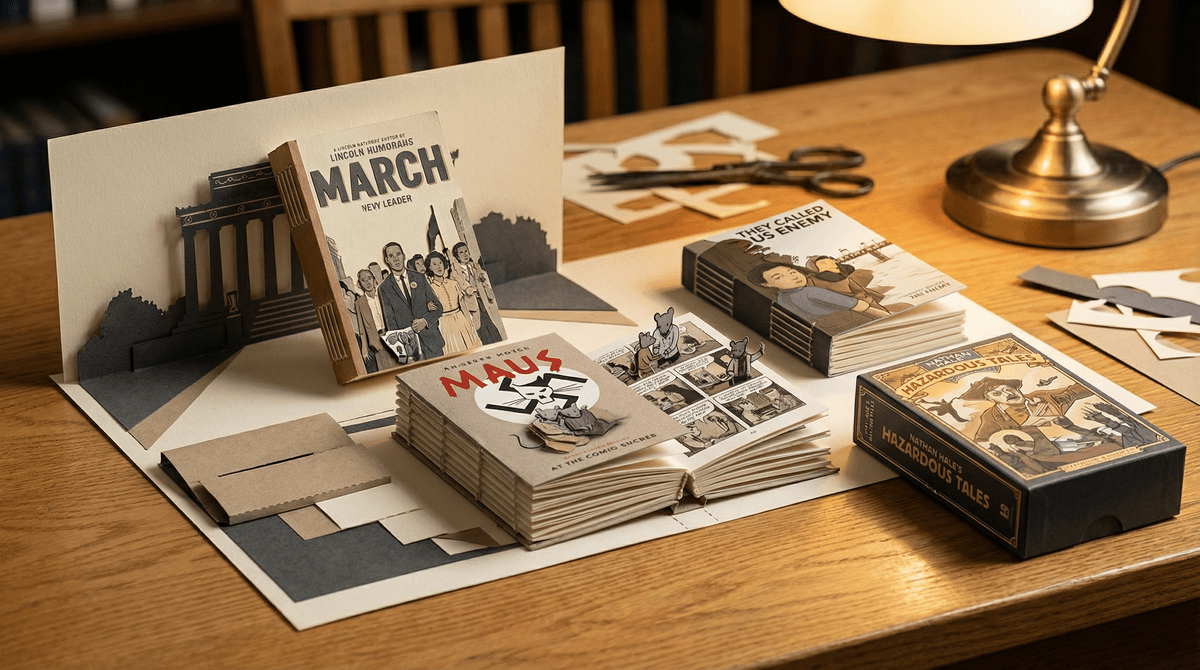
If your kid has already read Maus or March, this is the natural next step. It hits that same intersection of personal trauma and national shame, but with a specific focus on the American legal system’s fragility. If they finish this and want to dig deeper into the mechanics of how this happened, you can point them toward teaching kids about Japanese American incarceration for more primary sources and archives.
The takeaway
Don’t be surprised if this book leads to some uncomfortable questions about the present. Takei is very intentional about linking his childhood experience to modern-day issues of civil rights and border policy. He isn't just recounting a sad story from the past; he’s issuing a warning. Now that his follow-up, It Rhymes With Takei, has been out for a year, this original memoir remains the essential starting point for understanding why he’s spent his life as an activist. It’s a fast read, but it’s the kind of book that stays on the nightstand for a long time.