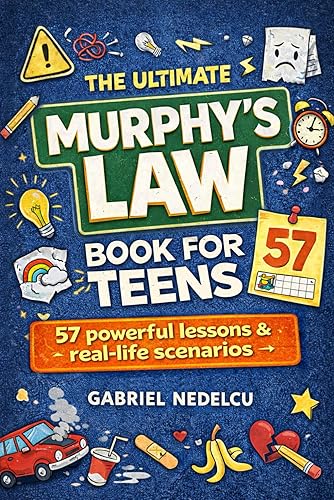
Teen self-help is usually a minefield of toxic positivity. Most books tell kids to "manifest" or "stay positive," which feels like a slap in the face when your phone breaks and your crush leaves you on read in the same hour. This book takes a different path by starting with the assumption that things will go wrong.
The "Plan for Chaos" Strategy
The 4.8-star rating on Amazon after its 2026 release isn't just a fluke of early reviews; it's a reflection of how much teens crave a realistic roadmap. Most books in this genre treat stress as an abstract concept. This one treats it like a technical glitch. By framing social and academic disasters through the lens of Murphy’s Law, it removes the shame. If you expect the Wi-Fi to die during your final presentation, you don't panic when it happens—you just execute the backup plan.
Why the "Independent" Label Matters
Because this is an independently published title, it avoids the sanitized-by-a-corporate-committee feel that plagues many YA non-fiction titles. It’s direct. It doesn't waste 40 pages on an introduction about the "journey of adolescence." It gets straight to the 57 scenarios. This format is perfect for a generation of readers who are used to short, high-density information bursts. They can flip to a page that looks like their current life—say, a group project falling apart—and get a three-minute read on how to handle the immediate fallout.
The Comparison Move
If your teen liked The 7 Habits of Highly Effective Teens, they will find this much more actionable. Where 7 Habits is about big-picture character, Murphy’s Law is about the tactical day-to-day. It’s less about who you want to be in ten years and more about how to not lose your mind in the next ten minutes. It’s the difference between a compass and a Swiss Army knife.
Handling the Friction
Let’s be real: any adult writing for teens is going to have some "how do you do, fellow kids" moments. You might see some slang that feels slightly off or scenarios that feel a bit staged. But because the book focuses on the mechanics of a crisis—the heart rate, the decision-making loop, the immediate social fallout—those moments of cringe don't sink the ship. The advice is sound enough that a 15-year-old will likely forgive a weirdly used phrase if the actual strategy helps them survive a cafeteria blowout or a failed exam.
If you have a kid who is a chronic overthinker, this is the manual they won't admit they needed. It’s not about being perfect; it’s about being unshakeable when things inevitably get messy.