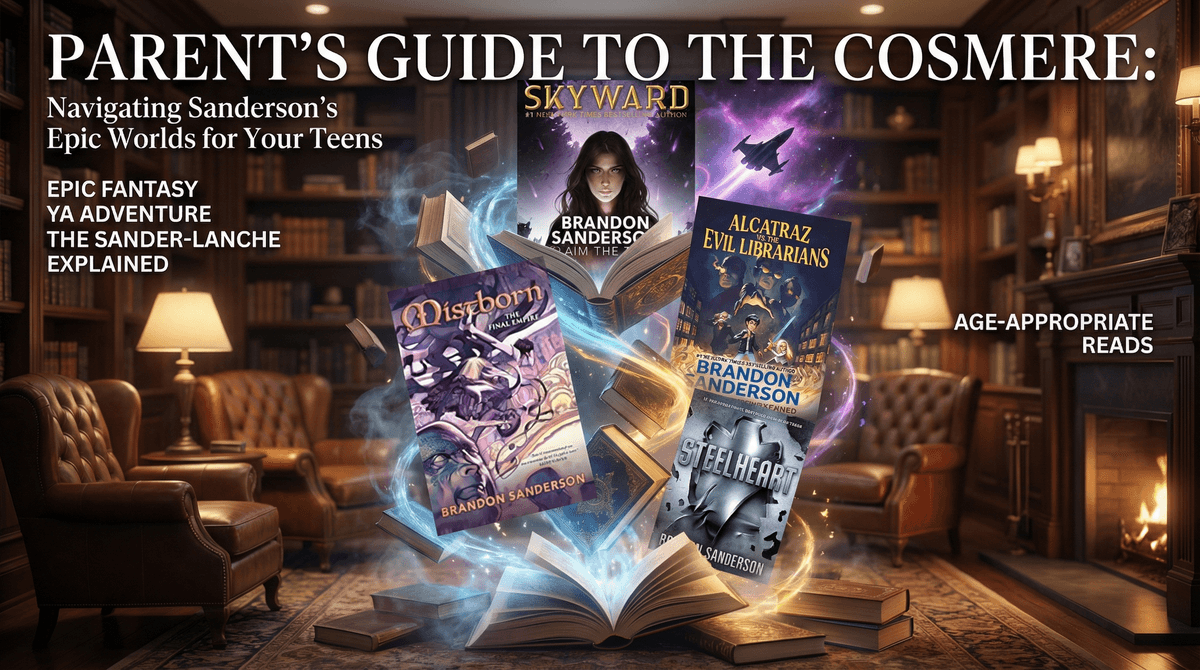
If you’re looking for the point where a young reader graduates from middle-grade adventures to the "big leagues" of epic fantasy, this is the series. Brandon Sanderson has basically become the center of gravity for the entire genre, and The Stormlight Archive is his heavyweight champion.
The "One Thousand Page" Problem
Let’s be real about the size of these things. Each book is a massive 1,000-plus page commitment. On Reddit and across fan forums, you’ll hear people talk about how these books feel like three novels bound together into one tome. They aren't lying. The first half of The Way of Kings is a slow, deliberate build. It takes its time introducing the alien world of Roshar, where hurricanes are so frequent that the plants have evolved to hide in the ground.
If your kid is used to the breakneck speed of a 300-page YA novel, they might hit a wall in the first few hundred pages. But there is a reason for the 4.7 Amazon rating. Sanderson is the master of the "big finish." He spends 800 pages setting up dominoes just so he can knock them down in the final 200. Fans call this the "Sanderlanche," and once a reader hits that point, they usually won't sleep until the book is finished.
The Cosmere Connection
This series is the crown jewel of what Sanderson calls "The Cosmere." It’s a shared universe where characters and magic systems from different books occasionally cross over. If your kid finishes these three and wants more, they have an entire roadmap of other series like Mistborn or Warbreaker to fall back on.
For parents wondering where to start, The Stormlight Archive is the most complex entry point. If the 1,200-page count feels like too much of a hurdle, checking out other Brandon Sanderson YA books like the Mistborn series might be a better "test run" to see if they enjoy his logical, rule-based approach to magic.
Why it sticks the landing
The reason this series has such an obsessed following isn't just the giant swords or the magic. It’s the humanity. Most "epic" fantasy relies on a chosen one who is perfect from day one. Sanderson’s heroes are broken. Kaladin deals with crushing seasonal depression; Shallan is navigating massive family trauma.
The books treat these mental health struggles as a core part of the characters' power rather than a weakness they need to "get over." It makes the high-flying action feel earned. You aren't just cheering because someone won a sword fight; you're cheering because a character finally decided that they were worth saving. It’s a level of emotional maturity that is rare in a genre that usually prioritizes world-building over people.
If you have a kid who loves deep lore, maps, and "hard" magic systems where everything has a logical explanation, this is the gold standard. Just make sure they have a sturdy bookshelf.