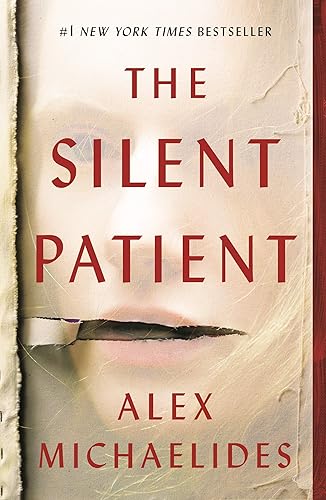
If you’ve spent any time on social media or in a bookstore in the last few years, you’ve seen this cover. It’s the ultimate "BookTok" gateway drug. The premise is a masterclass in narrative tension: Alicia Berenson shoots her husband five times in the face and then never speaks again. Not to the police, not to her lawyers, not to the doctors. She just paints.
The "One More Chapter" Problem
This is the quintessential example of books you should not start if you have work tomorrow. Alex Michaelides uses a dual-narrative structure that acts like a pincer move on your free time. You get the current-day perspective of Theo, a criminal psychotherapist who is arguably too obsessed with "fixing" Alicia, interspersed with Alicia’s old diary entries from the time leading up to the murder.
The diary entries are where the book actually lives. They provide the only color in a story that is otherwise quite bleak and clinical. While Theo is wandering around a drab, underfunded psychiatric hospital, the diary gives you the "before"—the glamorous, messy, and increasingly paranoid life of a London artist. It makes the silence of the present day feel much louder.
Don't Expect a Medical Journal
If you work in mental health or have a passing interest in how actual therapy works, prepare to be annoyed. The ethics in this book are non-existent. Theo’s "treatment" of Alicia involves a level of boundary-crossing that would get a real therapist’s license revoked in about ten minutes. The psychiatric facility itself feels more like a setting for a Gothic horror novel than a modern medical ward.
But here’s the thing: it doesn't really matter. This isn't a "medical" thriller; it's a psychological one. The "science" is just a vehicle to get you to the final fifty pages. If you can treat the setting like a stylized stage play rather than a documentary, the plot works much better. It’s built on the bones of Greek tragedy—specifically Alcestis—which gives the whole thing a weight that keeps it from feeling like a disposable airport novel.
Why It’s All Over Your Teen’s Feed
If your teen is graduating from YA mysteries and wants something that feels "grown-up" without being impenetrable, this is the bridge. It’s fast, it’s moody, and it rewards people who pay attention to small details. It’s a prime candidate for books that made me gasp out loud in public because the ending recontextualizes everything you just read.
The reason it dominates social media is the "reveal." It’s the kind of book people finish and immediately want to talk about to see if they missed the clues. We’ve broken down why this dark thriller is dominating your teen’s feed if you’re worried about the specific intensity of the trauma involved, but for most older teens, the draw is simply the puzzle. It’s a "fair play" mystery—the clues are there, but they’re buried under enough psychological noise that most readers will still find themselves blindsided by the final page.