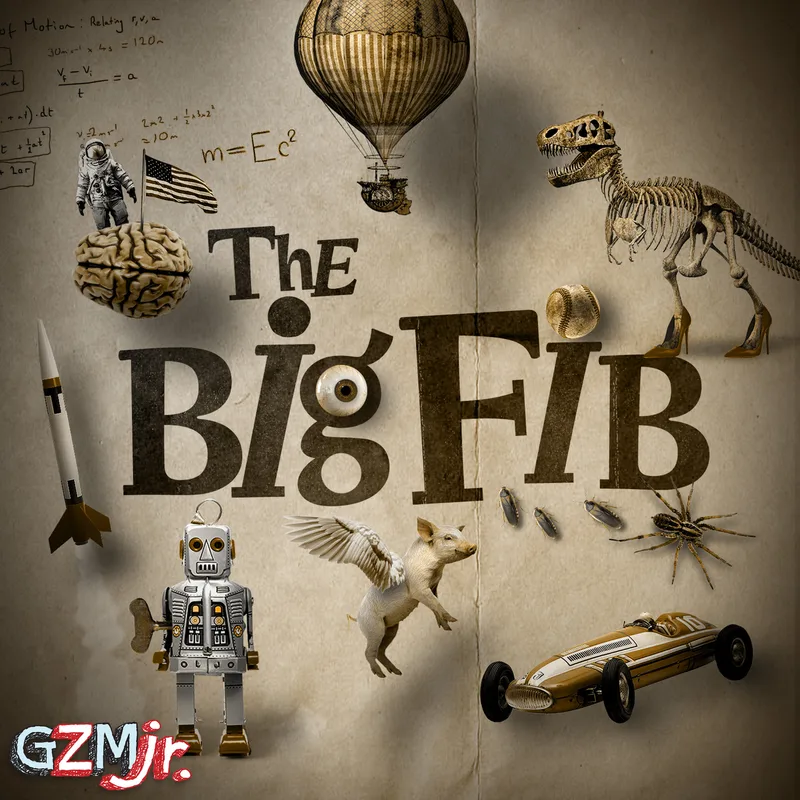
The Big Fib

The Big Fib

podcast

Clean, Leisure, Comedy

WISE
81%

WISE Score

Kids play detective to spot the fake expert in this fast-paced game show that's basically media literacy bootcamp disguised as fun.

Screenwise Verdict

This is one of those rare kids' podcasts that actually delivers on its educational promise without being boring. In an era where your third-grader is probably encountering AI-generated nonsense on YouTube, teaching them to ask good questions and spot BS is genuinely valuable life skills training.

The format is smart: two 'experts' discuss a topic (say, dinosaurs or astronauts), one is legit, one is making it all up, and a kid has to figure out who's who. It's engaging enough that kids want to play along, and the hosts keep things moving quickly.

The elephant in the room: yes, it makes lying entertaining. Some parents will side-eye that, and fair enough—you might need to have a conversation with younger kids about how this is a game with rules, not a blueprint for fooling their teacher. But the payoff is worth it. Kids are learning to think critically, which is more important than ever.

The downside? It's formulaic. After 10-15 episodes, you've basically seen the whole playbook. It's not appointment listening for years on end, but as a 20-episode rotation in your family podcast queue, it's solid.
Age Fit

Sweet spot is ages 7-12, where kids can grasp the game mechanics and appreciate the humor without finding it babyish. Younger kids might enjoy it but could miss the media literacy lessons or get confused about the 'lying is fun' framing. Teens will find it too juvenile.

WISE Breakdown
Wholesome
82

Clean dialogue throughout, kid-friendly topics, and a cooperative format where kids work through problems. The show models critical thinking and thoughtful questioning. One minor caveat: it does make a game out of lying, which could send mixed messages to younger kids about deception being fun, but the educational framing keeps it healthy overall.

Imaginative
76

The format is clever—kids must use deductive reasoning and creative questioning to spot the fake expert. It encourages curiosity and invites listeners to play along at home, building their own questioning strategies. However, it's formulaic week-to-week, which limits true creative expression beyond the core mechanic.

Safe
92

Extremely safe for the podcast format. All content is kid-friendly with no mature themes, explicit language, or concerning topics. No ads targeting kids, no social features, no unexpected content. Perfect for car rides and family listening where kids might overhear. The only minor consideration is the 'lying as entertainment' angle, but it's clearly framed as a game.

Enriching
81

Directly teaches media literacy and critical thinking skills—incredibly relevant in 2025. Kids learn to ask insightful questions, weigh evidence, and trust their instincts when detecting misinformation. The game show format makes learning genuinely entertaining. Topics vary widely, exposing kids to different fields. Loses a few points because episodes can feel repetitive and the educational payoff is more about the process than deep knowledge.

Parent Info

Why It Might Be Great

  • Teaches actual critical thinking skills kids need in the age of TikTok misinformation and deepfakes
  • Clean, family-friendly content that works perfectly for car rides without worrying what might come out of the speakers
  • Interactive format lets kids play along at home, making them active participants rather than passive listeners
  • Fast-paced and genuinely funny—kids ages 7-12 find it engaging, not preachy
  • Exposes kids to diverse topics and fields they might not encounter otherwise

What to Watch For

  • The premise literally rewards convincing lying, which might confuse younger kids (under 7) about when deception is okay
  • Episodes follow the same formula every week—some kids will love the predictability, others will get bored after a dozen episodes
  • Older kids (13+) will likely find it too childish and formulaic for their taste

Conversation Starters

  • "What questions would you ask to figure out who's lying? What clues would you look for?"
  • "Have you ever seen something online that turned out to be fake? How did you figure it out?"
  • "Why do you think the show makes lying into a game? Is that different from lying in real life?"
  • "Which expert did you think was real? What made you suspicious of the other one?"

Ask Anything

Get a personalized guide on any topic