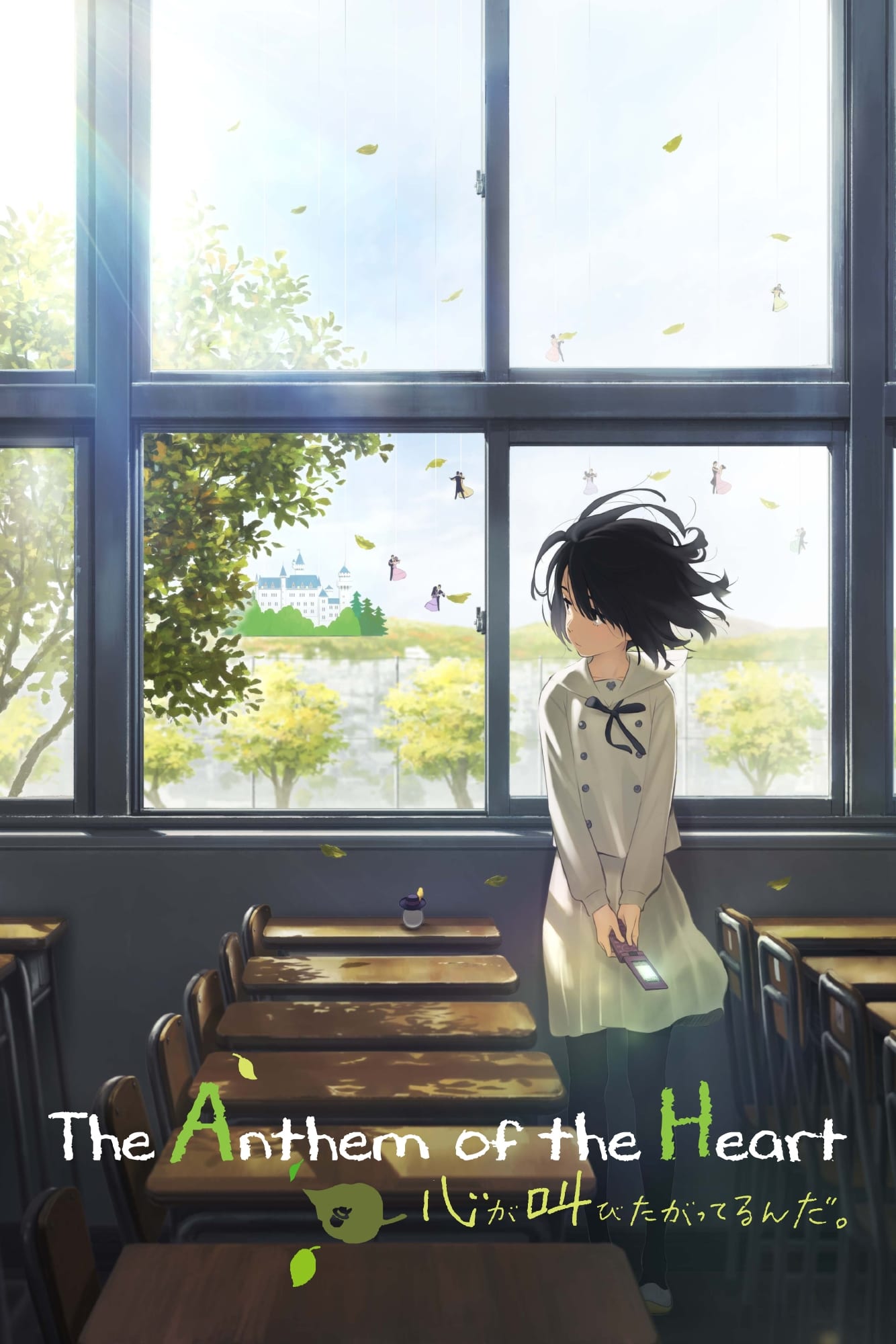
While most high school movies treat the "big school musical" as a glossy backdrop for a makeover or a romance, The Anthem of the Heart uses it as a literal survival mechanism. It’s a 2015 drama that leans into a specific kind of Japanese storytelling where the supernatural and the psychological blur together. If your kid is used to the high-octane energy of Shonen battle hits, they might find the pacing here glacial. But for a kid who feels like they’re constantly misunderstood or struggling to find the right words in a crowded hallway, this movie hits like a freight train.
The metaphor of the egg
The central hook is a "curse" delivered by a talking egg that seals the main character's mouth to prevent her from hurting others with her words. It’s a vivid, slightly weird way to illustrate psychosomatic mutism. What I love about this movie is that it doesn’t treat her silence as a "cute" quirk. It shows the physical stomachaches and the social isolation that come when a kid internalizes the idea that their voice is a weapon that destroys families.
The 65% audience score on Rotten Tomatoes is a bit of a tell. This isn't a crowd-pleaser in the traditional sense. It’s a talky, introspective drama that requires you to sit with the characters' discomfort. If your kid is looking for a "happily ever after" where every problem is solved with a magic wand, they’ll be disappointed. The resolution is much more grounded and, frankly, more useful for real life.
If they liked A Silent Voice
If your teenager was moved by A Silent Voice or Your Lie in April, this is the natural next step. It shares that same DNA of "teenagers with big feelings trying to navigate heavy trauma through art."
The musical sequences aren't just there to sell a soundtrack. They are the only way the characters can bypass their own social anxieties. We see four very different kids—the "silent" girl, the failed baseball star, the "cool" guy, and the girl trying to maintain a perfect image—forced to stop performing their social roles and actually communicate. It’s a great counter-programming option to the TikTok-era pressure of always having a perfect, snappy comeback ready.
The friction of the "slow burn"
You should know that the first forty minutes are almost entirely setup. We spend a lot of time watching the characters move furniture, argue about song lyrics, and avoid looking each other in the eye. For some kids, this will be boring. For others, particularly the "theater kids" or the sensitive types, this is where the movie builds its credibility. It shows that healing isn't a montage; it’s a series of small, often awkward decisions to trust someone else.
The 7.3 on IMDb and 3.5 on Letterboxd reflect a film that is widely respected by those who "get" the genre but might feel a bit alien to a casual viewer. It’s a movie about the weight of words—the ones we say and the ones we don't. Watching it together is a solid way to open a door to talking about how your own family handles conflict, without it feeling like a lecture.