Superhot VR

Superhot VR

game

2016, Shooter, Puzzle

WISE
89%

WISE Score

83%

IGDB

It’s basically The Matrix, but you’re a glass-shattering ballerina and time is your remote control.

Where to Play

Screenwise Verdict

Superhot VR is a rare breed: a shooter that actually makes you smarter. By tying the flow of time to the player's physical movement, it transforms a violent premise into a high-stakes spatial puzzle.

It’s one of the few 'must-play' titles that justifies owning a VR headset. It’s clean, it’s sharp, and it doesn't try to bleed your wallet dry with skins or battle passes. While the meta-narrative is a bit 'edgy' and clinical, the actual gameplay is pure, focused fun that rewards patience and planning over mindless clicking.

Age Fit

ESRB says 13+, but because the violence is so abstract (shattering mannequins), 10-year-olds who can handle the physical intensity of VR will be fine. Just make sure they don't dive into the coffee table.

WISE Breakdown
Wholesome
62

While the 'violence' is just red glass shattering, the meta-narrative is a bit dark and clinical. It's not a 'warm and fuzzy' game, but it's free of the typical toxic sludge found in multiplayer shooters.

Imaginative
95

The 'time moves when you move' mechanic is one of the most brilliant innovations in gaming. It turns a standard shooter into a high-speed chess match where your body is the piece.

Safe
75

Zero ads, zero microtransactions, and zero screaming 12-year-olds on voice chat. The main safety risk is physical: you will absolutely punch a wall or a lamp if you don't clear the room. Note: Earlier versions had 'self-harm' plot points that were largely patched out, but the vibe remains intense.

Enriching
88

It's a genuine workout for spatial reasoning and physical coordination. You aren't just twitching a thumbstick; you're calculating trajectories and moving your actual body to dodge bullets in slow motion.

Parent Info

Why It Might Be Great

  • Forces kids to slow down and think tactically rather than just 'spraying and praying'.
  • A genuine physical workout—expect them to be sweating after a few levels.
  • The minimalist art style is iconic and avoids the 'uncanny valley' creepiness of realistic shooters.
  • Zero predatory monetization; you buy the game, you own the game.

What to Watch For

  • The 'Guardian' boundary is your friend—kids get so immersed they'll try to lean on virtual tables and fall over.
  • The meta-story involves a 'system' taking over your mind, which can be a bit spooky for younger or sensitive players.
  • The game requires a decent amount of floor space to be played safely without breaking furniture.

Conversation Starters

  • "How did you have to move your body to get past that last wave of enemies?"
  • "Why do you think the creators chose to make the enemies look like red glass instead of real people?"
  • "If you could control time like that in real life, when would you use it?"

Deep Dive

The "Neo" Moment

Most shooters are about how fast you can twitch your thumb. Superhot VR is about how slowly you can move your elbow. Because time only crawls forward when you physically move, the game turns every encounter into a high-stakes choreography session. You aren't just playing a game; you’re conducting a symphony of shattered glass.

If your kid has spent any time watching The Matrix or the stylized combat in John Wick, this is the closest they’ll get to that specific brand of "cool" without a stunt coordinator. It’s one of the few titles that feels like it was built for VR from the molecules up, rather than a flat game ported over as an afterthought.

The Sweat Factor

Don't let the "puzzle" label fool you. This is a legitimate workout. You’ll find yourself ducking under virtual bullets, lunging for a discarded pistol, and holding a squat for thirty seconds while you plan your next move. It’s the kind of activity that makes you realize your living room is actually quite small.

If you’re wondering whether active video games are actually exercise, Superhot VR is Exhibit A. It’s not just "movement-based"; it’s physically demanding in a way that Beat Saber isn't. You aren't just flailing; you’re using your core to stay balanced while leaning at a forty-five-degree angle to avoid a shotgun blast. Just make sure the "Guardian" or "Chaperone" boundaries are calibrated perfectly. People have a tendency to try and lean on the virtual desks, which usually ends with a face-plant on the actual carpet.

The "Creepy" Meta-Layer

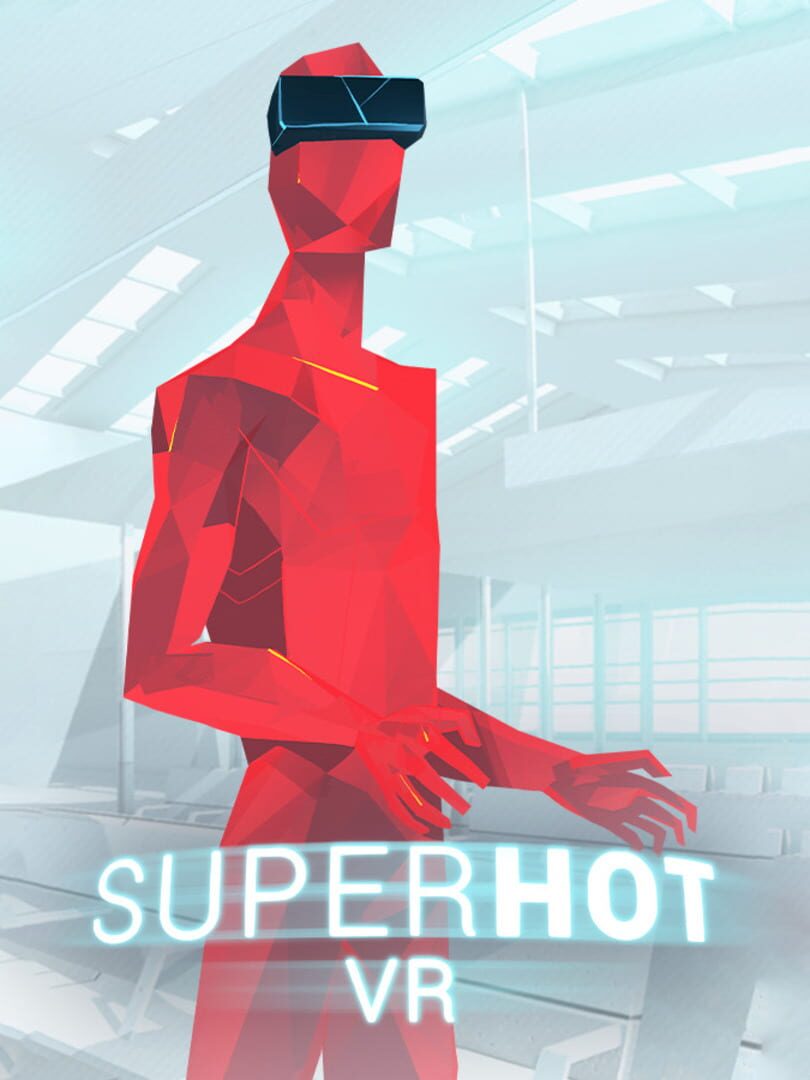
The game’s aesthetic is clinical—lots of white rooms and red, translucent enemies. It’s abstract enough that the violence feels more like breaking a vase than hurting a person. However, there is a weird, fourth-wall-breaking narrative happening in the background. The game tells you to "follow the system" and occasionally tries to mess with your head, suggesting the game is taking over your mind.

For most 10-to-12-year-olds, this is just "cool hacker stuff." For more sensitive kids, the feeling of being "trapped" in a simulation might be a bit much. It’s not a horror game, but it is unsettling by design. If they liked the logic-bending puzzles of Portal but want something with more adrenaline, this is the logical next step.

Why It Still Holds Up

Even a decade after its release, Superhot VR remains a benchmark. The SUPERHOT Team nailed a specific loop that hasn't been bettered: See the threat, freeze, plan the path, execute. It’s tactical in a way that rewards a calm head. If your kid is frustrated by the chaotic, loud environments of Roblox shooters or Fortnite, they might find the quiet, focused intensity here much more rewarding. There are no teammates to let them down and no loot boxes to buy—just a series of increasingly difficult rooms that require them to be the smartest person in the simulation.

Ask Anything

Get a personalized guide on any topic