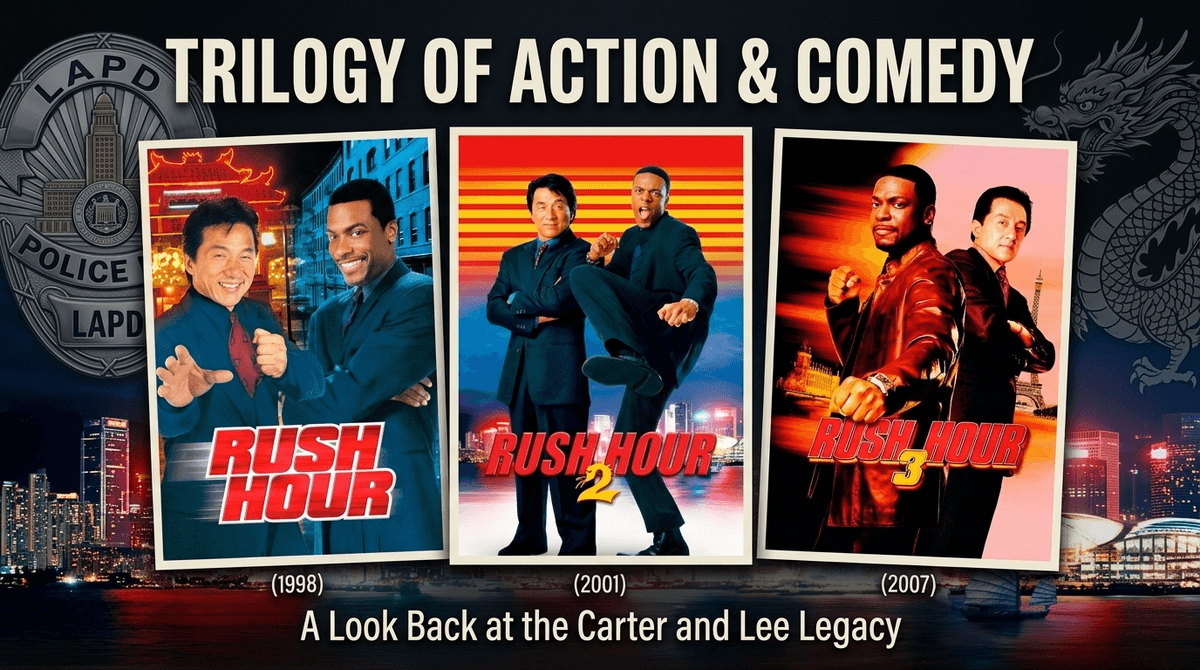
The Jackie Chan Effect
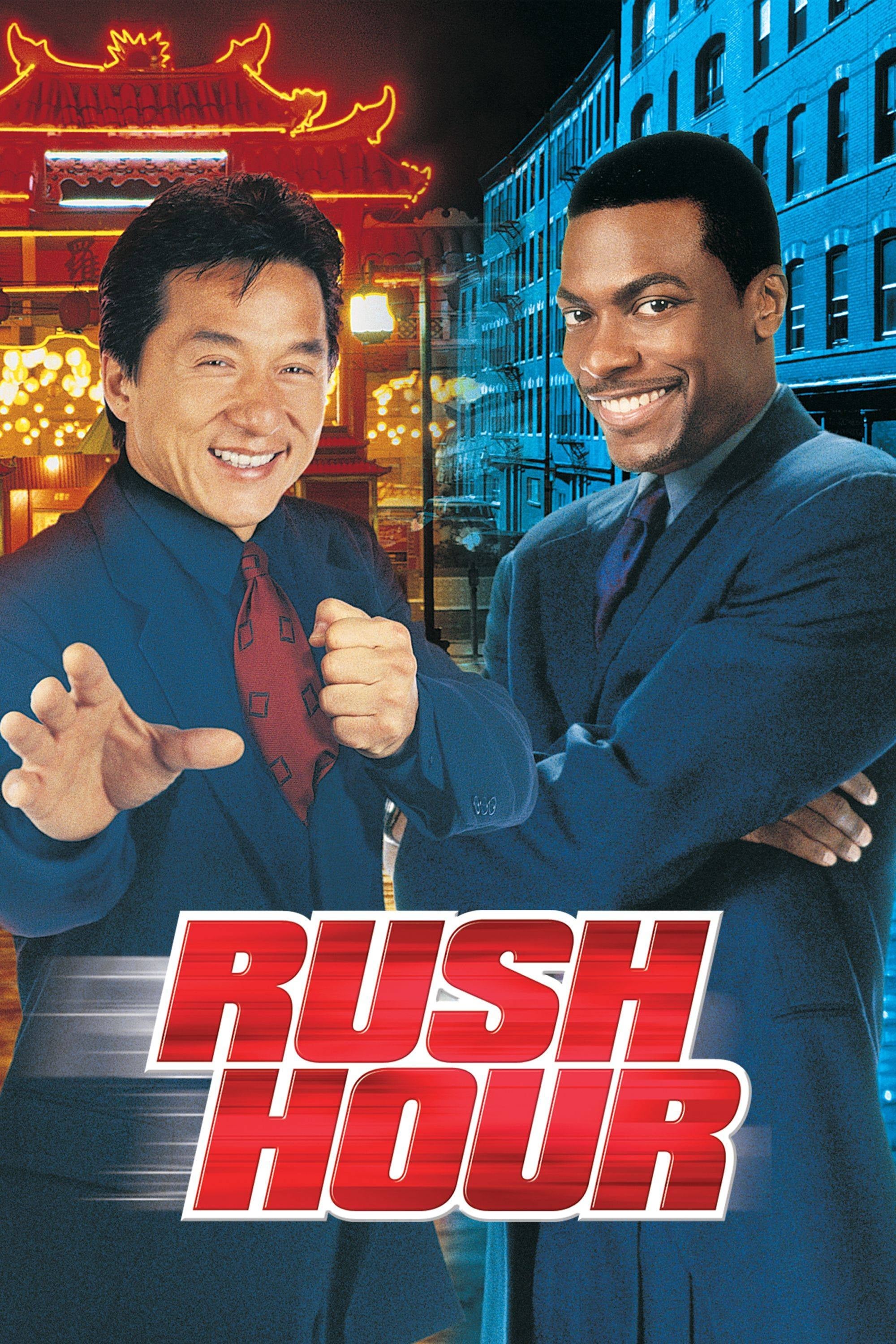
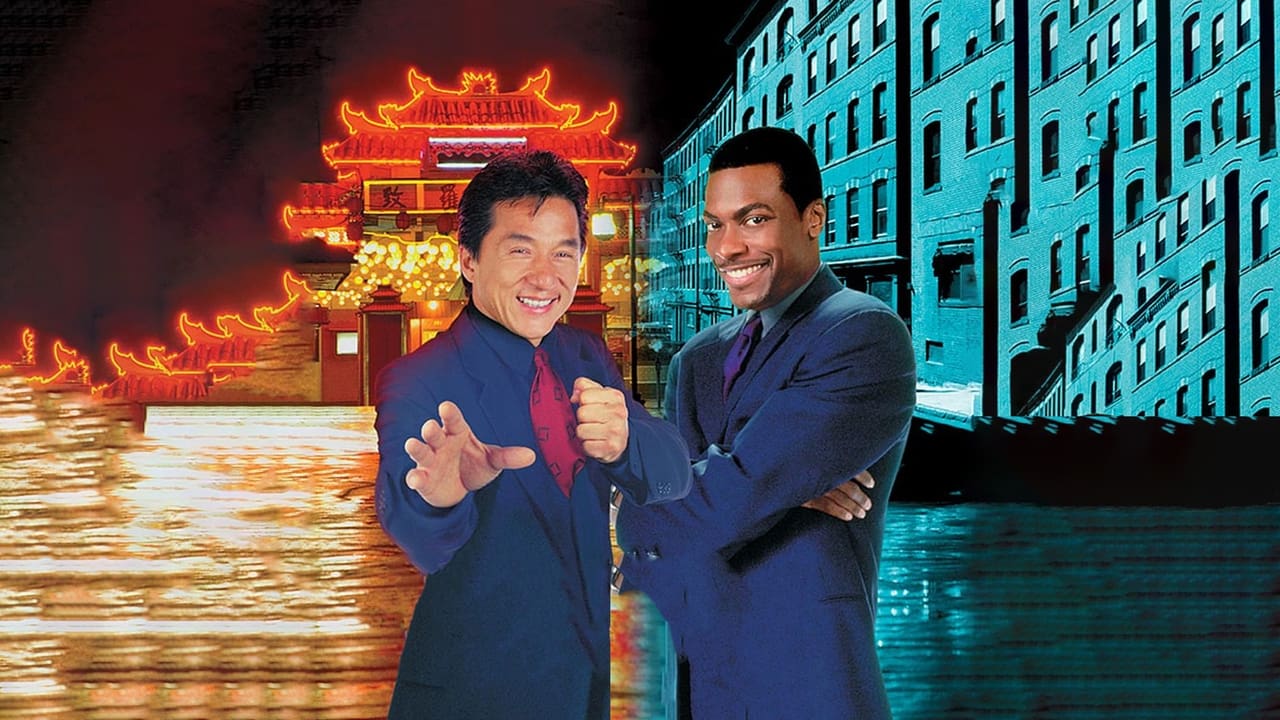
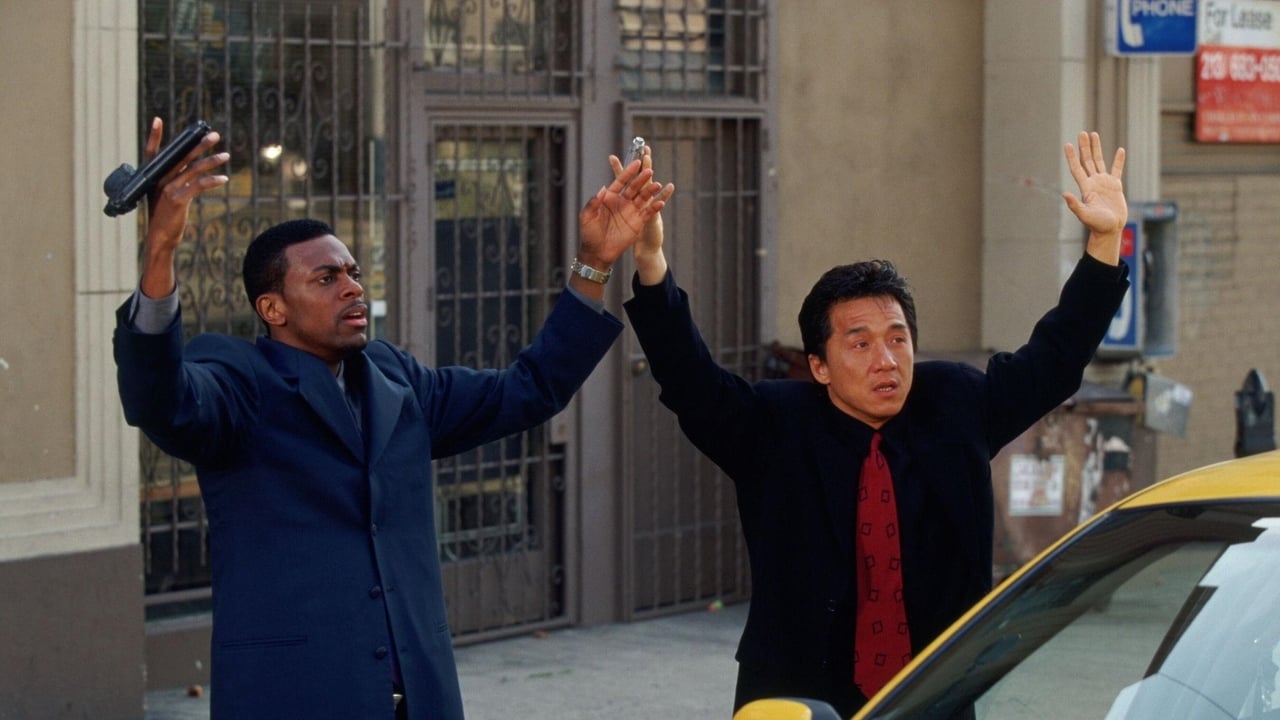
To understand why Rush Hour still works in 2026, you have to look at the action. In an era where every punch is enhanced by AI and every explosion is a digital asset, watching Jackie Chan actually climb a moving bus or weave through a barrage of falling crates is a revelation. For kids raised on the weightless physics of superhero movies, this is a great introduction to practical stunts. It’s physical theater disguised as a cop movie.
A Product of Its Time
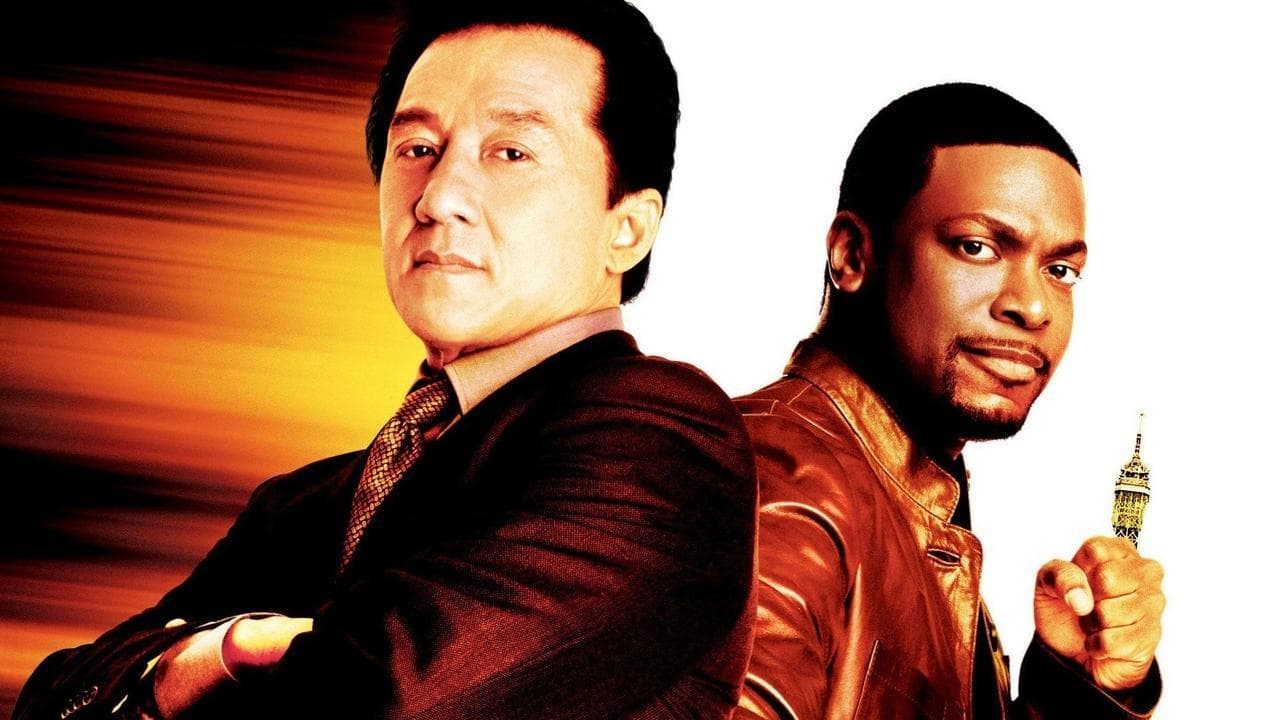
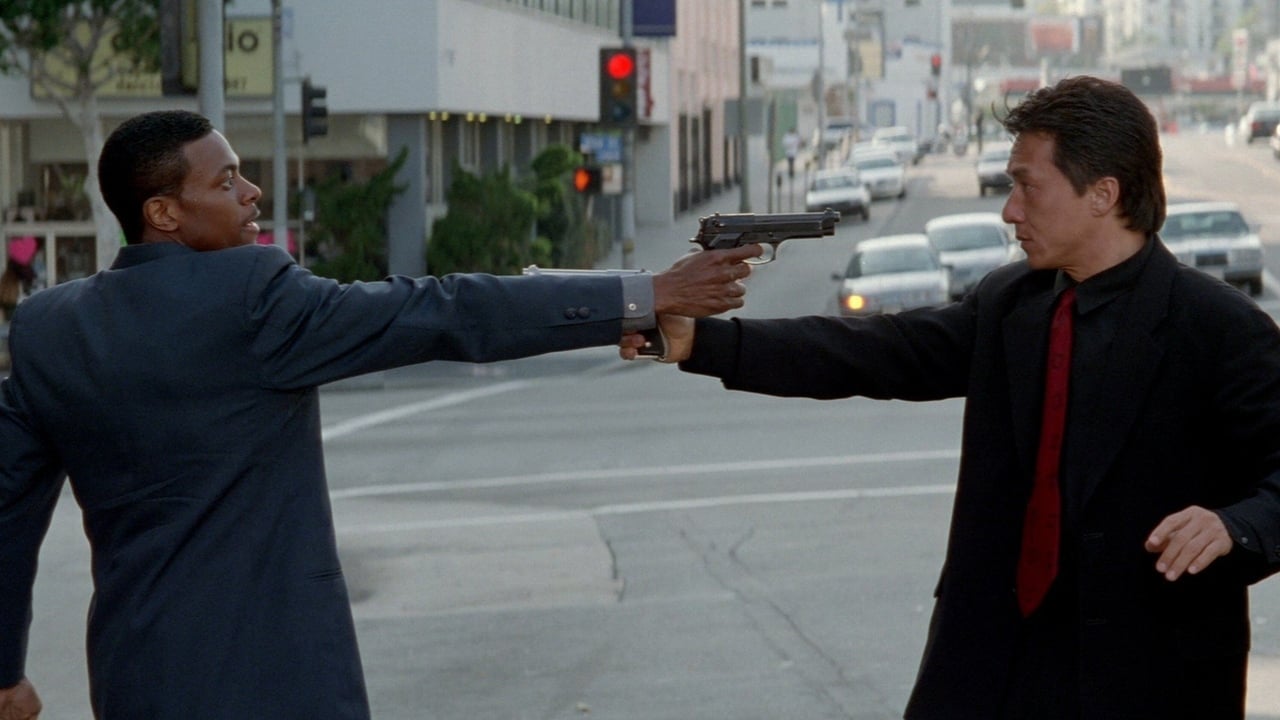
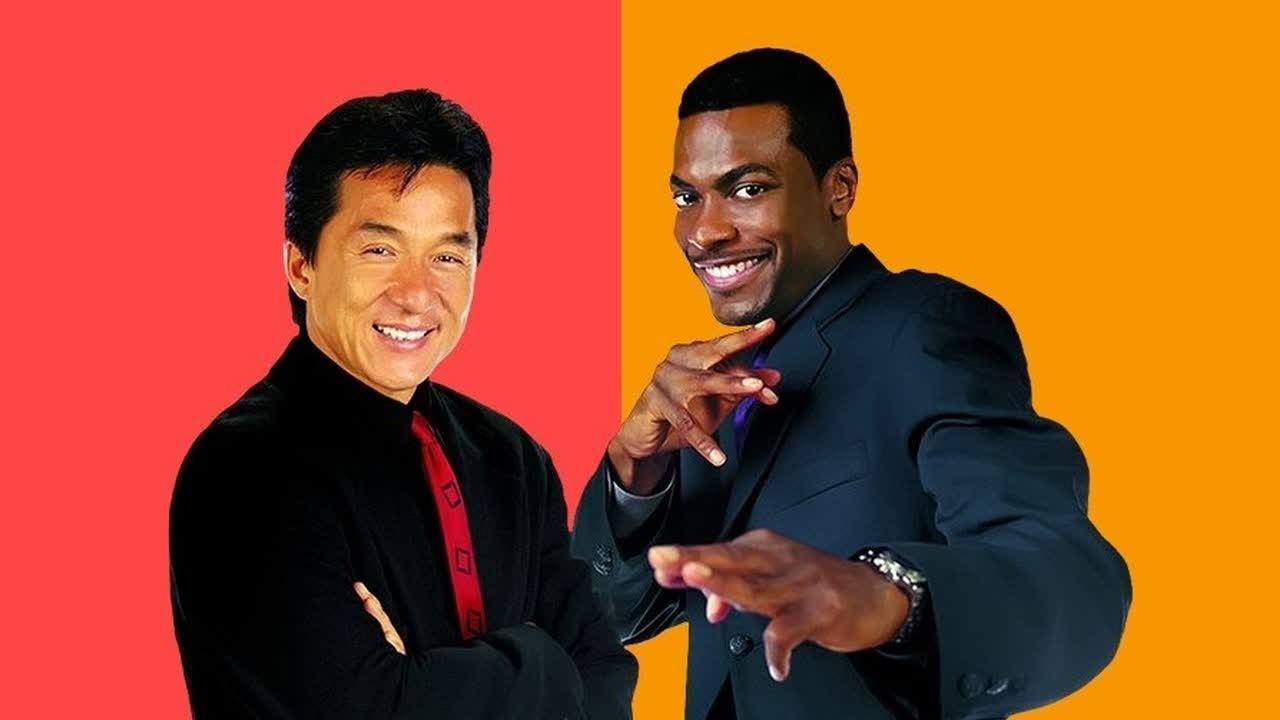
Chris Tucker’s Detective Carter is a loud, fast-talking whirlwind. In 1998, this was the peak of comedy. Today, some of his lines might feel a bit abrasive or repetitive. More importantly, the movie leans heavily into the 'Black guy/Chinese guy' trope. While the film eventually subverts these stereotypes by making both characters equally capable and heroic, the journey there involves a lot of jokes that might feel 'off' to a modern audience. It’s worth a quick mention to your kids that 'this is how movies used to talk,' but the genuine warmth that develops between the two leads usually saves it from feeling mean-spirited.
Why it Holds Up
Unlike many 90s relics, Rush Hour isn't boring. It starts with a bang and ends with outtakes (which are mandatory viewing). It’s a lean, mean, entertainment machine. If your kid liked the Jumanji sequels or Spider-Man: Homecoming, they’ll likely appreciate the banter-heavy rhythm here. It’s a reminder that before movies were 'cinematic universes,' they were just about two guys who couldn't stand each other trying to save the day.