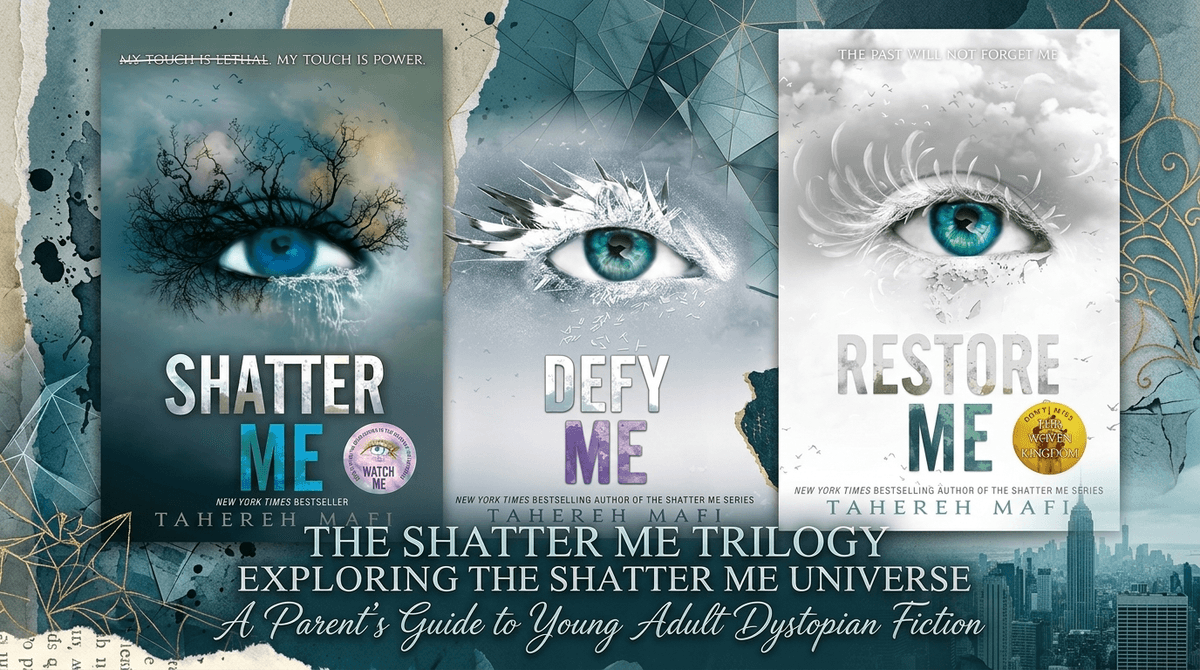
The trilogy that wouldn't stay dead
Most fans thought the Shatter Me story ended with the third book. When Restore Me dropped years later, it effectively functioned as a series reboot, shifting the focus from "surviving the government" to "trying to be the government." This transition is where the series finds its second wind. If your teen burned through the first three books, they’ll notice a shift in tone here. The stakes are less about physical escape and more about the psychological toll of leadership and the messy reality of a power vacuum.
The Warner factor
The biggest mechanical change in this installment is the introduction of dual perspectives. We finally get inside Warner’s head. For the target audience, this is the main event. Mafi uses this to complicate the romance, moving it away from the typical YA love triangle and into something much more obsessive and fractured.
It’s worth noting that this is where the series starts to lean into "New Adult" territory. While it’s still shelved in the teen section, the emotional intensity and the romantic tension are dialed up significantly. If you’re trying to gauge if they’re ready for the even more provocative themes in the next book, our parent's guide to Defy Me breaks down how that trajectory continues.
Dystopian politics and "The I Can Fix Him" trope
Juliette’s transition to Supreme Commander is intentionally rocky. She’s a seventeen-year-old girl with a lethal touch trying to navigate international diplomacy, and the book doesn't pretend she’s a natural at it. This makes for a great entry point for a parent's guide to Restore Me conversation about whether being "chosen" or "powerful" is the same thing as being capable.
The book also leans heavily into the "villain gets the girl" archetype. Warner isn't a hero in the traditional sense; he’s a deeply traumatized, often cold character. The story doesn't necessarily excuse his past actions, but it does ask the reader to empathize with them. If your kid is into the "dark academia" or "enemies to lovers" corners of the internet, this book is their north star.
Why it sticks the landing
The writing style remains Mafi’s signature: strike-through text, breathless sentences, and heavy metaphors. It’s a polarizing style—critics sometimes find it overwrought, but for a teenager feeling the weight of the world, it feels authentic. It’s the literary equivalent of a high-budget music video. It’s stylish, moody, and knows exactly who its audience is. If they liked the high-stakes drama of The Hunger Games but wished it had 50% more pining, this is the book they’ve been looking for.