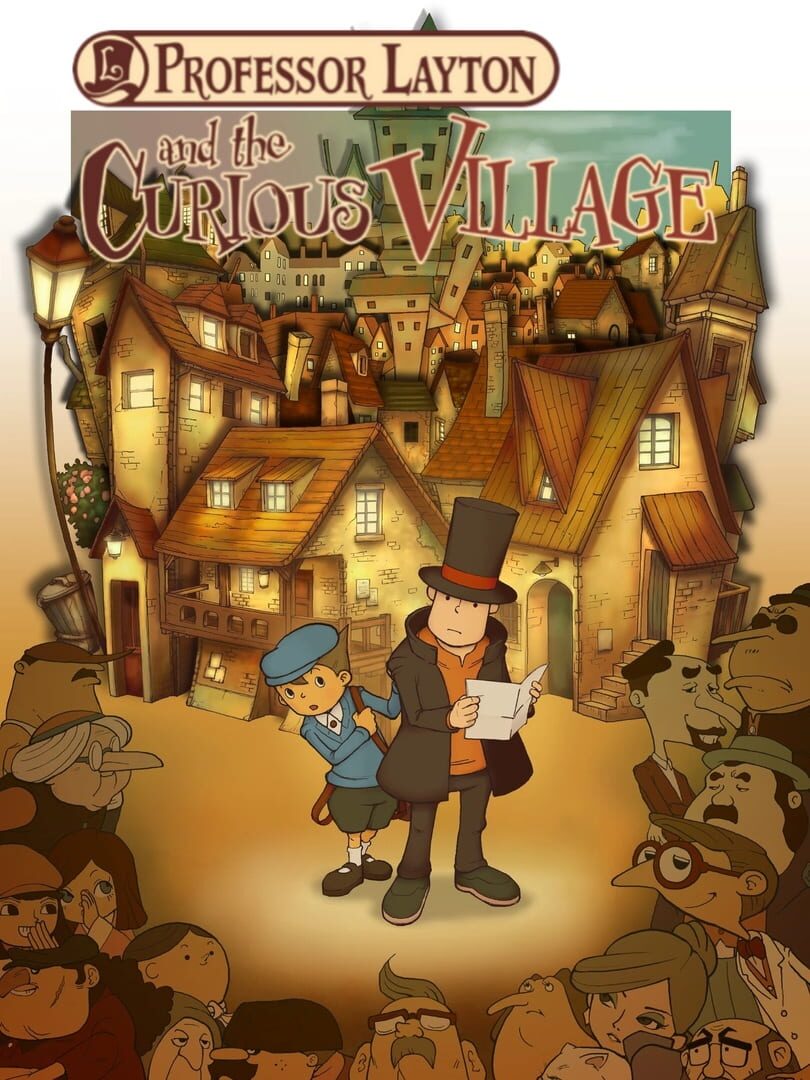
Professor Layton and the Curious Village

Professor Layton and the Curious Village

game

2007, Point-and-click, Puzzle

WISE
94%

WISE Score

82%

IGDB

Sherlock Holmes meets a logic puzzle book in a charmingly weird French village.

Screenwise Verdict

Professor Layton and the Curious Village is the gold standard for what a 'smart' game looks like. It completely avoids the dopamine-loop traps of modern mobile gaming, opting instead for a quiet, atmospheric mystery that actually respects the player's intelligence.

While it originally launched on the DS, the HD mobile ports are the way to go now. They look crisp, play perfectly on a tablet, and offer a focused experience that’s increasingly hard to find. It’s polite, it’s challenging, and it’s one of the few games that will actually leave your kid feeling smarter after an hour of play.

Age Fit

Best for ages 8 and up. The logic requires a certain level of reading comprehension and abstract thought, but it's a fantastic 'couch co-op' game where a parent and kid solve riddles together.

WISE Breakdown
Wholesome
94

Hershel Layton is the ultimate digital role model. He models patience, manners, and critical thinking. The relationship with his apprentice, Luke, is built on mentorship and mutual respect rather than the typical 'snarky kid' tropes.

Imaginative
88

The art style—inspired by Franco-Belgian comics—is a breath of fresh air compared to modern 3D assets. The world-building turns a simple village into a giant, interactive riddle box.

Safe
98

Completely offline. No chat, no microtransactions, no data harvesting. It’s a closed-loop experience that respects the player's time and privacy.

Enriching
96

This isn't 'educational' in the boring way. It uses actual logic puzzles, spatial reasoning, and lateral thinking that challenge even smart adults. It rewards persistence over reflexes.

Parent Info

Why It Might Be Great

  • Genuine brain exercise that doesn't feel like homework, covering everything from math to visual trickery.
  • Timeless aesthetic that looks like a high-end European animated film rather than a dated 2007 video game.
  • Zero pressure gameplay—there are no timers or 'game over' screens, making it perfect for anxious kids.
  • The 'Gentleman' ethos provides a refreshing break from the aggressive or chaotic protagonists found in most modern games.

What to Watch For

  • Puzzle frustration is real; some riddles are 'trick' questions that can feel unfair to a literal-minded child.
  • Reading heavy—if your kid isn't a confident reader yet, you'll be doing a lot of the heavy lifting.
  • Hint coin management is a thing; kids might blow all their help early and get stuck on the harder late-game puzzles.

Conversation Starters

  • "Which puzzle made you feel the smartest after you finally cracked it?"
  • "Professor Layton always says a gentleman never leaves a puzzle unsolved. What do you think that means about being persistent?"
  • "Do you think the 'trick' puzzles are clever or just annoying?"
  • "If you could design a puzzle for the village, what kind would it be?"

Deep Dive

Why Layton Still Matters

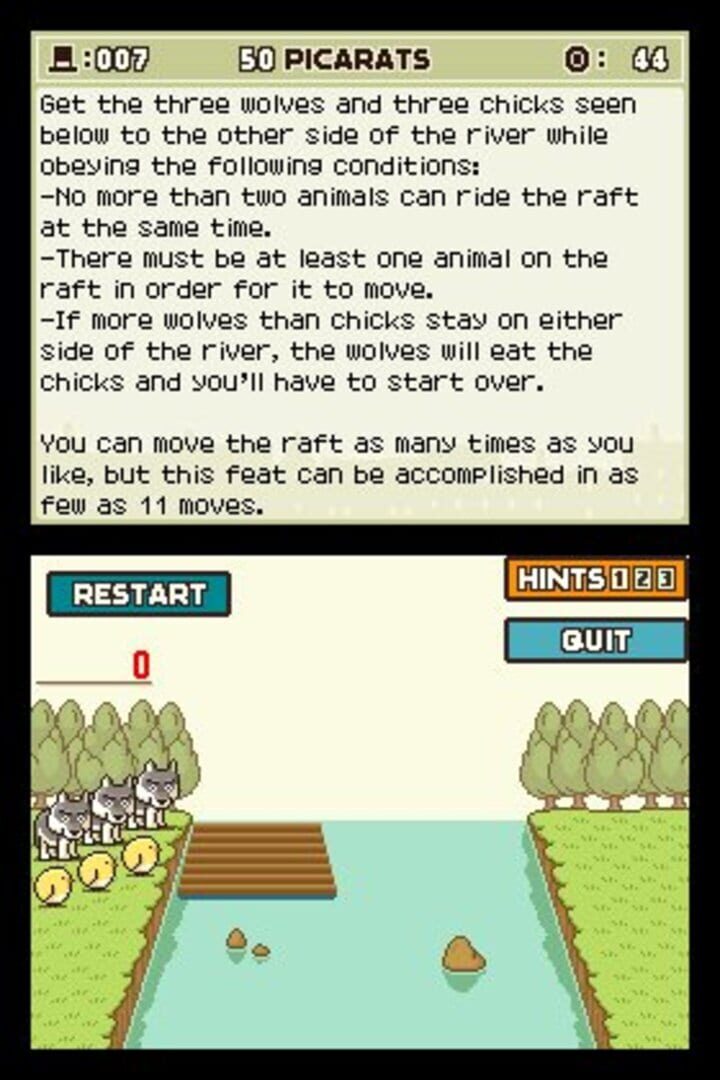
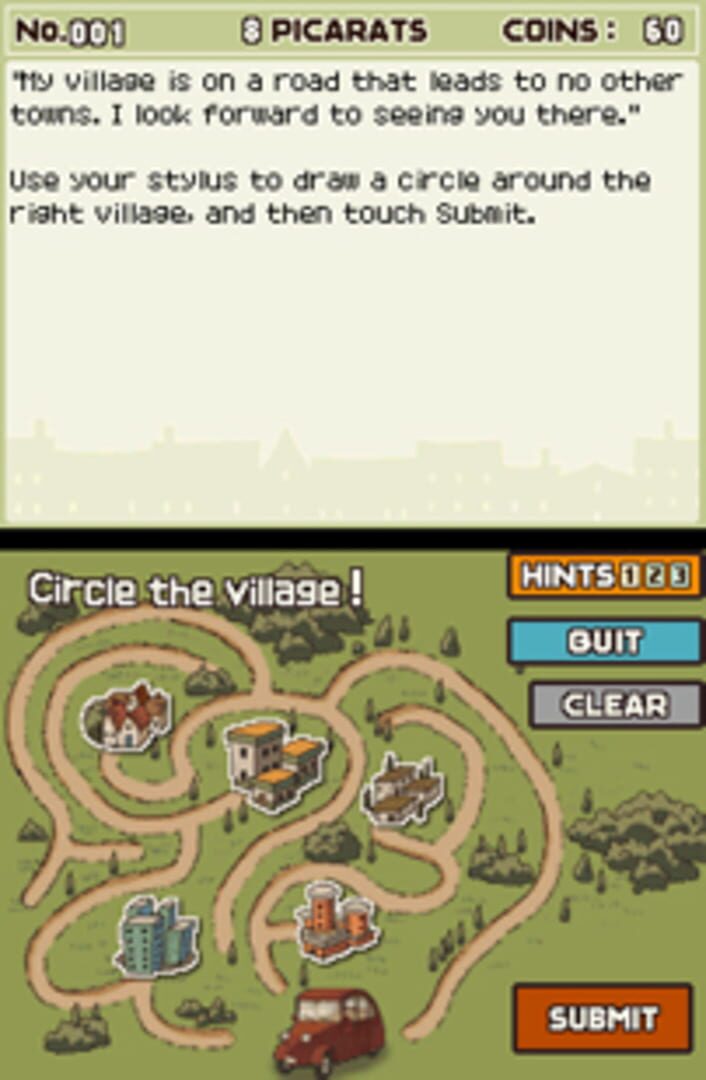
In a world of Roblox and Fortnite, Professor Layton feels like a transmission from a more civilized age. It’s a point-and-click mystery that moves at the speed of a Sunday morning. You play as the titular Professor and his young assistant, Luke, as they explore the village of St. Mystere. The catch? Everyone in this town is obsessed with puzzles. To get through a door or get information from a witness, you have to solve a riddle.

The Logic of the 'Gentleman'

What makes this work is the tone. Layton isn't a superhero; he's a scholar. The game emphasizes observation and logic over brute force. For parents, this is a dream. You aren't managing 'battle passes' or worrying about who your kid is talking to in a lobby. You're just helping them figure out how many matches you need to move to turn a dog into a house.

The 'Aha!' Moment

The puzzles range from simple math to complex lateral thinking. Yes, some of them are 'gotchas'—the kind of riddles where the answer is 'zero' because of some linguistic technicality. This can lead to some pouting, but it’s also a great way to teach kids to read the fine print.

If your kid is used to the constant noise of modern apps, Layton might feel slow at first. But once they hit that first 'Aha!' moment on a difficult puzzle, they'll be hooked. It’s the digital equivalent of a high-quality wooden toy: simple, elegant, and built to last.

What Parents Ask

Ask Anything

Get a personalized guide on any topic