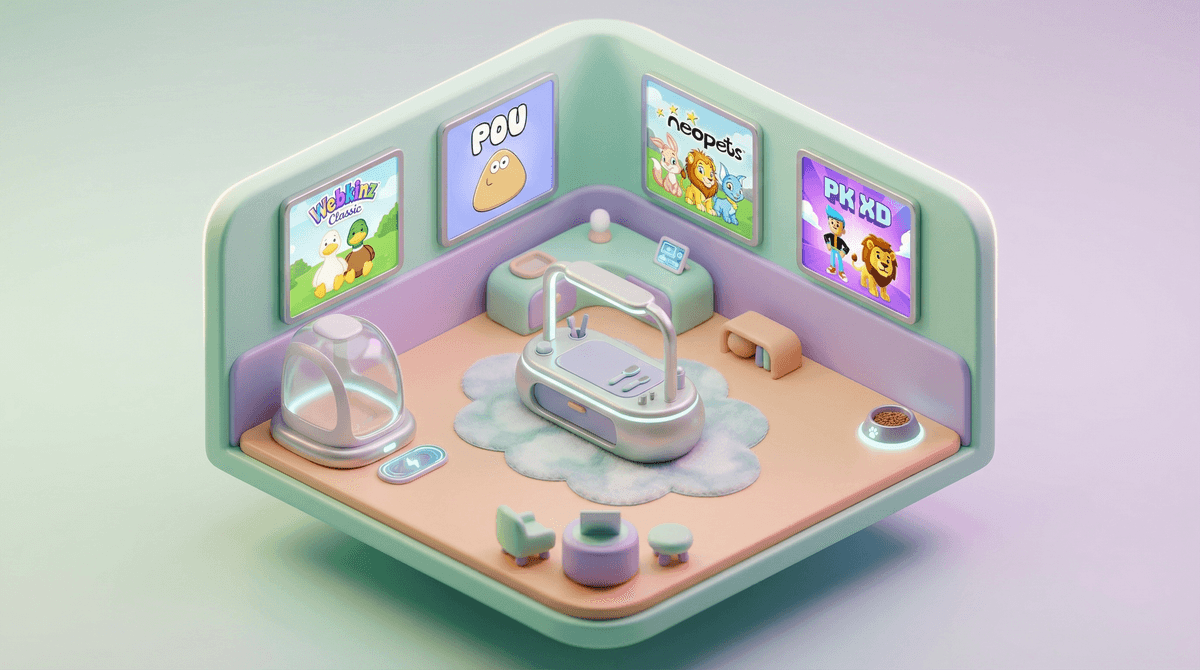


Pou is a relic from the early smartphone era—a digital pet that taught a generation of kids about virtual responsibility. It's harmless and genuinely sweet, but it's also showing every one of its 13 years.
The core loop is classic Tamagotchi: feed, clean, play mini-games, earn coins, buy stuff. Young kids (5-7) can find this genuinely engaging, especially if they've never experienced this genre before. Parent reviews confirm it teaches basic routines and responsibility without violence or mature content.
But let's be real: the gameplay is repetitive, the mini-games are derivative, and the freemium model nudges kids toward IAP. The 2012 graphics and mechanics feel dated compared to what modern kids expect. It's not terrible, but it's not exciting either.
If your kindergartener is begging for their first app and you want something gentle and non-violent, Pou works. Just set up purchase restrictions and prepare for them to move on within a few weeks.