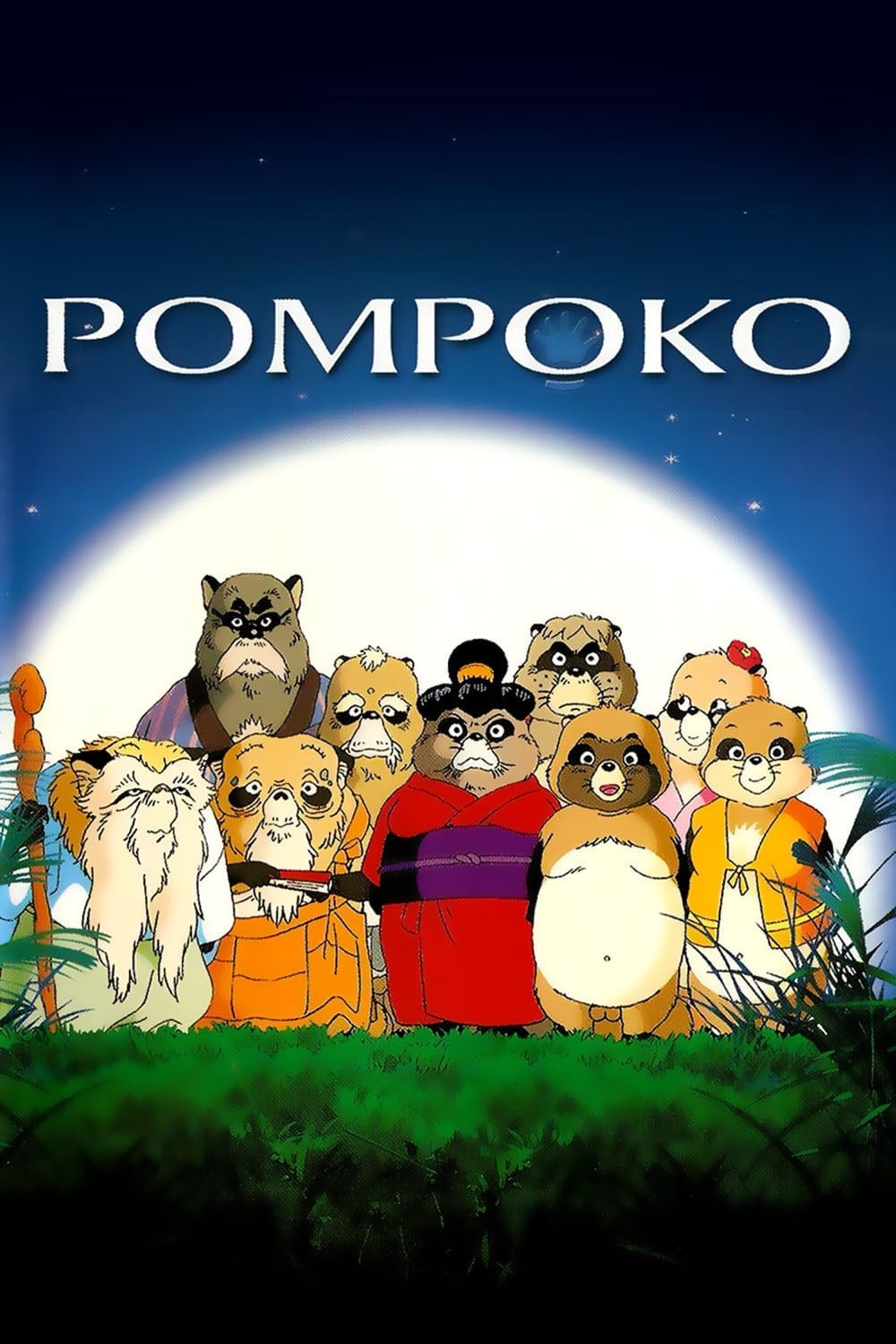
Most Studio Ghibli films feel like a warm hug or a soft dream. Pom Poko feels more like a fever dream that ends in a hangover. While the studio is famous for its "cozy" aesthetic, this movie is a chaotic, sprawling, and occasionally heartbreaking look at what happens when the natural world loses its fight against a shopping mall.
The folklore vs. the "ick" factor
If you are watching this with kids, you need to be ready for the tanuki anatomy. In Japanese folklore, these raccoon dogs are shapeshifters who use their... oversized biology... as a tool for survival. The English dub calls them pouches, but there is no hiding what they are. They turn them into parachutes, weapons, and even carpets.
It is easy to get hung up on the "weirdness" of it, but for the tanuki, it is a point of pride. It represents their connection to a wild, untamed past. If your kids can get past the initial "why am I looking at this?" moment, they will find a story that treats animals as complex characters rather than just cute mascots. These aren't the noble spirits of Princess Mononoke; they are lazy, gluttonous, and prone to infighting. They are, in many ways, very human.
A visual peak in the "Night Parade"
The movie is worth the price of admission for the Night Parade sequence alone. When the tanuki decide to haunt the new suburban development with a massive display of illusions, the animation shifts into a kaleidoscopic tribute to Japanese mythology. It is one of the most imaginative sequences the studio ever produced.
However, this high point highlights the movie’s biggest friction: the pacing. The story is told through a dry, documentary-style narrator. It jumps through time, sometimes skipping months or years of the struggle. This makes the movie feel long. If your kids are used to the tight, hero’s-journey structure of a Disney or Pixar film, they might find the middle section a bit of a slog.
The ending is a reality check
Most family movies about the environment end with the humans learning a lesson and the forest being saved. Pom Poko refuses to give you that sugarcoat. It is a story about a losing battle. By the end, the tanuki are forced to make a choice: assimilate into human society by staying in "human" form forever, or live on the scraps of the remaining green space.
It is a bittersweet conclusion that might lead to some heavy questions. It doesn't offer a magical solution to urban sprawl because, in the real world, there isn't one. If you have a kid who is deeply sensitive to animal welfare, be prepared for some tears. But if you have a kid who appreciates a story that doesn't talk down to them, this is a masterpiece of environmental storytelling that sticks with you long after the credits.