The antidote to high-octane "brain rot"
In an era where most preschool content feels like a neon-colored strobe light, Nanalan' is a radical departure. It’s a show where the primary conflict might be a missing ball or the discovery of a particularly interesting leaf. While modern hits are engineered by attention-span scientists to keep kids locked in, this 1998 Canadian import operates on toddler time.
If your household is currently stuck in a cycle of high-energy shows that leave your kid "wired but tired," Nanalan' is the reset button. It doesn't just entertain; it de-escalates. The pacing is famously glacial, mirroring the way a three-year-old actually processes the world. It’s one of the few shows that captures the monologue of early childhood—the repetitive, slightly nonsensical, and deeply earnest way kids talk to themselves while they play.
Embracing the "weird" puppet energy
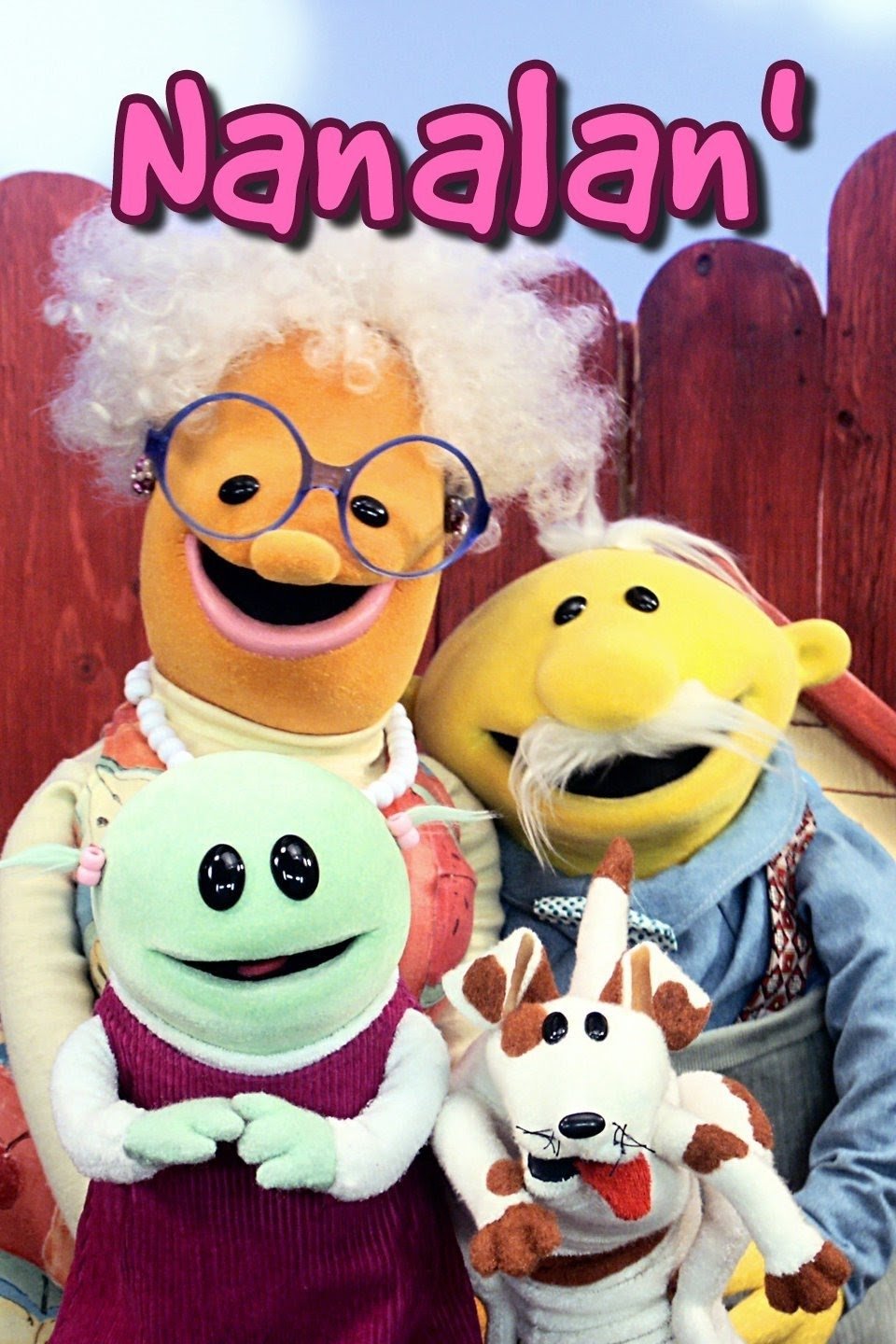
Let’s be honest: the puppets don't look like Elmo. Mona is a lime-green toddler with a handful of hair strands, and Nana looks like a cozy, slightly melted marshmallow. To a parent raised on Pixar, the DIY, "found-object" aesthetic might feel a bit jarring or even uncanny at first.
However, this visual style is exactly why it resonates. Unlike the sterile, perfectly symmetrical characters in modern CGI, Mona and her dog, Russell, have a tactile, physical presence. They feel like toys that actually exist in a real backyard. Critics and fans on IMDb frequently point out that this "lo-fi" look is a strength, not a weakness. It encourages kids to look at their own toys and backyards as places where stories happen, rather than waiting for a screen to provide a cinematic spectacle.
The "Wonderful Girl" phenomenon
You might recognize the theme song from its massive, unlikely revival on TikTok and Instagram. There’s a reason "Who’s That Wonderful Girl?" became a viral anthem for adults: the show’s emotional intelligence is top-tier.
The relationship between Mona and Nana is a masterclass in patient caregiving. Nana doesn't "manage" Mona; she witnesses her. When Mona makes a mess or gets confused, Nana’s reaction is consistently grounded in unconditional positive regard. It’s a subtle but powerful model for parents, too. While your kid is watching the puppets, you’re watching a blueprint for low-stress parenting.
If you like Bluey, try this for the wind-down
Think of Nanalan' as the "Chillhop" version of Bluey. While Bluey is brilliant at depicting family dynamics and complex play, it can still be quite high-energy. Nanalan' is what you put on when you need the house to go quiet before a nap or bedtime.
It lacks the snark and meta-humor of modern shows, which might make it feel "boring" to an older sibling, but for a two-year-old, it’s magnetic. If you can find the full episodes—often tucked away on official archives or international channels—you’ll find that the 1998 video quality actually adds to the dreamlike, nostalgic atmosphere. It’s a rare piece of media that feels like it’s purely on the child’s side.